Elk Viewing in the North Cumberland Zone
Elk viewing in the North Cumberland Wildlife Management Area offers tips for spotting wild herds across one hundred fifty thousand acres.
Know what you’re after.
Big game, small game, upland birds, and waterfowl — identification, behavior, rut and migration timing, and how each species moves through the season.

Elk viewing in the North Cumberland Wildlife Management Area offers tips for spotting wild herds across one hundred fifty thousand acres.
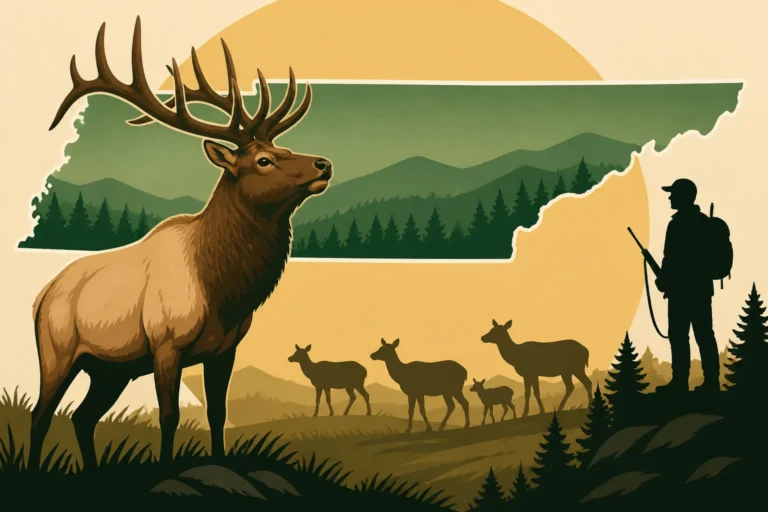
Tennessee elk population history, the 2000 reintroduction by the Tennessee Wildlife Resources Agency, and herd conservation.

The Tennessee elk restoration in North Cumberland explains how conservationists and agencies brought the vanished animals back.
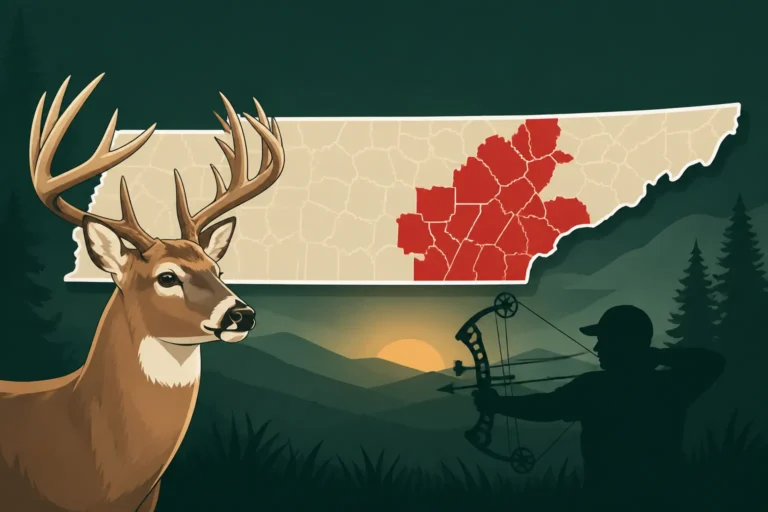
Tennessee chronic wasting disease management zone includes twenty one counties, explaining regulations for deer hunters and wildlife health.
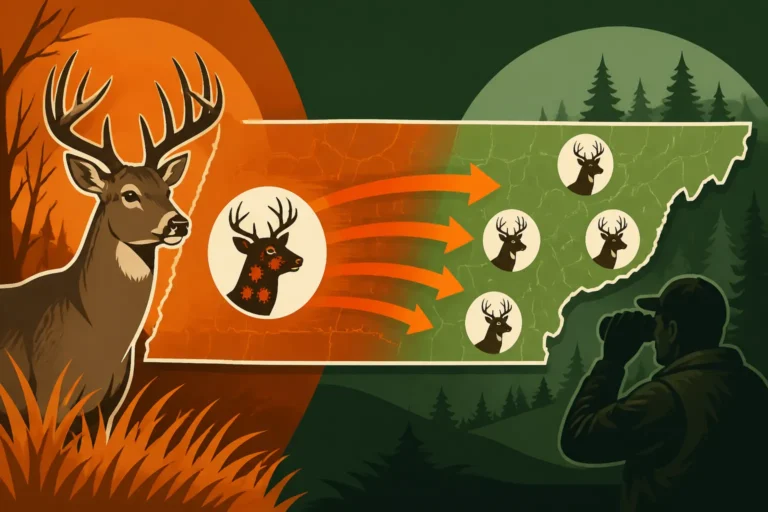
Chronic Wasting Disease spread from West Tennessee through natural deer movement, river corridors, and high population densities.

Tennessee deer harvest records from the TWRA reveal county data, weapon types, and population trends to help hunters plan.
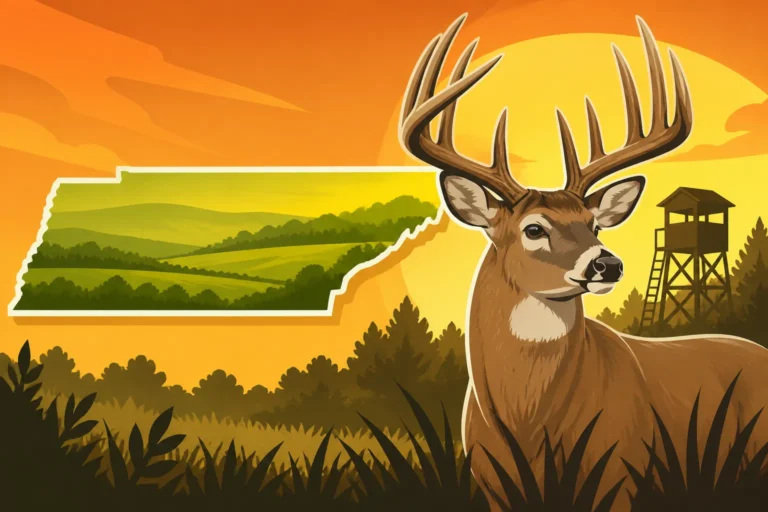
West Tennessee whitetails achieve massive body weights and heavy racks due to fertile soil, abundant crops, and secure lowland cover.
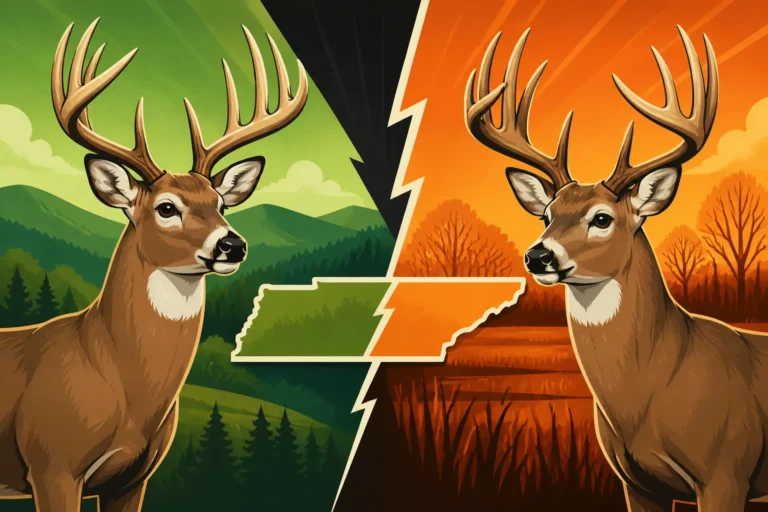
Middle Tennessee and West Tennessee deer habitats feature different geographies, soils, and elevations that alter animal movement patterns.
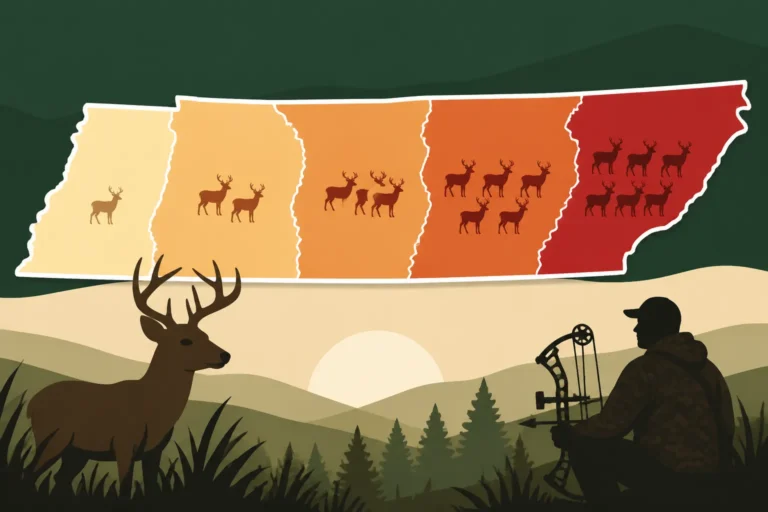
Tennessee deer density variations across regional habitats explain population numbers and help hunters choose locations.

Tennessee Wildlife Resources Agency methods for estimating deer populations through harvest data, hunter surveys, and field observations.