Tennessee Wolf History and Extirpation
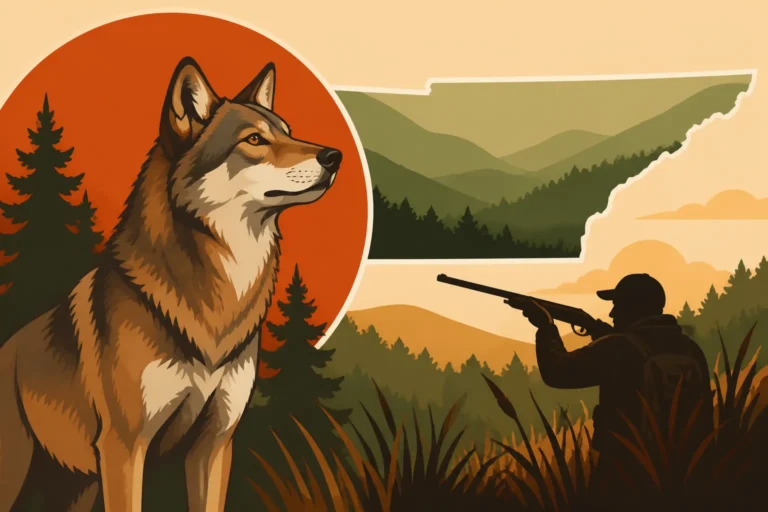
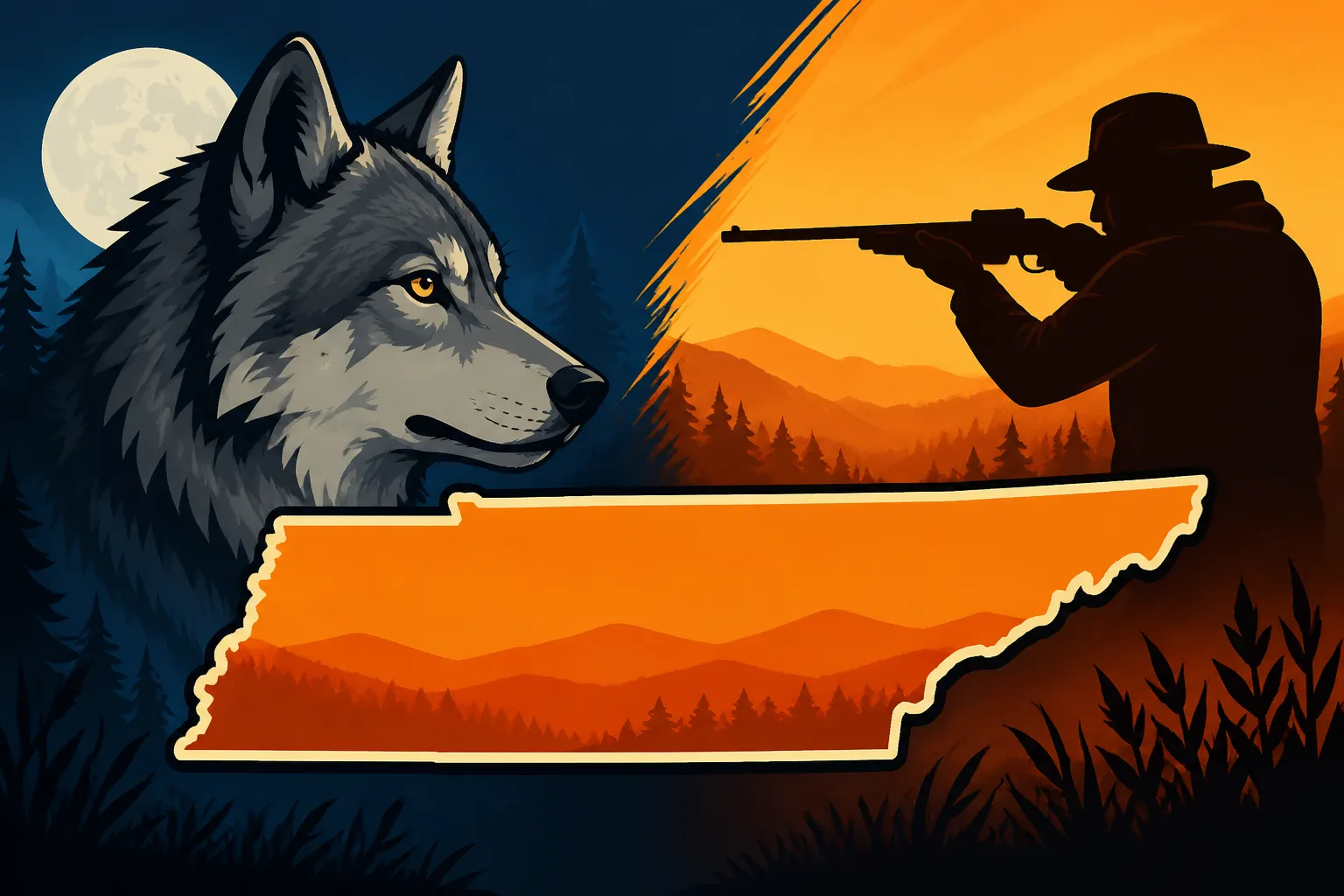
The story of Tennessee's landscape is one of constant change, and perhaps no chapter illustrates that more profoundly than the complete disappearance of the wild wolf. For generations, these apex predators were an integral part of our state's wilderness, their howls echoing through the ancient forests and along winding rivers. Their extirpation represents a significant historical ecological shift, leaving a void that shaped the wild spaces we know today.
Ancient Howls: Wolves Across Pre-Settlement Tennessee
Before European settlement fundamentally altered the landscape, wolves roamed freely across what would become Tennessee. These were not just any wolves; the primary species here was the red wolf (Canis rufus), a slightly smaller, more slender canid than its grey wolf cousins found further north and west. There’s some debate and historical overlap, but generally, the red wolf was the dominant canid, though occasional incursions or presence of grey wolves in the northern Appalachian regions were possible. Their presence wasn't just a biological fact; it was a cornerstone of the ecosystem.
Distribution and Habitat
Imagine a Tennessee with vast, unbroken forests stretching from the Appalachian Mountains in the east, across the Cumberland Plateau, through the rolling hills of Middle Tennessee, and into the fertile bottomlands of West Tennessee. This was the wolves' domain. They thrived in dense woodlands, cane breaks, and riverine habitats – places where deer, elk, and other prey animals were abundant. Their territories were enormous, encompassing thousands of acres, and their movements were largely unhindered by human development. They were true wilderness inhabitants, perfectly adapted to the diverse terrain and rich biodiversity of early Tennessee. A hunter looking at today's Reading Aerial Photos for Cumberland Plateau Deer or Finding Sign in Big Cherokee Forest Timber might get a glimpse of the kind of undisturbed wilderness that once stretched for miles, prime habitat for these predators.
Role in the Ecosystem
The role of the wolf in this pristine environment cannot be overstated. As apex predators, they were crucial in maintaining the health and balance of the ecosystem. They primarily hunted deer, elk, and bison (which were also once present in Tennessee), targeting the old, sick, or weak animals. This natural culling strengthened prey populations by removing less fit individuals, preventing overgrazing, and ensuring a robust gene pool. Without wolves, prey species could expand unchecked, leading to habitat degradation and potentially population crashes due to starvation and disease. The fear their presence instilled in herbivores also kept prey animals on the move, preventing them from denuding specific areas. This dynamic interaction shaped plant communities and indirectly supported countless other species.
The Tide Turns: The Era of Eradication
The arrival of European settlers brought profound changes to Tennessee’s landscape and its wildlife. As settlements grew, forests were cleared for agriculture, and livestock became common. This shift inevitably put wolves and humans on a collision course, leading to a relentless campaign of eradication that lasted for centuries.
Perceived Threats
For settlers, wolves quickly transitioned from being a natural part of the wilderness to a direct threat to their livelihoods and safety. Wolves were seen as livestock killers, preying on sheep, cattle, and hogs, which were vital for pioneer survival. While some depredation undoubtedly occurred, fear and misunderstanding often exaggerated the actual threat. The perception was that every wolf was a potential danger, and this fueled a strong desire to eliminate them from settled areas. Hunters trying to understand Hunting Pressure on Tennessee Public Land today might reflect on how human expansion inevitably impacts wildlife habitats and populations.
Methods of Removal
The methods used to eliminate wolves were often brutal and systematic. Bounties were established as early as the late 1700s and continued well into the 19th century, offering financial incentives for killing wolves. This encouraged widespread hunting and trapping. Professional wolfers and bounty hunters often used steel traps, snares, and even poisons, indiscriminately killing wolves alongside other wildlife. Organized drives, where groups of men would sweep through an area to kill any wolves encountered, were also common. These efforts were highly effective, pushing wolf populations further and further into the dwindling wilderness areas.
Table: Estimated Decline Timeline of Wild Wolves in Tennessee
| Era | Estimated Status | Key Factors Leading to Decline |
|---|---|---|
| Pre-1750 | Widespread and abundant across all regions | Minimal human impact, stable ecosystems |
| 1750 – 1800 | Declining in eastern/central settlement areas | Early settlement, livestock introduction, initial bounties |
| 1800 – 1850 | Localized extirpation in agricultural regions | Intensified bounties, habitat loss, widespread hunting |
| 1850 – 1900 | Restricted to remote mountain and riverine areas | Continued persecution, widespread use of traps and poisons |
| 1900 – 1920s | Rare, isolated individuals | Final push for eradication, last remaining wilderness shrinking |
| Post-1920s | Officially extirpated | No sustained breeding populations left |
Last Strongholds and Final Extirpation
As human populations expanded and technology advanced, the pressure on wolves intensified. Their last remaining refuges became battlegrounds, until eventually, the fight was lost entirely.
Pockets of Resistance
Despite the relentless persecution, wolves managed to persist in the most remote and rugged corners of Tennessee for decades. The vast, mountainous terrain of the eastern Cherokee National Forest, with its deep hollows and dense forests, provided a temporary sanctuary. Similarly, the extensive river bottoms and swamps of West Tennessee, particularly around the Mississippi River, offered isolated pockets of habitat where a few wolves could cling on. These areas were less accessible to settlers, providing crucial breathing room. Stories from these regions sometimes mention "ghost wolves" – elusive animals that were rarely seen but whose presence was still felt. Even today, when Hunting West Tennessee Bottomland Deer or exploring remote sections of the Cherokee National Forest Hunting, you can feel the wildness that once sheltered these magnificent creatures.
The Official End
By the early 20th century, sightings of wild wolves in Tennessee became exceedingly rare. The last confirmed wild red wolf in Tennessee is generally believed to have been killed in the 1920s, though some anecdotal reports lingered for a few more years in the most isolated stretches of the Appalachians. The relentless campaign, combined with habitat destruction and the decline of their primary prey species (like elk and bison), had finally pushed them past the brink. There was no specific "last wolf" widely documented with an exact date, but rather a gradual fading into silence. The silence that followed was a stark testament to the effectiveness of the eradication efforts.
The Modern Context: An Ecosystem Changed
Today, Tennessee's landscape is vastly different. While many species have rebounded thanks to conservation efforts, the wild wolf remains absent. This absence has had lasting effects on our natural world.
The Ecological Vacuum
The extirpation of wolves created a significant ecological vacuum. Without a top predator, deer populations, in particular, could expand more freely, leading to increased browsing pressure on forest undergrowth. This impacts plant diversity and can affect other species that rely on specific plants for food and cover. While coyotes have moved into many areas, filling some of the predatory niche, they don't fully replace the ecological role of a larger, pack-hunting predator like the wolf. The complex web of interactions that wolves once maintained has been fundamentally altered, a shift that continues to influence modern wildlife management strategies, even for species like White-Tailed Deer Across Tennessee.
The Echoes of the Past
While wild wolves are gone from Tennessee, their legacy endures. Their story serves as a powerful reminder of humanity's impact on nature and the importance of conservation. Efforts to understand and appreciate Tennessee's natural history are crucial. Many hunters and outdoor enthusiasts, myself included, use advanced mapping tools, much like those found on platforms such as GoHunt, not just to plan hunts but also to explore historical land use and imagine what these wild places once looked like. Scouting With the Tennessee TWRA App can show us current habitats, but understanding the past requires digging a bit deeper. There have been, and continue to be, discussions about the possibility of reintroducing red wolves in other parts of their historical range, primarily through managed populations in the Southeast, but a widespread, free-ranging return to Tennessee's modern landscape faces immense challenges due to habitat fragmentation and human population density.
The memory of Tennessee's wolves, and their ultimate disappearance, is a poignant chapter in our natural history, reminding us of the wildness we've lost and the delicate balance of the ecosystems we strive to protect today.
Disclaimer
This article is for general informational purposes only and does not constitute professional advice. Laws, prices and regulations vary by location and change over time. Consult a qualified professional for guidance on your specific situation.