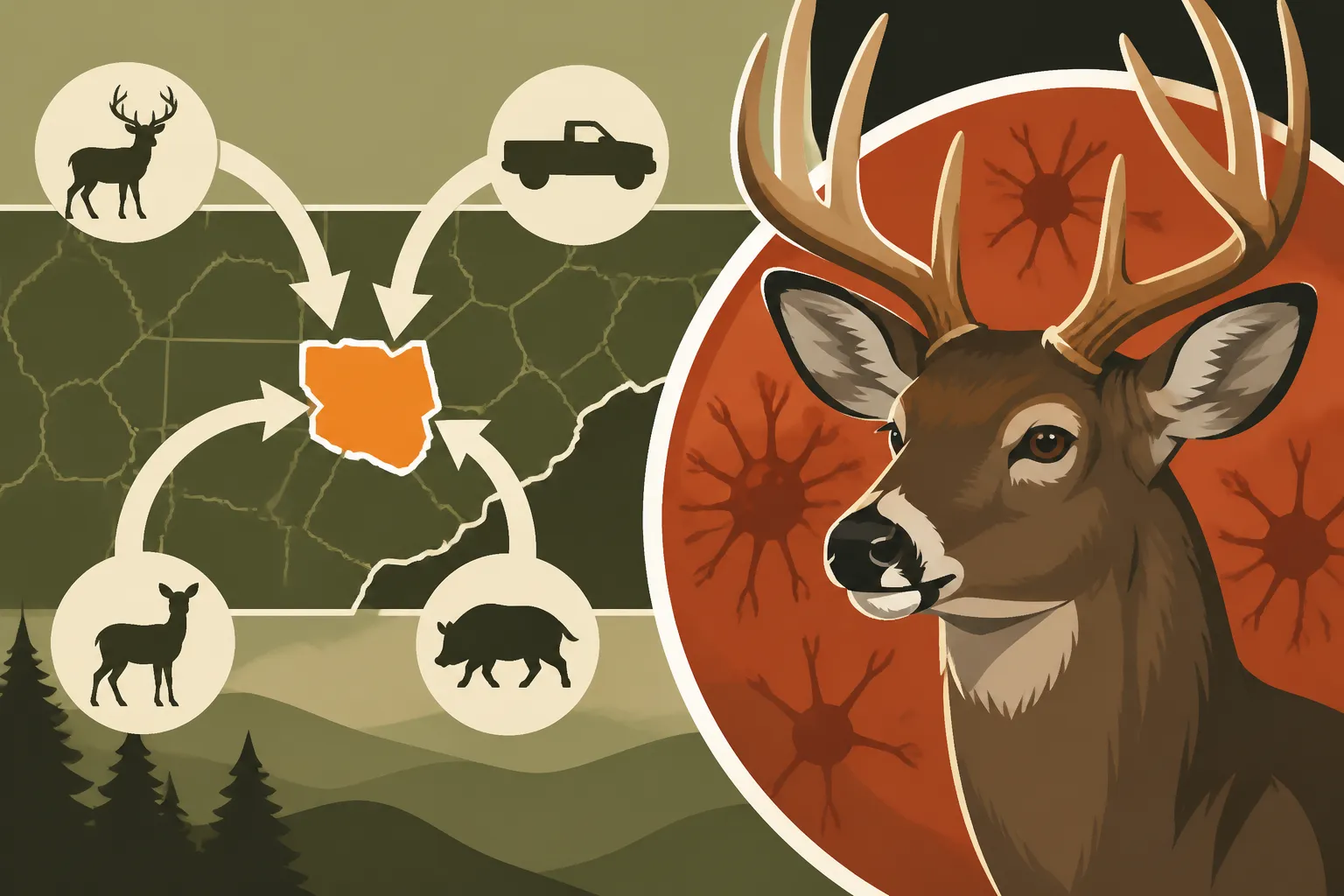
How CWD Reached Humphreys County
For many deer hunters in Tennessee, the discovery of Chronic Wasting Disease (CWD) has cast a long, unsettling shadow over a beloved tradition. When CWD was first detected in West Tennessee, many hoped it would remain contained, but the unfortunate truth is that this persistent disease has continued its slow, westward march across our state. For hunters in Humphreys County, the confirmation of CWD within their beloved hunting grounds was a particularly bitter pill, bringing with it new regulations and concerns about the health of the deer herd. This guide will delve into how CWD found its way to Humphreys County and what this means for local hunters and the future of deer hunting in this cherished part of Tennessee.
The Unwelcome Arrival: CWD in Humphreys County
The news of Chronic Wasting Disease reaching Humphreys County hit hard for many hunters and landowners who cherish the region's deer population. While West Tennessee had been grappling with CWD for some time, the progression eastward always felt like a distant threat for those further in the heart of the state. When the first positive CWD case was confirmed in Humphreys County, it wasn't just a biological finding; it was a shift in the landscape of hunting for everyone in the area.
Tracing the Path of the Disease
Understanding how CWD travels is crucial to comprehending its spread across Tennessee. CWD is a neurological disease affecting deer, elk, and moose, caused by abnormal proteins called prions. These prions can be shed through saliva, urine, and feces, contaminating the environment for years, even decades. The movement of deer, whether natural dispersal of young bucks looking for new territory or human-assisted translocation, plays a significant role in its spread. Often, the disease might go undetected in an area for several years before enough infected animals are present to be found through testing.
When we look at how CWD spread east from West Tennessee, it wasn't a single jump but likely a gradual expansion from infected areas into neighboring counties. Deer, especially young bucks, are known to travel considerable distances, particularly during the rut, when they're actively seeking does. A buck from an adjacent county that may have contracted CWD from contaminated soil or direct contact could easily venture into Humphreys County. Over time, as more deer pick up the prions, the prevalence slowly builds. It's a silent invasion, often invisible until a hunter harvests an infected animal or a sick deer is observed. This slow, insidious nature makes it incredibly challenging to contain once it establishes a foothold.
The Initial Detection and Hunter Response
The official detection of CWD in Humphreys County likely came through the diligent efforts of the Tennessee Wildlife Resources Agency (TWRA) surveillance program. This typically involves targeted testing of harvested deer from specific areas, often in counties bordering known CWD zones, or testing of sick or road-killed deer. When a positive test result comes back, it triggers a cascade of responses designed to understand the extent of the infection and implement management strategies. For hunters in Humphreys County, the announcement was met with a mix of concern, frustration, and a strong desire for information.
Many local hunters, who have spent decades in the woods, suddenly had to confront a new reality. There's a natural attachment to the local deer herd, and the idea of a debilitating disease impacting it is disheartening. Questions immediately arose: "Is the venison safe to eat?" "Will I still be able to hunt the same way?" "What do I need to do differently?" This initial shock and the need for clear, actionable information from TWRA and other resources became paramount. It wasn't just about deer; it was about protecting a way of life and ensuring the sustainability of hunting for future generations.
Navigating the CWD Management Zone
Once CWD is confirmed in a county, that area becomes part of the Tennessee's Chronic Wasting Disease Management Zone. This designation isn't just a label; it comes with a specific set of rules and regulations designed to slow the spread of the disease and monitor its prevalence. For hunters in Humphreys County, this means a significant change in how they approach deer hunting, from carcass handling to mandatory testing.
New Regulations and Hunter Responsibilities
The primary goal of CWD management regulations is to minimize the human-assisted spread of the disease. This impacts hunters directly. In a CWD-positive county like Humphreys, specific rules typically govern the movement of deer carcasses, carcass parts, and even certain tissues. For instance, hunters usually cannot transport an intact deer carcass out of a CWD-positive county into a CWD-negative county. This means if you harvest a deer in Humphreys, you'll need to process it within the CWD zone, often deboning the meat and leaving the skull, spinal column, and other high-risk parts behind. Understanding Tennessee carcass deboning requirements is absolutely essential.
Hunters also have new responsibilities regarding mandatory or voluntary CWD testing. Depending on the specific regulations in place for Humphreys County, you might be required to submit samples from harvested deer for testing, particularly during certain periods or within designated areas. Even if not mandatory, voluntary testing is highly encouraged. This data is critical for TWRA to track the disease's progression and concentration. Tools like the GoHunt app or the TWRA website can be incredibly helpful for hunters to quickly determine which counties sit inside Tennessee's CWD Zone and what specific rules apply to their hunting area. It's a new layer of complexity, but one that is vital for the long-term health of the deer herd.
Impact on Hunting Practices and Opportunities
The presence of CWD and the associated regulations naturally influence hunting practices. For starters, the extra steps involved in carcass processing and testing add time and effort to what was once a relatively straightforward post-harvest routine. Imagine harvesting a deer deep in a hollow in Humphreys County, knowing you can't simply throw it in the truck and take it home across county lines. This might mean investing in portable processing equipment, learning the gutless method, or scouting the locations of CWD sampling stations beforehand.
While CWD does not mean an end to deer hunting, it definitely shifts the focus. Some hunters might become more selective, choosing to harvest fewer deer to allow the herd to recover or to avoid the added processing complexities. Others might embrace the challenge, viewing it as a new aspect of responsible hunting. The Tennessee Deer Season Structure Explained still provides robust hunting opportunities, but the context has changed. Hunters might also see changes in antlerless limits or earn-a-buck programs, designed to increase harvest pressure and collect more samples for testing. For example, Tennessee's Earn-a-Buck CWD Program is a direct response to the need for increased sampling and management in affected areas. It requires adapting, learning, and staying informed about the evolving landscape of hunting regulations.
Hunter's Role in CWD Mitigation
Hunters are arguably the most critical component in the fight against Chronic Wasting Disease. We are on the front lines, interacting with the deer herd, and our actions directly impact the disease's spread and management. Far from being passive observers, every hunter in Humphreys County now has a vital role to play in protecting the resource they love.
Understanding Sampling and Testing Procedures
Participating in CWD sampling is one of the most direct ways hunters can contribute. When you harvest a deer in Humphreys County, especially if it's within a CWD management zone, take the time to submit a sample. The process is usually quite straightforward. You can typically find designated drop-off locations or official sampling stations where TWRA staff or trained volunteers can collect the necessary lymph node samples. These stations are critical for the agency to collect data on the disease's prevalence and distribution. Using mapping tools like GoHunt can help you locate the nearest CWD sampling station before you even head to the woods, allowing you to plan your post-harvest route efficiently.
The data gathered from these samples is invaluable. It helps TWRA understand where the disease is concentrated, if it's spreading, and how effective current management strategies are. It's not just about compliance; it's about being an active partner in wildlife conservation. Submitting a deer for Tennessee CWD testing provides a clear picture of the herd's health and helps ensure that future generations of hunters have a healthy deer population to pursue. Imagine the collective impact if every hunter in the county participated – it would provide an unparalleled wealth of information for wildlife managers.
| CWD Hunter Responsibilities in Humphreys County | Key Action | Why It Matters |
|---|---|---|
| Carcass Movement | Debone meat within county; leave high-risk parts. | Prevents CWD prion transport to uninfected areas. |
| CWD Testing | Submit samples from harvested deer (mandatory/voluntary). | Provides vital data for disease monitoring and management. |
| Reporting Sick Deer | Immediately contact TWRA if you see a deer with CWD symptoms. | Helps TWRA pinpoint new outbreaks and remove infected animals. |
| Proper Disposal | Dispose of remains in approved landfills or on private land where harvested. | Minimizes environmental contamination by prions. |
| Stay Informed | Regularly check TWRA updates and local regulations. | Ensures compliance and effective participation in management. |
Best Practices for Carcass Disposal and Movement
Proper carcass disposal is another cornerstone of CWD mitigation. Prions, the infectious agents of CWD, can persist in the soil for years. Therefore, simply leaving a carcass or its parts where they might be consumed by scavengers or come into contact with other deer poses a risk. In CWD-positive areas, the general recommendation is to either dispose of high-risk parts (brain, spinal cord, lymph nodes, spleen) in approved landfills or, if on private land, bury them deeply.
When you're afield, especially when hunting in a CWD-affected area, consider the most practical ways to handle your harvest. This might mean learning to field-dress and debone a deer on site, minimizing the amount of material you need to transport. Many hunters have embraced the "gutless method" to reduce the weight and bulk of a deer when packing it out, which also helps address carcass movement concerns. Always be aware of the specific rules for moving deboned venison before leaving the CWD Zone. For example, some regulations might allow deboned meat, clean skull plates, and antlers to cross county lines, but require all other parts to stay within the CWD zone. Planning ahead, even scouting for CWD sampling stations before your hunt, can save you a lot of hassle and ensure you're in compliance with regulations designed to protect the deer herd.
The Future of Deer Hunting in Humphreys County
The presence of CWD in Humphreys County is a long-term challenge, but it doesn't spell the end of deer hunting. Instead, it ushers in an era of adaptive management and increased hunter involvement, requiring a collective effort to sustain this cherished outdoor activity.
Long-Term Outlook and Community Efforts
The fight against CWD is not a sprint, but a marathon. There's no quick fix, and the long-term outlook involves continuous monitoring, adaptive management strategies, and strong community engagement. TWRA will continue to track CWD prevalence, adjust season structures, and explore new research to combat the disease. This could mean sustained efforts to manage herd densities, particularly in localized hotspots, to reduce deer-to-deer contact. The community, including hunters, landowners, and local residents, plays a critical role. Attending public meetings, staying informed through sources like the TWRA website or the Go Outdoors Tennessee portal, and spreading accurate information can help foster a shared understanding and commitment to managing CWD.
Moreover, the resilience of Tennessee's deer population should not be underestimated. While CWD is a serious threat, deer herds have shown an ability to persist even in affected areas with proper management. The focus will be on maintaining a healthy, balanced herd, not just in terms of numbers but also age structure and overall vitality. Hunters can contribute by providing vital harvest data through the Tennessee Deer Harvest Reporting Rules, which helps TWRA make informed decisions.
Adapting Your Hunting Strategy
For the individual hunter in Humphreys County, adapting your hunting strategy is key. This might involve:
- Increased Scouting and Observation: Pay closer attention to deer behavior. Are you seeing any deer exhibiting CWD symptoms (emaciation, drooling, neurological signs)? Report these immediately. Reading Aerial Photos for Cumberland Plateau Deer or using mapping apps like GoHunt can help you understand deer movement patterns in relation to potential CWD hotspots or sampling stations.
- Embracing New Regulations: View the regulations not as burdens, but as necessary tools for conservation. Familiarize yourself thoroughly with any antler restrictions, bag limit changes, or testing requirements that apply to your specific hunting zone. Understanding How Tennessee's Deer Season Runs Archery to January in the context of CWD can also help you plan your hunts more effectively.
- Carcass Management: Plan your post-harvest strategy before you even head into the woods. Know where the closest sampling station is, have your deboning tools ready, and understand the rules for disposing of high-risk parts. Consider Field Dressing a Deer in Cold Weather or warm weather, adapting your technique for CWD compliance.
- Ethical Considerations: Continue to make ethical shot choices, aiming for quick, humane kills. This is always important, but even more so when dealing with a disease that impacts animal health.
- Support Research: Stay open to new findings and management techniques. The scientific understanding of CWD is continually evolving, and hunters' willingness to adapt is crucial.
Ultimately, CWD is a part of the deer hunting narrative in Humphreys County now, but it is not the final chapter. By being informed, responsible, and proactive, Tennessee hunters can ensure that the tradition endures and the deer herd thrives despite this challenging disease.
Disclaimer
This article is for general informational purposes only and does not constitute professional advice. Laws, prices and regulations vary by location and change over time. Consult a qualified professional for guidance on your specific situation.