Canada Geese on Tennessee Farmland
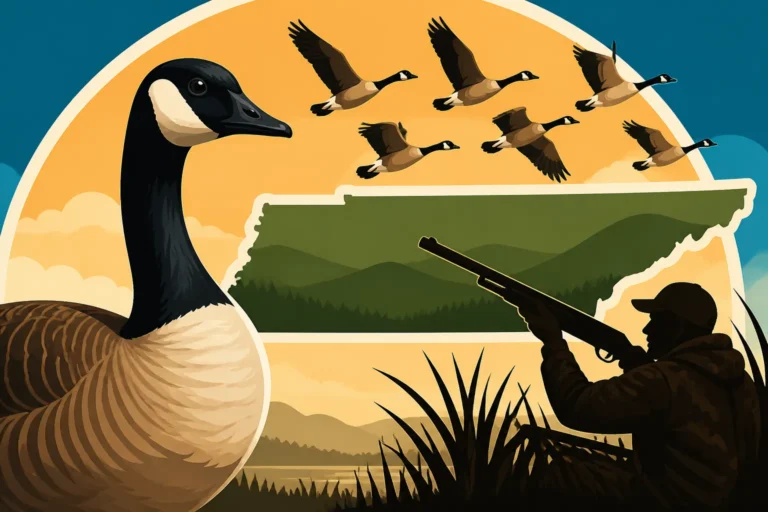
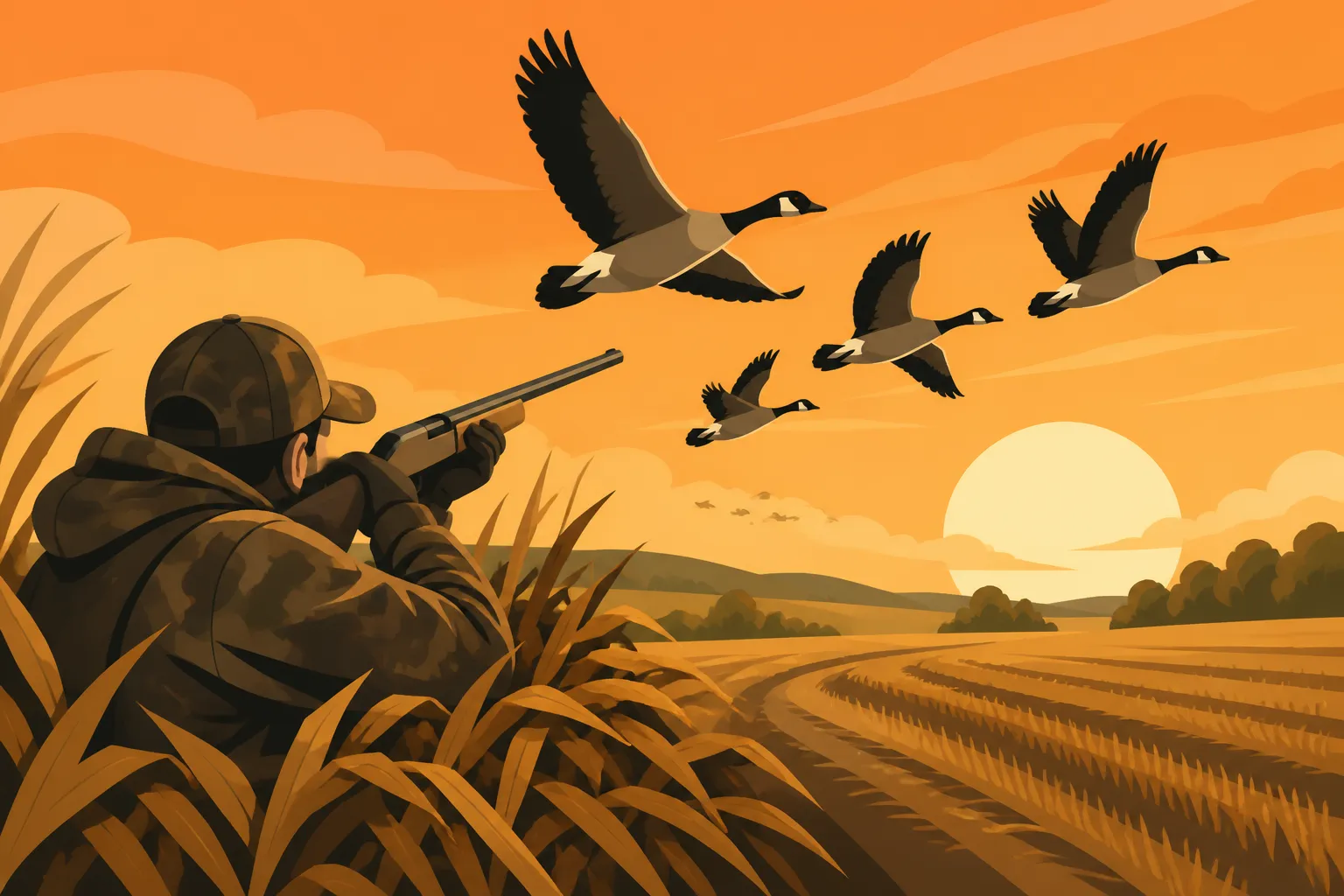
There's nothing quite like seeing a massive flock of Canada geese settle into a freshly harvested cornfield, honking and feeding contentedly, yet feeling utterly frustrated because that beautiful sight is on private land you don't have access to. Many Tennessee hunters struggle with breaking into the world of farmland goose hunting, unsure how to scout effectively, get permission, or set up for success. This guide is here to walk you through everything you need to know to turn those distant observations into successful hunts, from understanding goose behavior to mastering decoy spreads and securing that crucial permission.
Understanding Tennessee's Resident Canada Geese
Tennessee isn't just a stopover for migrating ducks; it's also home to a thriving population of resident Canada geese that have made our farmlands their year-round homes. These aren't the same birds that fly thousands of miles from the Arctic; these are local geese, often descendants of birds released in restoration efforts decades ago, who have learned to exploit the abundance of food and relative safety found in our agricultural landscapes.
The Rise of Resident Goose Populations
The story of the resident Canada goose is a conservation success, but one that comes with its own set of challenges for farmers and hunters alike. Unlike their migratory cousins who breed in the far north and pass through Tennessee during spring and fall, resident geese nest right here in the state, often on ponds, lakes, and even golf courses. Their numbers have exploded over the past few decades, largely due to ample food provided by agriculture, fewer natural predators in settled areas, and relatively stable breeding grounds. They're incredibly adaptable, choosing to live out their lives within a relatively small geographic area, becoming familiar with local water bodies for roosting and nearby fields for feeding. This consistent presence means that if you find a flock using a particular farm, they're likely to be there day after day, offering predictable hunting opportunities if you can crack their code.
When we talk about resident geese, we're talking about birds that have adapted to human-altered landscapes. They'll readily exploit corn stubble, winter wheat fields, soybean remnants, and even freshly planted crops. This constant presence can lead to significant crop damage for farmers, making them, surprisingly, potential allies in your hunting endeavors. Understanding that these birds are often considered a nuisance by landowners can be a key to gaining access. They're not just passing through; they're here to stay, and their habits are tied directly to the resources our farmlands provide.
Behavior Patterns on Farmland
Resident Canada geese are creatures of habit, and understanding their daily rhythms is fundamental to successful farmland hunting. Typically, they’ll spend their nights roosting on larger, open bodies of water – a sizable farm pond, a reservoir, or even a wide section of a river where they feel safe from predators. As dawn breaks, often well before legal shooting light, they'll begin to stir, vocalizing and gathering into smaller groups. With the first light, these groups will take wing, often in distinct flight paths, heading directly to their chosen feeding fields.
These feeding fields are usually where they spent the previous day, or where new, desirable food sources have become available. They have an uncanny ability to pinpoint fresh waste grain, whether it’s corn, wheat, or soybeans. Once they land, they’ll spread out and spend hours grazing, often until mid-morning or early afternoon. After a hearty meal, some may remain in the field, loafing and digesting, while others might fly back to water for a drink and a rest. As late afternoon approaches, they'll often make another trip to a feeding field before returning to their secure roosting water for the night. Observing these flight patterns and understanding their daily routines—when they leave water, where they feed, and when they return—is crucial. They are very sensitive to pressure, and their patterns can shift quickly if they feel threatened. This is why a good scouting plan is your most valuable tool.
Essential Scouting for Farmland Geese
You can have the best decoys and the most expensive shotgun, but if you're not where the geese want to be, you're not going to be successful. Scouting is the absolute bedrock of farmland goose hunting, and it requires dedication, patience, and a keen eye for detail. This isn't just about finding geese; it's about understanding why they're there and how they're using the landscape.
Locating Roosting and Feeding Areas
The first step in effective goose scouting is identifying their roosting and feeding areas. Start by looking for significant water bodies in the agricultural areas you're interested in – large farm ponds, private lakes, or even wider sections of rivers like the Cumberland or Tennessee River. These are prime candidates for roosting spots. Drive around at dawn and dusk, using binoculars or a spotting scope to observe these areas. Look for concentrations of geese on the water, listening for their characteristic honking. Once you've identified a roost, the next step is to watch where they go.
Follow their flights at first light. Geese are often surprisingly consistent in their flight paths from roost to feed. These paths might be narrow corridors through timber or wide arcs over open country. Once you see where they're landing, you've found your feeding field. Pay attention to the type of crop – corn stubble, cut wheat, or bean fields are common draws. Don't be afraid to drive the backroads and rural routes, always keeping an eye on the sky and listening for the distinct sounds of a flock. Sometimes, you'll simply spot a field full of geese while driving, and that's your starting point. Modern mapping tools, like those available through GoHunt, can be incredibly useful here. You can identify potential water sources and large agricultural fields, and even see property lines, which helps immensely when you start considering permission. Remember, locating a field they are currently using is far more valuable than finding a field they used last week.
Reading Field Sign and Flight Paths
Once you've identified a field where geese are feeding, it's time to get a little closer – but discreetly. Park well away from the field and approach cautiously, using hedgerows, timber lines, or topography for concealment. You're looking for concrete evidence that geese are routinely using the spot. The most obvious sign is droppings – lots of them. Geese are prolific eaters and, consequently, prolific droppers. Fresh droppings, still moist and dark, indicate recent activity. You might also see areas of plucked stubble, especially in corn or wheat fields, where they've been pulling up leftover grains. Their tracks, large and webbed, will be visible in muddy areas or even dusty soil.
Beyond physical sign, observing their flight patterns is crucial. Watch how they enter and exit the field. Do they always come in from a certain direction, perhaps over a low spot in a ridge or along a particular treeline? This information is gold for setting up your blind and decoy spread. The wind plays a huge role in a goose's landing approach; they almost always land into the wind, slowing their descent and offering more control. So, note the prevailing wind direction on the days you scout. If you observe a flight path being used repeatedly, especially when there are plenty of other seemingly good fields nearby, it tells you that spot has a strong draw. Be mindful of existing hunting pressure; if geese are being shot at regularly in one field, they might quickly abandon it for a "safer" alternative, even if the food isn't quite as good. Learning to read these subtle cues makes all the difference.
Gaining Access to Private Farmland
This is often the biggest hurdle for Tennessee hunters wanting to pursue Canada geese on farmland. It can feel like an impossible task, driving past field after field teeming with birds, all behind "No Trespassing" signs. But it's not impossible, and with the right approach, you can open up a lot of hunting opportunities.
The Challenge of Private Land Access
The frustration is real: you've spent hours scouting, found the perfect field, watched the geese fly in and out like clockwork, only to realize it's all on private property. For many hunters, this is where the dream dies. Public land waterfowl hunting exists, especially around major river systems and large impoundments, but prime farmland goose hunting is almost exclusively a private land affair in Tennessee. Landowners have every right to protect their property and privacy, and a cold approach can often be met with suspicion or an immediate "no."
However, there's a silver lining. Resident Canada geese can be a significant nuisance for farmers. They graze on newly planted crops, consume waste grain that could be feed for livestock, and leave behind copious amounts of droppings that can contaminate pastures or fields. This means that a farmer who might say no to deer hunting could be surprisingly receptive to someone offering to help manage a goose problem. Your approach needs to acknowledge their concerns and offer a solution, rather than just asking for a place to hunt. Building a positive relationship, rooted in respect and understanding, is paramount. This isn't just about one hunt; it's about potentially opening the door to future opportunities. For more on this, check out our guide on Getting Private Land Permission in Tennessee.
Approaching Landowners for Permission
So, you've found the perfect field and identified the landowner, perhaps using a tool like GoHunt to look up property records. Now comes the most critical step: asking for permission. Don't show up in your hunting clothes with your gun in the truck. Dress respectfully, as if you're going to a job interview or a nice dinner. A clean shirt and jeans are usually sufficient. Approach the landowner at a convenient time for them – not during planting, harvest, or supper. Mid-morning or early afternoon on a weekday is often a good bet.
When you introduce yourself, be polite and concise. Explain that you've noticed a large number of geese using their fields and, understanding the potential for crop damage, you'd be interested in helping them manage the population. Emphasize that you are a responsible hunter, will respect their property, and will leave no trace. Offer to share any harvested birds, or even help with a small chore around the farm if they're agreeable. Be prepared for a "no," and accept it graciously if it comes. A polite "no" today doesn't mean a "no" forever. If they say yes, discuss specific access points, areas to avoid (like livestock pastures or sensitive equipment), and when you plan to hunt. Always get permission in writing, even if it's just a simple note, to avoid any misunderstandings. This shows you're serious and protects both parties. A strong relationship with a landowner can lead to years of incredible hunting experiences.
Decoy Spreads and Blind Strategies
Once you've got your permission and know exactly where the geese are feeding, the real fun begins: setting up your spread. Canada geese are wary birds, especially resident populations that have seen a lot of hunting pressure. Your decoy spread and blind concealment need to be on point to consistently fool them.
Decoy Spreads for Different Scenarios
Decoys are your silent partners in the field. The goal is to create a realistic scene that tells incoming geese, "It's safe here, come join us." There are various types of decoys, each with its place:
- Full-body decoys: These are the most realistic, appearing as 3D geese feeding or loafing. They're expensive and bulky but offer the best visual appeal, especially on clear days.
- Shell decoys: These are hollow plastic shells that sit on the ground, offering a 3D profile from above but less bulk than full bodies. A good compromise.
- Silhouette decoys: Flat, 2D cutouts that are highly portable and cost-effective. They work surprisingly well in numbers, especially from a distance.
- Flags: Handheld flags that mimic the flapping wings of a landing goose. Excellent for catching attention from afar and giving a lifelike movement to your spread.
For farmland geese, bigger is often better when it comes to spreads, but quality still trumps quantity. A spread of 2-3 dozen high-quality decoys can be more effective than 6 dozen cheap ones. The pattern of your spread is crucial. Geese are social, so you want to mimic a flock feeding naturally. Avoid straight lines or perfect circles. Instead, create several family groups of 3-5 decoys, spaced loosely, with some facing different directions as if feeding, some looking around. Leave a large "landing zone" or "kill hole" directly in front of your blind, downwind, where you expect the geese to approach and commit to land. This is where you want to focus your shots. If you're working with a smaller number of decoys, focus on creating a compact, realistic landing zone rather than spreading them too thin. Our guide on Decoy Placement for Pressured Tennessee Birds offers more specific tips that can apply to geese as well.
Here’s a quick comparison of common decoy types:
| Decoy Type | Realism | Portability | Cost | Ideal Use Case |
|---|---|---|---|---|
| Full Body | High | Low | High | Primary decoy for critical focal points, clear days |
| Shell | Medium | Medium | Medium | Adding bulk to a spread, cost-effective 3D |
| Silhouette | Low | High | Low | Budget-friendly, high-volume spreads, windy days |
| Feeder | High | Medium | Medium-High | Mimicking feeding behavior, core of the spread |
| Active/Sentry | High | Medium | Medium-High | Geese looking around, on the edge of the spread |
| Motion (Flag) | Very High | High | Medium | Adding realism, attracting distant birds, movement |
Effective Blind Placement and Concealment
Geese have incredible eyesight, perhaps even better than turkeys. Your blind needs to be absolutely invisible. Forget about sitting on a bucket in the middle of a field; it simply won't work for consistent success.
- Natural Cover: The best blinds are often found, not built. Look for existing fencelines, hedgerows, ditches, or the edges of standing crops (like tall corn or uncut soybeans) that offer a natural break in the landscape. These provide concealment from all angles and break up your human outline. If you can, set your blind up so that your back is to a darker background, like timber, which helps you blend in.
- Layout Blinds: In wide-open fields, a layout blind is indispensable. These low-profile, coffin-like blinds allow you to lie down flat, becoming virtually undetectable when properly brushed in. They are designed to blend seamlessly with the stubble and soil. For more on this, our Layout Blind Hunting West Tennessee Fields guide goes into detail.
- Brushing In: Regardless of the type of blind, brushing it in is non-negotiable. This means covering it with natural vegetation from the immediate surroundings – corn stalks, soybean stubble, grass, weeds. Don't be shy; overdo it. The goal is for your blind to look like a natural part of the field, not an anomaly. Even a small piece of exposed blind material can flare birds.
- Sun and Wind: Always consider the sun and wind. Position your blind so that the sun is at the geese's back as they approach, making it harder for them to see you. Crucially, set up so the geese will land into the wind, putting them directly in front of your spread and giving you ethical shot opportunities. This usually means your blind will be facing downwind from your landing zone.
Remember, geese will often circle several times before committing. Any flicker of movement, shine from a face or gun barrel, or unnatural shape can send them sailing away. Stay still, stay hidden, and only rise to shoot when they are fully committed and within range.
Calling Techniques and Shot Selection
Calling to geese is an art form, not just noise, and knowing what to say and when can make the difference between a high-flying flock and birds cupped in your face. Similarly, choosing the right ammunition and making ethical shots are vital.
Mastering the Canada Goose Call
Goose calling is about communication. You're trying to convince a skeptical flock that your spread is a safe and inviting place to land. It requires a good quality short-reed goose call and practice, practice, practice.
-
Basic Calls: Start with the fundamentals:
- Cluck: A sharp, single note, often used to get attention or as part of a greeting.
- Honk: The longer, deeper "honk" that Canada geese are famous for. Use it to simulate excitement or to call to distant birds.
- Moan/Growl: A low, guttural sound, often made by geese on the ground while feeding or loafing. Adds realism to a close-in scenario.
- Comeback Call: A series of excited clucks and honks when geese are flying away, trying to turn them around.
-
Reading Reactions: The most important aspect of calling is knowing when to call and, perhaps more importantly, when to shut up.
- When geese are distant, use louder, longer honks to get their attention.
- As they get closer, switch to softer clucks and moans, mimicking feeding birds.
- If they're looking at your spread and steadily approaching, often less is more. Let the decoys do the work.
- If they start to drift or fly past, a sharp series of clucks or a comeback call might turn them.
- If they're about to land, a soft, reassuring moan can be the final convincer.
-
Working Together: If you're hunting with a partner, try to simulate a conversation among geese. One hunter might be "honking" at distant birds, while another adds soft "clucks" and "moans" as they get closer. This adds another layer of realism to your spread. Consistency and restraint are key – don't overcall. Sometimes, silent, perfectly concealed hunters are the most effective.
Shotgun and Ammunition Choice for Geese
Geese are big, tough birds, and they require a reliable shotgun and effective ammunition to bring down cleanly and ethically.
- Shotgun Gauge: While 20-gauge shotguns can work with modern heavy loads, 12-gauge is the most common and versatile choice for goose hunting. Many experienced goose hunters also favor 10-gauge for its ability to throw a heavy charge of large shot, especially for those high-flying birds or windy conditions.
- Non-Toxic Shot: It is absolutely mandatory to use non-toxic shot for all waterfowl hunting, including Canada geese, across the entire United States. Steel shot is the most common and affordable option, but bismuth and tungsten-based loads offer denser patterns and more knockdown power, albeit at a higher cost. These denser loads can be a game-changer when you need extra range.
- Shot Size: For Canada geese, you'll typically want larger shot sizes to ensure enough energy and penetration. Popular choices include BB, BBB, T, and sometimes F. Smaller shot sizes like #2 or #4 steel might work for very close birds but are generally considered too light for consistent performance on geese.
- Choke Tubes: A modified or improved modified choke is a good all-around choice for goose hunting, offering a balance of pattern density and spread. If you expect longer shots, a full choke can tighten your pattern, but it also reduces the margin for error. Pattern your shotgun with your chosen ammunition and choke to see how it performs at various distances. You want a dense, even pattern out to about 40 yards.
- Ethical Shot Distances: Know your limits and your gun's capabilities. For most hunters, a responsible shot on a goose is within 40-45 yards. Pushing beyond that significantly increases the chance of wounding birds, which is something every ethical hunter wants to avoid. Let the birds work, let them commit to the decoys, and only rise to shoot when they are well within your effective range.
Season Dates, Limits, and Regulations
Before you even think about loading your shotgun or setting out your first decoy, it is absolutely critical to be well-versed in Tennessee's specific regulations for Canada geese. Wildlife laws are in place to ensure sustainable populations and safe hunting for everyone, and ignorance is never an excuse for non-compliance.
Understanding Tennessee's Goose Seasons
Tennessee offers a variety of goose seasons, and it's essential to know which one applies to the birds you're targeting and the zone you're in. Resident Canada geese, in particular, often have an early season specifically designed to help manage their local populations before migratory birds arrive and complicate identification.
- Early Goose Seasons: Typically, Tennessee has an early Canada goose season, often in September. This season is specifically geared towards resident birds and can offer liberal bag limits. This is often the best time to target farmland geese, as they haven't experienced as much hunting pressure, and their patterns are more predictable. The weather is usually warmer, which means proper meat care is even more critical.
- Regular Waterfowl Seasons: Canada geese are also hunted during the regular duck and goose seasons, which typically run in phases throughout the fall and winter. These seasons are usually split into zones (e.g., Reelfoot Zone, East Tennessee Zone, etc.), each with slightly different dates. The rules during these later seasons can be more complex, as you might also encounter migratory geese alongside residents. Always double-check the current TWRA Hunting and Trapping Guide for precise dates for your specific area.
Regulations can and do change annually, so never rely on last year's guide. The official TWRA website or printed guide is your definitive source. Understanding the specific dates helps you plan your scouting trips and target your hunts when the birds are most vulnerable and legal to pursue. This also applies to other migratory birds, so make sure to review the full details on Tennessee Waterfowl Zones and Seasons.
Bag Limits and Other Considerations
Beyond season dates, there are crucial details like bag limits and licensing requirements that you must follow to stay on the right side of the law and be an ethical hunter.
- Daily and Possession Limits: Canada geese have specific daily bag limits (the number you can harvest per day) and possession limits (the maximum number you can have in your possession at any time). These limits are often more generous during early resident goose seasons than during the regular migratory bird seasons. Know these numbers by heart.
- HIP Certification and Federal Duck Stamp: Any hunter pursuing migratory game birds in Tennessee, including Canada geese, must have current Harvest Information Program (HIP) certification. This is a simple registration you complete when you buy your license. Additionally, anyone 16 years of age or older must possess a valid Federal Migratory Bird Hunting and Conservation Stamp (the "Federal Duck Stamp"). These are absolutely required. Learn more about Tennessee Migratory Bird Certification and the Tennessee Federal Duck Stamp Requirement.
- Safe Hunting Practices: Farmland hunting often means open fields, and that requires extra vigilance for safe gun handling. Always be aware of your surroundings, especially if there are other hunters, farm equipment, or livestock in the vicinity. Establish clear shooting lanes and know your maximum range. If you're hunting in a group, communicate your shooting zones clearly.
- Retrieving Downed Birds: When a goose is down, retrieve it quickly. Not only is it good sportsmanship to recover every bird you shoot, but it's also legally required. Wounded geese can run surprisingly fast or even swim away if they fall near water. Having a well-trained retriever can be invaluable, but if not, ensure you have a plan for swift recovery. Cold weather can preserve birds, but in Tennessee's warmer early seasons, get them on ice quickly to ensure the meat is good.
Being a responsible goose hunter means not only harvesting birds but doing so legally, ethically, and safely. Always carry your licenses and permits, and be prepared to show them if requested by a wildlife officer.
Disclaimer
This article is for general informational purposes only and does not constitute professional advice. Laws, prices and regulations vary by location and change over time. Consult a qualified professional for guidance on your specific situation.