Moving Deboned Venison Out of the CWD Zone
The moment you get that deer down in one of Tennessee's CWD-positive counties, a whole new layer of questions can pop up, especially if you live outside that zone or plan to travel. It's frustrating enough dealing with the logistics of field dressing and hauling, let alone worrying if you're going to accidentally break a regulation by taking your hard-earned venison home. This guide is here to walk you through exactly how to legally and safely transport your deer meat out of a Chronic Wasting Disease (CWD) Management Zone, focusing specifically on the crucial process of deboning.
Understanding Tennessee's CWD Zone and Regulations
Tennessee has been diligently working to manage the spread of Chronic Wasting Disease, a neurological disease affecting deer and other cervids. For hunters, this means specific rules are in place, particularly concerning how you handle and transport your harvest if it comes from a county within a CWD Management Zone. Navigating these rules can feel like a maze, but understanding the 'why' behind them helps make the 'how' much clearer.
What is CWD and Why Does it Matter to Hunters?
Chronic Wasting Disease is a fatal, contagious neurological disease that affects deer, elk, moose, and reindeer. It's caused by abnormal proteins called prions, which accumulate in the brain and nervous system, leading to behavioral changes, emaciation, and ultimately death. While there's no evidence CWD can spread to humans, wildlife agencies, including the Tennessee Wildlife Resources Agency (TWRA), implement strict protocols to limit its spread among deer populations. For hunters, this translates to important responsibilities in managing carcasses and parts, ensuring we don't inadvertently contribute to the disease's expansion. It's about protecting the future of our deer herd and, by extension, our hunting heritage.
The disease is transmitted through direct animal-to-animal contact and indirectly through contaminated environments, such as soil or plants containing prions from infected animals. These prions are highly resilient and can persist in the environment for extended periods. This is precisely why the movement of certain deer parts is restricted – to prevent prions from being carried from an infected area into an uninfected one. Every hunter plays a vital role in this containment effort, even if it adds a bit of extra work to an already physically demanding activity.
Identifying CWD-Positive Counties in Tennessee
The list of CWD-positive counties in Tennessee isn't static; it expands as new cases are confirmed. These counties, along with surrounding counties deemed "CWD-positive" or "CWD-buffer," collectively form Tennessee's Chronic Wasting Disease Management Zone. When you plan your hunt, especially if you're venturing into unfamiliar territory, it's absolutely critical to know if your target county is within this zone. The TWRA provides updated maps and lists on their website, which you should always check before heading out.
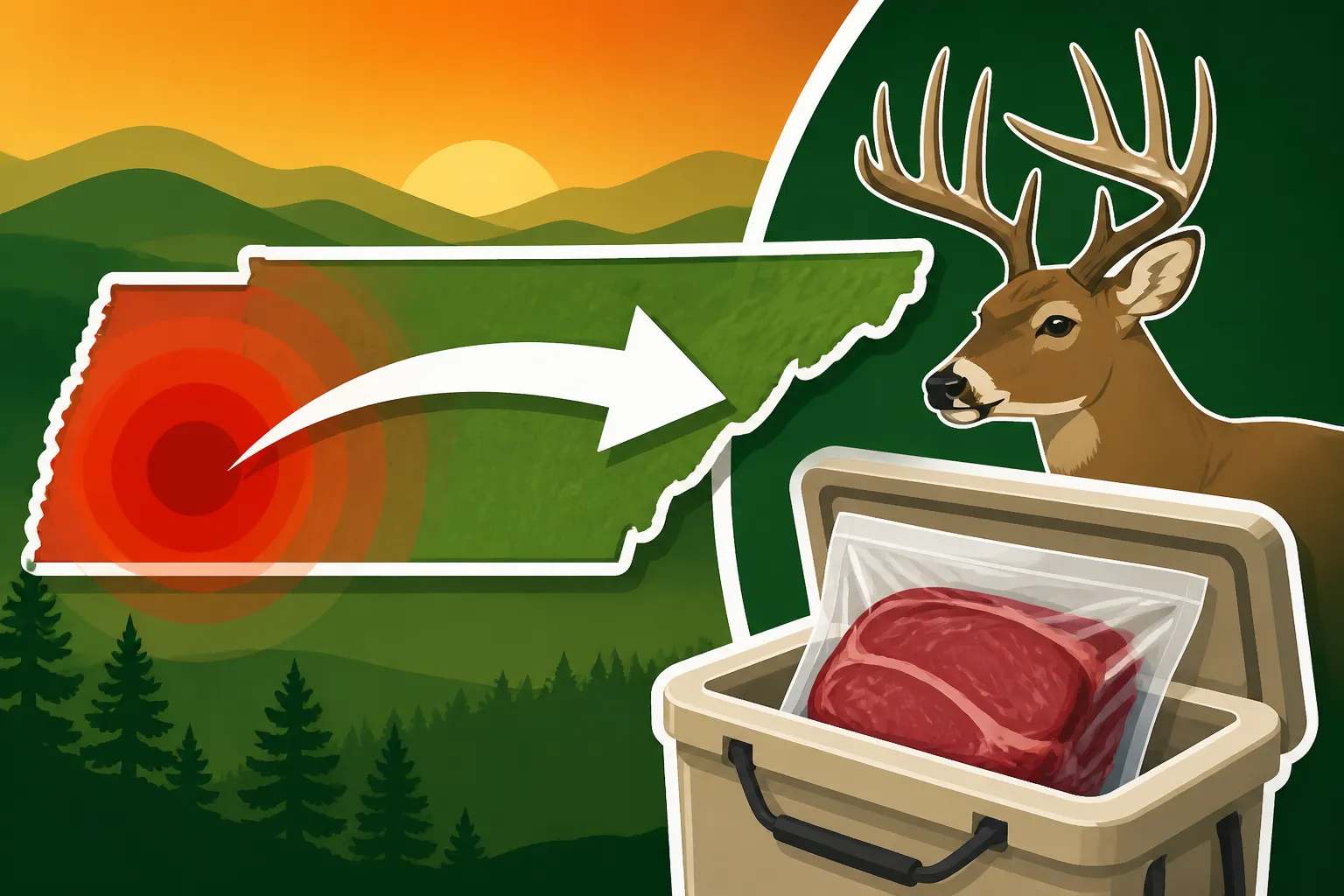
Currently, the CWD Management Zone primarily affects counties in West and portions of Middle Tennessee, but it has been steadily expanding eastward. Knowing How CWD Spread East From West Tennessee helps illustrate the dynamic nature of this challenge. For instance, counties like Fayette, Hardeman, McNairy, and Madison have been CWD-positive for some time, with new additions like Giles, Lincoln, and Marshall counties joining the list more recently as the disease continues to make its way across the state. Using tools like the GoHunt app or the TWRA's own online resources can make identifying these zones quick and easy right from your phone.
Carcass Movement Restrictions: The Core Problem
The foundational rule for hunting within a CWD Management Zone is straightforward: you cannot transport a whole deer carcass out of it. This restriction is the cornerstone of the TWRA's strategy to prevent the geographical spread of CWD prions. The parts that carry the highest risk of transmitting the disease—like the brain, spinal cord, lymph nodes, and certain bones—must remain within the CWD zone in which the deer was harvested.
This regulation directly impacts how you plan your hunt, especially if you live or process your deer in a county outside the CWD zone. It means you can't just throw a whole deer in the back of your truck and drive it home if you've harvested it in, say, Hardin County and live in Williamson County. The thought of this can be daunting, adding another layer of complexity to an already strenuous hunting trip. However, there are very specific allowances for what can be transported, and understanding these is key to staying compliant and avoiding penalties.
The Deboning Solution: Safely Transporting Venison
For many hunters, especially those who prefer to process their own deer or take it to a local butcher outside the CWD zone, deboning is the primary method to comply with carcass transport regulations. It's not just about cutting off some meat; it's a precise process to ensure only low-risk materials leave the management zone.
Deboning: What It Means for CWD Compliance
When the TWRA talks about deboning for CWD compliance, they mean removing all muscle tissue from the bone. This process ensures that the skeletal bones, skull (especially the braincase), spinal cord, and other high-risk lymphoid tissues are left behind. Essentially, you're only allowed to transport the "clean" muscle meat, hides with no head or spinal column material attached, antlers or clean skull plates, and teeth.
This isn't just a suggestion; it's a legal requirement outlined in Tennessee Carcass Deboning Requirements. It means any bone, including ribs, vertebrae, leg bones, and even the small bones of the head, must be separated from the meat. The goal is to eliminate any potential prion-carrying material from leaving the CWD zone, significantly reducing the risk of further disease spread. While it might sound like a lot of extra work, with the right tools and a little practice, it can become a routine part of your harvest process.
Step-by-Step Guide to Deboning in the Field
Deboning a deer in the field might seem intimidating at first, but it's a skill worth mastering, especially if you frequently hunt in CWD zones. Not only does it allow for legal transport, but it can also make getting your harvest out of remote areas much easier. Here's a simplified breakdown:
- Preparation is Key: Before you even make a cut, make sure you have the right tools: a sharp knife, a game bag or clean trash bags, and gloves. Some hunters also prefer a small bone saw for the skull plate if they plan to keep the antlers. Lay out a clean tarp or plastic sheet if possible to keep your meat as clean as possible during the process.
- Field Dressing First: Begin by field dressing your deer as you normally would. This removes the entrails and helps cool the carcass quickly, which is especially important in warmer weather. This step will also make accessing some of the prime meat cuts easier.
- Break Down the Carcass: Start by removing the front and hindquarters. Make cuts around the leg joints to separate them from the main body. Then, carefully debone these sections by running your knife along the bones, separating the muscle tissue. The goal is to leave zero meat on the bone.
- Backstraps and Tenderloins: These are the easiest to remove. Run your knife along the spine to carefully peel off the backstraps. The tenderloins are inside the body cavity, against the spine, and are usually easy to lift out once the entrails are removed.
- Neck and Shoulder Meat: Don't forget the neck meat and shoulder roasts. These often have a lot of good grinding meat. Carefully debone them, trimming away any gristle or undesirable tissue.
- Disposal of High-Risk Parts: All bones, the head (unless cleaned to a skull plate, see below), and the spinal column must remain in the CWD zone. The best practice is to double-bag these parts and dispose of them properly at a designated CWD sampling station or landfill within the CWD zone. Do not just leave them scattered in the woods, as this defeats the purpose of the regulations.
For those planning to keep the antlers, you can remove the skull plate by carefully sawing through the skull to separate the antlers with minimal bone attached. Ensure any brain material or tissue is thoroughly removed and discarded within the CWD zone. This meticulous process might take some time, especially your first few times, but it's essential for compliance and good meat care.
Permitted and Prohibited Parts for Transport
To make it as clear as possible, here's a table summarizing what you can and cannot legally move out of a Tennessee CWD Management Zone:
| Permitted for Transport Out of CWD Zone | Prohibited for Transport Out of CWD Zone |
|---|---|
| Deboned meat (muscle tissue only, no bone or spinal cord material) | Whole carcasses |
| Hides (without the head or spinal column material attached) | Heads (unless skull plate cleaned and free of brain/tissue) |
| Antlers or clean skull plates (with no visible brain or spinal tissue) | Spinal columns |
| Clean teeth (with no visible tissue) | Any bones (except cleaned skull plates) |
| Finished taxidermy mounts | Internal organs (except heart and liver, see below) |
This table serves as a quick reference, but remember the overarching principle: if it could potentially harbor prions, it needs to stay within the CWD zone or be handled appropriately. This includes even small bone fragments. When in doubt, leave it out.
Practical Considerations and Best Practices
Successfully deboning and transporting venison from a CWD zone involves more than just knowing the rules; it requires practical application, careful planning, and attention to detail to ensure both compliance and meat quality.
Proper Field Care and Cooling of Deboned Meat
Once you've deboned your deer, especially if you're doing it in the field, proper care of the meat becomes paramount. Unlike a whole carcass that might take longer to cool, deboned meat can cool down much faster, but it also has more surface area exposed to contaminants. It’s crucial to get that meat cooled as quickly as possible, especially during warmer early season hunts like the August antlerless-only archery hunt.
Use game bags, not just plastic trash bags, to protect the deboned meat. Game bags are breathable, allowing air to circulate and the meat to form a protective crust, which is better for cooling and hygiene. Once bagged, get the meat into a cooler packed with ice immediately. Make sure the ice doesn't directly contact the meat to avoid waterlogging; use a raised grate or sealed bags for the ice. For longer trips, consider freezing water bottles or jugs to act as ice packs, as they don't melt into water that can contaminate the meat. This careful attention to detail ensures your venison arrives home in prime condition, ready for the freezer or butcher.
Utilizing CWD Testing and Sampling Stations
Even after deboning, submitting your deer for CWD testing is a responsible and encouraged practice. It helps the TWRA monitor the disease's prevalence and spread, informing future management decisions. Many hunters appreciate knowing whether their harvested animal was CWD positive, even if the meat is safe to consume based on current scientific understanding.
The TWRA maintains numerous CWD sampling stations throughout the state, particularly within and around CWD Management Zones. You can find these stations, which often include self-serve kiosks, on the TWRA website or by using a mapping application like GoHunt or the official TWRA app. These tools often highlight locations for sampling stations, making it easier for hunters to locate them, even in unfamiliar areas. Dropping off a head for testing only takes a few minutes, and it provides invaluable data for wildlife management. Understanding Tennessee CWD Testing for Hunters is a crucial part of hunting in these zones.
Planning Your Hunt Around CWD Regulations
Planning ahead is your best defense against unexpected issues when hunting in a CWD zone. If you typically take your deer to a processor, call them beforehand to confirm their policies regarding CWD-zone deer. Some processors within the zone may handle whole carcasses, but most outside the zone will require you to bring only deboned meat.
Consider your logistics. If you're hunting public land far from home, how will you debone the animal and keep the meat cool until you can get it to a refrigerator or freezer? Packing extra coolers, sharp knives, and game bags is essential. For many, a portable camping table can make field deboning much easier than working on the ground. Hunters venturing into areas like the Cherokee National Forest for big game should always consider these logistics. It's not just about the shot; it's about the responsible steps that follow, ensuring you respect both the law and the resource.
Common Questions and Misconceptions
CWD regulations often lead to questions about specific parts of the deer, especially trophies, and what constitutes acceptable movement. Let's clear up some common points of confusion.
Can I Take My Trophy Antlers Out of the CWD Zone?
Yes, you absolutely can take your trophy antlers out of a CWD Management Zone, but with a critical caveat: they must be completely clean of any brain tissue, spinal cord material, or other soft tissues. For a skull plate, this means meticulously cleaning it, often by boiling, scraping, or power washing, to remove all meat, skin, and brain matter. The TWRA's rule is clear that only "clean skull plates" or "antlers" are permitted.
Many taxidermists who operate outside CWD zones will require the skull plate to be thoroughly cleaned before they accept it. If you're unsure about your ability to clean it sufficiently in the field, it's often best to leave the skull with a local processor or taxidermist within the CWD zone who is equipped to handle the cleaning process. This ensures compliance and peace of mind, allowing you to proudly display your trophy without worry.
What About Organs Like the Heart and Liver?
The heart and liver are generally considered low-risk parts regarding CWD transmission, primarily because they do not accumulate prions to the same extent as the brain, spinal cord, and lymph nodes. Therefore, Tennessee regulations typically allow for the transport of the heart and liver out of a CWD Management Zone, provided they are separated from the rest of the carcass.
However, it's always wise to err on the side of caution. Ensure they are clean, free of any visible lymphatic tissue, and stored separately from any prohibited parts. Just like the muscle meat, these organs should be kept cool and handled hygienically to ensure they remain safe and palatable for consumption. When Field Dressing a Deer in Cold Weather, special attention to these parts can ensure their quality.
What if I'm Just Passing Through a CWD County?
If you've harvested a deer outside a CWD Management Zone and are simply passing through a CWD county to get home, the rules are different. The restrictions apply to deer harvested within the CWD zone. So, if your deer was taken in a non-CWD county, you can typically transport it whole through a CWD zone.
However, the safest and most stress-free approach is to always verify the latest regulations, especially if you're traveling a significant distance. Rules can change, and it's better to be overly cautious than face potential fines or the loss of your harvest. Always consult the TWRA's most current guidelines before embarking on your journey, especially when crossing county lines after a successful hunt.
Disclaimer
Please remember that hunting regulations, particularly those concerning Chronic Wasting Disease, are subject to change. Always consult the most current Tennessee Wildlife Resources Agency (TWRA) regulations before heading afield. This guide is for informational purposes only and does not supersede official TWRA rules and guidelines.