Calling Crows Over a Winter Feed Site
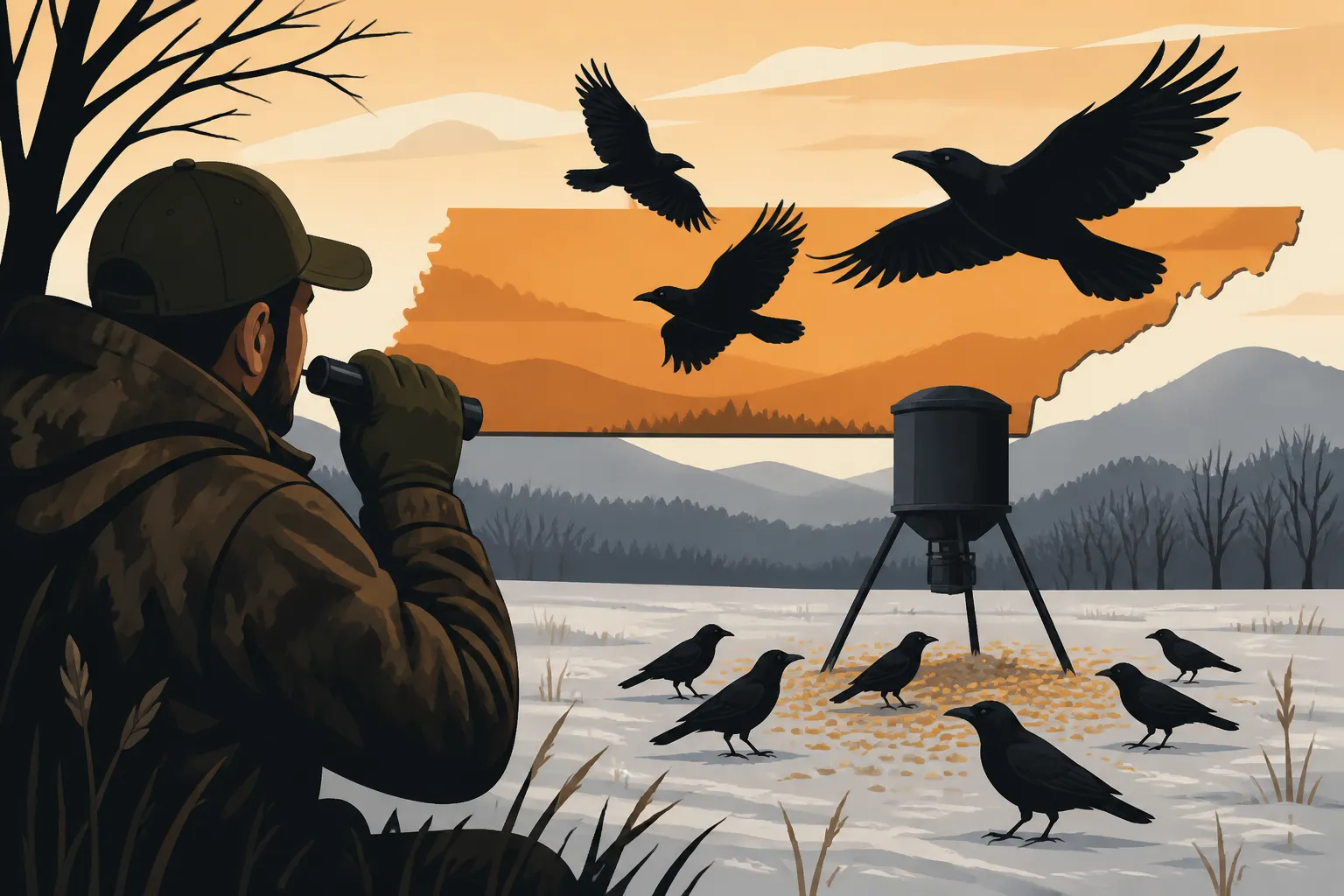
It's incredibly frustrating when you've put in the hard work to establish winter food plots or you're counting on natural feed sites for deer and other game, only to see flocks of crows descend like a black cloud, devouring everything in sight. These intelligent, opportunistic birds can decimate a valuable food source surprisingly quickly. This guide is all about giving you the strategies and knowledge to effectively call and manage crows over those crucial winter feed sites here in Tennessee, protecting your investment and your wildlife.
The Winter Crow Challenge in Tennessee
Crows, with their keen eyesight and notorious intelligence, can be a real nuisance, especially during the lean winter months when food is scarce. What might seem like a minor inconvenience can quickly become a significant problem when hundreds of crows descend on a newly planted winter wheat field or a prime oak flat that still holds acorns. They're not just taking a few kernels; they're systematically working the area, and their numbers allow them to clear out food sources that other game animals, like deer and wild turkeys, are depending on for survival. Managing them becomes a conservation effort as much as a hunting opportunity.
Why Crows Are So Drawn to Winter Feed Sites
Think about it: during winter in Tennessee, much of the natural forage is gone. Acorns have largely been consumed, soft mast is long gone, and many agricultural fields have been harvested. What remains? Often, it's those carefully maintained winter plots you've planted, or areas where leftover grain from harvest offers an easy meal. Crows, being highly adaptable omnivores, are masters at finding these concentrated food sources. They'll frequent everything from cornfields to soybean stubble, even picking through livestock feed if given the chance. Their highly social nature means that when one crow finds a good spot, the word spreads fast, bringing in the entire neighborhood. You'll see this behavior particularly around cut crop fields or Hunting a Green Field Planted for Deer, where they can cause significant damage.
Understanding Crow Behavior During Cold Months
In winter, crows often congregate in massive communal roosts, sometimes numbering in the tens of thousands. From these roosts, they'll fan out in smaller groups, sometimes miles away, to forage during the day. Their daily routine is remarkably consistent: fly out from the roost at dawn, feed throughout the day, and then return to the roost just before dark. If you've got a prime feed site in between their roost and a major flyway, you're going to have crow problems. They use sentinel crows to warn the flock of danger, showcasing their intelligence and making them challenging to hunt. They also have excellent memory, associating locations and even vehicles with danger. This makes a consistent, well-thought-out approach absolutely essential.
Assembling Your Crow Hunting Arsenal
Effective crow hunting, especially over a winter feed site, requires a specific set of tools and a solid understanding of how to use them. You can't just walk out there with a shotgun and expect results; these birds are too smart for that. The right gear helps you blend in, attract them, and make a clean shot when the opportunity arises.
Electronic Calls Versus Mouth Calls
When it comes to calling crows, you've got two main options: electronic calls and mouth calls. Each has its pros and cons, and often, the most effective strategy involves using both. Electronic calls, like those from FoxPro or Primos, are fantastic for volume and variety. They can broadcast realistic crow distress calls, fighting calls, and even "assembly" calls over long distances, drawing birds from far away. They're especially useful for getting the initial attention of distant crows and can cycle through different sounds automatically. The drawback is that they require batteries and can sometimes sound a little too perfect, which wary crows might pick up on.
Mouth calls, on the other hand, offer unparalleled realism and nuance. A skilled caller can imitate a wide range of crow vocalizations, from the excited "caw-caw-caw" of a feeding flock to the frantic "caw-caw-CAW!" of a crow under attack. The human element adds a layer of authenticity that electronic calls sometimes lack, and you can instantly adjust the volume and cadence based on the birds' reaction. Many seasoned crow hunters will start with an electronic call to draw distant birds into the general vicinity and then switch to mouth calls for the close-in, nuanced work needed to seal the deal. Remember, crows respond to specific calls, and having a diverse range available is key to success.
| Call Type | Pros | Cons | Best Use Case |
|---|---|---|---|
| Electronic | High volume, diverse sounds, hands-free use | Battery dependent, less realistic nuance | Attracting distant birds, initial setup |
| Mouth | Realistic, nuanced, adaptable volume/cadence | Requires skill, limited range | Close-in work, finishing birds, adjusting to reactions |
Decoys and Their Strategic Placement
Crows are highly visual animals, and decoys are almost as important as calls. A good decoy spread gives wary crows the visual confirmation they need to commit to flying into your setup. You'll want at least a dozen crow decoys, but more is always better. Full-body decoys are excellent, but even silhouettes can work in a pinch. Place your decoys in a way that mimics a feeding or distressed flock. Some effective setups include:
- Feeding Flock: Scatter decoys naturally on the ground in the feeding area, simulating crows happily pecking away at the grain or mast.
- Attack Scene: Place a few decoys clustered around an owl or hawk decoy, making it look like crows are mobbing a predator. This is a very effective distress signal.
- Roosting: If hunting near tree lines, place a few decoys up in the branches to simulate crows perched and surveying the area.
Crucially, position your decoys within shotgun range – generally 20-40 yards from your blind. Also, consider the wind; crows will almost always approach into the wind, much like ducks or geese. Set up your decoys so that approaching birds will present broadside or slightly quartering shots as they glide in. Using a mapping tool like GoHunt can help you visualize wind direction relative to your setup and identify optimal decoy placement spots.
Shotguns, Ammunition, and Camouflage Needs
For crow hunting, a 12-gauge or 20-gauge shotgun is ideal, choked to Modified or Full. You'll want to use shotshells loaded with lead shot sizes 6, 7.5, or 8. Crows aren't particularly large or tough birds, but they are fast, and you want a dense pattern to ensure clean kills. Don't skimp on ammunition; you might go through a lot if the birds are cooperating.
Camouflage is absolutely critical. Crows have incredible eyesight, and they will spot any movement or unnatural shapes. Full camo, including a face mask and gloves, is a must. If you're hunting in a field, a layout blind is invaluable. If you're in timber or brush, ensure your blind blends seamlessly with the surroundings. Think dark, earthy tones, and break up your silhouette. Remember, crows aren't like deer; they look up and out, so overhead cover is just as important as lateral concealment.
Strategic Setups for Decoying and Calling
Successfully calling crows over a winter feed site isn't just about having the right gear; it's about executing a flawless setup that fools these cunning birds. Their intelligence means you need to be meticulous in your planning and execution.
Picking the Perfect Blind Location and Concealment
Your blind's location is paramount. Since crows are often coming into open areas like fields, a Layout Blind Hunting a Cut Cornfield can be a perfect solution. If you're near a wood line, utilize natural cover like thick brush, cedars, or even a downed log pile. The key is to disappear. Consider the sun's position – you want it at your back or to the side, never directly in the crows' eyes as they approach. This also helps you see them clearly.
Wind direction is another non-negotiable factor. Crows, like most birds, prefer to land and take off into the wind. Set your blind up so that the prevailing wind is coming from behind you or over your shoulder, directing the crows to land directly in front of your decoy spread, offering ideal shot opportunities. This strategy is similar to setting up for waterfowl, where understanding Reading a Bottomland Slough for a Morning Flight is crucial. Always face the direction you expect the birds to approach from, which is typically downwind of your decoys. This allows you to stay hidden until the last possible second.
Crafting Realistic Decoy Spreads
As mentioned, decoys are vital. But it's not just about having them; it's about how you arrange them. A common and effective spread is the "mobbing a predator" setup. Place an owl or hawk decoy in the center of your kill zone, perhaps on a fence post or a low branch if available. Then, arrange your crow decoys aggressively around it, some on the ground, some perched slightly higher, all facing the predator. This creates a highly agitated visual that screams "danger!" to other crows, but also "opportunity!" to join the fight.
Another effective spread for a feed site is a mixed feeding and sentinel setup. Place the majority of your crow decoys on the ground, spread out as if they're feeding naturally. Then, place a few decoys on slightly elevated positions – like a hay bale, a low tree limb, or even a specialized decoy stake – to act as "sentinels" watching over the feeding flock. This adds realism and helps convince incoming crows that the area is safe. Remember, movement helps. If you have a rotating wing decoy (like a Mojo Crow), incorporate it into your spread. The flashing wings can catch the eye of distant crows and convince them there's real activity happening.
Mastering Calling Sequences for Incoming Crows
Calling crows effectively is an art form. You'll typically start with loud, attention-grabbing calls to draw distant birds. A series of aggressive "assembly" calls or distress calls from your electronic caller, perhaps mixed with some fighting calls, works well. Once you see crows reacting and heading your way, it's time to refine your strategy. As they get closer, transition to more moderate calls. If they're circling high and seem hesitant, switch to frantic distress calls, especially if you have an owl or hawk decoy out. This gives them a reason to dive in and investigate.
Don't call constantly. Let the silence work for you. Crows often respond better when you call, go quiet, and then call again, mimicking a real flock's communication patterns. When a crow commits and is heading directly for your spread, ease off the calling or switch to excited "feeding" calls to reassure them. Pay close attention to their body language. Are they flying directly in? Are they circling warily? Adjust your calling accordingly. And always be ready for a quick shot; these birds can drop in silently. You might find some of the techniques used when Coyote Calling in Tennessee Farm Country share similarities in terms of luring in wary predators.
Executing the Hunt and Ethical Considerations
Once you've got your setup perfect, the real work begins: bringing those smart crows into range and making good on the opportunity. This requires patience, quick reflexes, and a strong commitment to ethical hunting practices.
Patience and Timing Your Shots
Crow hunting can be fast-paced, but it also demands patience. Crows are often wary, especially those that have been hunted before. They might circle several times, cawing excitedly, trying to discern if your setup is legitimate. Resist the urge to call too much or move too soon. Wait for them to commit, to drop their altitude, and to start working their way into your decoy spread. The ideal shot opportunity is when they're hovering over the decoys, perhaps trying to land, or flying low and slow within your effective range.
When it's time to shoot, stand up quickly and decisively. Take aim and shoot. Crows are quick fliers, so lead them adequately. If you're hunting with a partner, communicate clearly. Decide beforehand who shoots first, or if you'll shoot simultaneously to maximize your chances. After the initial volley, quickly get back down in your blind, and start calling again. Often, the remaining birds in the flock will circle back to investigate the commotion, offering additional shooting opportunities. This can continue until the flock disperses or learns its lesson.
Managing Large Flocks and Legal Considerations
When a large flock of crows descends, it can be overwhelming, but it also presents a unique challenge. Try to pick out individual birds and focus on making clean shots. Don't just blindly shoot into the flock; this can result in wounded birds and poor retrieves. After a few shots, crows will scatter, and your calling skills will be tested again as you try to bring them back. This is where your mouth calls can shine, offering realistic distress calls that might entice curious birds to return.
It's also important to be aware of the legal aspects of crow hunting in Tennessee. Unlike many game species, crows typically have very liberal seasons, often year-round, with no bag limits. However, there can be specific restrictions, so always double-check the latest Tennessee Wildlife Resources Agency (TWRA) regulations for Crow Hunting Seasons and Tactics in Tennessee. Generally, you can hunt crows from one-half hour before sunrise to one-half hour after sunset, aligning with Tennessee Public Land Hunting Hours for other species. Always ensure you are on land where you have permission to hunt, and that you are not shooting over public roadways or near occupied dwellings.
Ethical Hunting and Post-Hunt Practices
Ethical crow hunting means striving for clean kills and retrieving any downed birds. While crows are not typically consumed like waterfowl or small game, proper disposal is important. Don't leave a pile of dead birds where they might attract scavengers to an area you're trying to manage for other wildlife, or create an unsightly scene for landowners. Bury them, or take them to an appropriate disposal site.
Respect for the birds, the land, and other hunters is paramount. Even though crows can be pests, they are still wildlife. Avoid unnecessary suffering by taking responsible shots. If you have concerns about violations or observe unethical behavior by others, you should know that Tennessee Wildlife Violation Penalties are in place to protect our wildlife resources. By hunting crows responsibly, you contribute to better wildlife management and maintain a positive image for hunters in Tennessee.
Disclaimer
Please remember that hunting regulations and seasons can change. Always consult the latest official Tennessee Wildlife Resources Agency (TWRA) regulations before heading into the field. This guide is for informational purposes only and does not supersede state laws or regulations. Stay safe and hunt responsibly.