Crow Hunting Seasons and Tactics in Tennessee
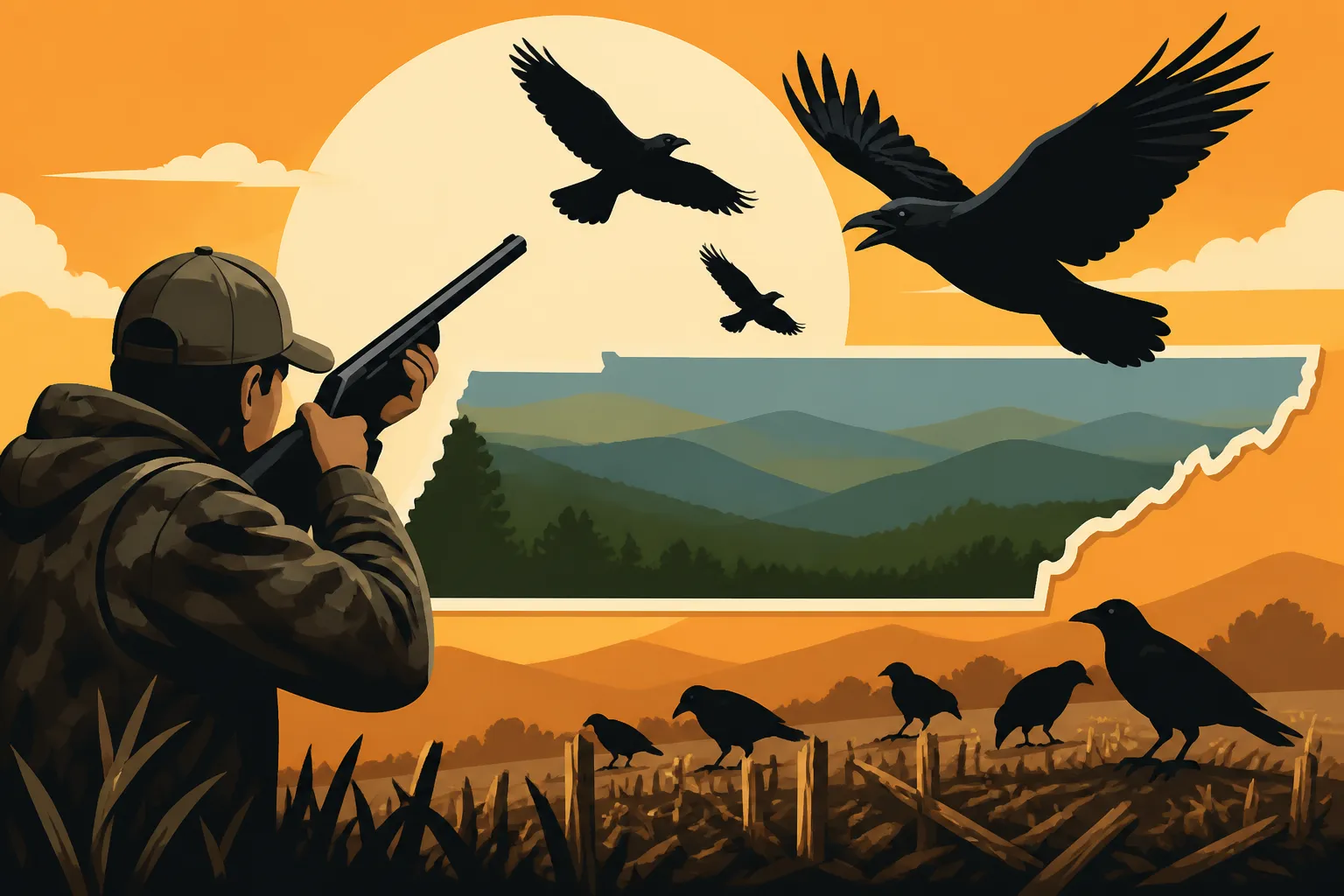
Many Tennessee hunters find themselves with a lingering itch for action once deer and turkey seasons close, or perhaps they're looking for a way to sharpen their skills and help local farmers at the same time. While often overlooked, crow hunting offers an incredibly engaging, year-round pursuit that demands sharp observation, calling prowess, and tactical setups. This guide will walk you through everything you need to know, from understanding Tennessee's unique regulations to mastering the art of setting up and calling these notoriously intelligent birds, ensuring you're ready for your next avian adventure.
Understanding Tennessee's Crow Hunting Regulations
Crow hunting in Tennessee isn't quite as straightforward as some other small game pursuits, mainly because crows are classified as migratory birds under federal law, even if they don't migrate as extensively as, say, ducks or geese. This classification means the Tennessee Wildlife Resources Agency (TWRA) must adhere to federal guidelines regarding hunting seasons and methods. The good news? You've got a lot of opportunity to get out there.
Federal Framework and State Interpretation
The federal Migratory Bird Treaty Act dictates that migratory birds, including crows, can only be hunted during specific periods. For many years, this translated into a rather generous but clearly defined season in Tennessee, often stretching from early fall through early spring, with no daily or possession limit. This long season gives hunters ample chance to pursue them. Unlike deer or turkey hunting, you won't find specific zones or restrictive bag limits for crows, which simplifies planning considerably. However, it's always wise to double-check the current year's Tennessee Small Game Season Rules in the TWRA hunting guide, as regulations can occasionally see minor adjustments.
The idea here is to manage populations while allowing recreational hunting. Crows are incredibly adaptable and intelligent, with strong social structures. While hunting can impact local populations, their overall numbers tend to remain robust due to their wide distribution and ability to thrive in various habitats, including close to human habitation. This makes them a fascinating quarry for hunters who appreciate a challenge beyond just pulling a trigger.
Legal Hunting Hours and Methods
One critical aspect of crow hunting in Tennessee, which sometimes trips up new hunters, is the legal hunting hours. Crows are diurnal, meaning they're active during the day. While most hunting seasons follow a "daylight hours" rule, the specific definition can vary slightly. For crows, hunting is generally permitted from one-half hour before official sunrise to one-half hour after official sunset. This extended window is a boon, especially on those short winter days or when you're trying to catch birds moving to or from roosts.
When it comes to methods, the TWRA allows common hunting practices. Shotguns are the most popular choice, typically in 12- or 20-gauge, using smaller shot sizes like 7.5 or 8. Rifles are generally not recommended or even legal in some areas due to safety concerns and the difficulty of getting a clean, humane shot on a small, fast-moving bird. Electronic calls are perfectly legal and, in fact, incredibly effective for drawing in wary crows. Decoys, whether simple silhouettes or full-bodied models, also play a significant role in convincing crows to commit to your setup. Just be mindful of local ordinances if you're hunting near developed areas; standard Tennessee Public Land Hunting Hours and firearms discharge setbacks still apply.
Essential Tactics for Successful Crow Hunting
Successfully hunting crows is less about brute force and more about finesse, understanding their behavior, and exploiting their social nature. These birds are sharp, and they learn quickly, making them a worthy adversary.
Scouting for Roosts and Feeding Areas
Just like Scouting With the Tennessee TWRA App for deer, crow hunting success starts with good scouting. Crows are creatures of habit, often using the same roosting sites for weeks or even months, especially during the colder months when large communal roosts can number in the thousands. These roosts are often found in dense timber, river bottoms, or pine plantations. Observing crow flight patterns in the late afternoon will often lead you right to these staging and roosting areas. Look for converging flight lines – crows coming from all directions to a central point.
Beyond roosts, identifying prime feeding areas is crucial. Crows are omnivores and will readily feed on agricultural fields (especially corn and soybeans after harvest), pastures with livestock (picking at grain or insects), freshly mowed hayfields, and even roadkill. Farmers often welcome crow hunters because crows can cause significant crop damage, especially to young corn or ripening fruit. Getting Private Land Permission in Tennessee on these agricultural lands can be a goldmine for consistent action. When scouting, pay attention to open areas bordering timber – these edges are natural travel lanes and often where crows feel comfortable feeding before retreating to cover.
Decoy Spreads and Blind Placement
Crows are highly visual birds, and decoys are critical for drawing them into range. A good decoy spread mimics a flock of crows feeding or reacting to an intruder. Simple, inexpensive plastic crow decoys or even homemade silhouettes can be effective. Position your decoys in an open area, such as a field edge or pasture, where they are highly visible from a distance. Some hunters like to place a few decoys on fence posts or low branches to simulate sentry birds.
Blind placement is equally vital. Crows have excellent eyesight and will quickly spot anything out of place. A natural ground blind brushed in with local vegetation is often the best choice. Think about blending into a fencerow, a stand of cedars, or the edge of a woodlot. The goal is to break up your outline completely. If you're hunting a field edge, consider Brushing In a Blind on a Field Edge aggressively. Hunters often use portable ground blinds, like those from GoHunt, which offer quick setup and excellent concealment. Ensure your blind allows for a clear field of fire while keeping you hidden from multiple angles. Crows will often circle overhead to investigate, so overhead cover can be beneficial if possible.
Calling Sequences and Techniques
Calling is arguably the most dynamic and exciting part of crow hunting. There's a wide range of calls, from simple distress squalls to aggressive fighting calls. Electronic callers are incredibly effective because they can produce realistic, loud, and sustained sequences that draw birds from a distance. Brands like FoxPro or Primos offer excellent electronic callers with a variety of crow sounds. When using an electronic caller, consider placing it 20-30 yards away from your blind, slightly to the side, to draw the crows' attention away from your position.
Start with a loud, aggressive "come here" call or a mobbing call to get their attention. Once crows start to approach, you can switch to distress calls, simulating a crow in trouble or being attacked by a predator like a hawk or owl. This often enrages them and makes them commit more readily. When they're close, a short, sharp "caw" can make them cup their wings and commit for a shot. Don't be afraid to experiment with different sequences. Sometimes, simply mimicking a single crow flying by can be enough to draw in curious birds. Remember, crows learn, so if a call sequence works once, it might not be as effective the next time in the same spot. Vary your approach. For inspiration, many of the principles of Coyote Calling in Tennessee Farm Country can be adapted to crow calling, particularly regarding understanding predator/prey vocalizations and setting up for wary animals.
Gear and Setup for Calling Crows
Just like any other hunting pursuit, having the right gear can make or break your crow hunting experience. It doesn't have to be overly expensive, but a few key items will significantly increase your success and comfort.
Shotguns and Ammunition Choices
For crow hunting, a 12-gauge or 20-gauge shotgun is typically your best bet. A semi-automatic or pump-action allows for quick follow-up shots, which can be crucial when multiple crows commit to your call. The specific Shotgun Gauge Choice often comes down to personal preference, but reliable operation is key. Barrel length isn't as critical as for turkey hunting, but something in the 26-28 inch range offers a good balance of swing and maneuverability.
When it comes to ammunition, lead shot is generally permissible for crows, unlike waterfowl. Common choices are 7.5 or 8 shot. These smaller pellets create a dense pattern, which is ideal for breaking up fast-flying crows at typical ranges (20-40 yards). Some hunters prefer 6 shot for a bit more punch, especially if shots might be longer. High-brass loads often provide a bit more velocity, which can be helpful. Pattern your shotgun with your chosen loads before heading to the field to understand its effective range. This is just good practice, whether you're chasing crows or Spring Turkey Hunting in Tennessee.
Electronic Callers and Manual Calls
An electronic caller is arguably the single most important piece of gear for serious crow hunting. Modern callers from companies like FoxPro or Primos come pre-loaded with a variety of realistic crow sounds, including common caws, distress calls, and "fight" calls. The ability to adjust volume and switch calls rapidly is invaluable. Some callers even have remote controls, allowing you to operate them from inside your blind without movement. Place the caller 20-30 yards in front of your blind and off to the side, so incoming crows focus their attention on the sound source rather than your hidden position.
While electronic callers are highly effective, don't discount manual calls. Hand-held crow calls can add a layer of realism and allow for more nuanced calling. A good friction call or an open-reed crow call can mimic individual caws, adding to the illusion of a full flock. Use manual calls to complement your electronic caller, perhaps giving a few quick "caws" as birds approach to reinforce the illusion or to make them commit. There's a certain satisfaction in calling a crow in purely with a hand call.
Blinds and Decoys
As mentioned, good concealment is paramount. A portable Using a Ground Blind on Tennessee Public Land is highly effective. Look for blinds with a low profile that you can easily brush into natural cover. Many GoHunt users swear by compact, easy-to-deploy blinds for their versatility. Camouflage patterns that match the local vegetation are best. Make sure your blind has shooting ports that allow you to cover incoming flight paths without excessive movement.
Decoys complete the picture. You don't need dozens, but a dozen or so can create a convincing spread. Place them strategically in an open area to be highly visible. If you're hunting in a field, scatter them like a feeding flock. If near timber, place some on elevated positions like stumps or low branches to mimic lookout crows. Some hunters even incorporate a predator decoy, like a stuffed owl or hawk, to trigger an aggressive "mobbing" response from the crows. The visual cue of decoys helps to pull the birds' focus away from your blind and makes them feel more secure approaching the calling sounds.
| Gear Item | Purpose | Key Considerations |
|---|---|---|
| 12/20 Gauge Shotgun | Primary firearm for engaging crows | Semi-auto or pump for quick follow-up shots; reliable action. |
| #7.5 or #8 Shot Ammo | Effective shot size for crow hunting | Dense pattern for small, fast-moving targets; high-brass often preferred for velocity. |
| Electronic Caller | Reproduces realistic crow sounds, draws birds | Variety of calls (distress, mobbing, caw); remote control; good volume. FoxPro and Primos are popular choices. |
| Manual Crow Call | Adds realism, nuance to calling | Good for fine-tuning calls as birds approach; can be used without an electronic caller. |
| Ground Blind | Concealment from sharp-eyed crows | Low profile, blendable camouflage, easy setup, sufficient shooting ports. GoHunt offers various portable options. |
| Crow Decoys (6-12) | Visual attraction, convinces crows to commit | Realistic appearance, visible from a distance, mix of feeding/alert positions; can include predator decoys. |
| Camouflage Clothing | Breaks up human outline | Full camo pattern (head-to-toe), suitable for local terrain, comfortable for extended sits. |
Common Challenges and Solutions in Crow Hunting
Even with the best gear and scouting, crow hunting can present its own set of challenges. Their intelligence and keen senses mean you'll need to adapt and overcome.
Wary Birds and Educated Flocks
Crows are incredibly intelligent and have excellent memory. If you hunt the same area frequently or use the same calling sequences repeatedly, they will become "educated" and increasingly wary. They'll recognize the calls as a trap or quickly pinpoint your location, circling high overhead without committing. This can be incredibly frustrating when you know the birds are in the area.
The solution is variety and mobility. Don't overhunt a single spot. If you have success in a particular field or woodlot, give it a few weeks before returning. Change up your calling sequences dramatically. Instead of always starting with an aggressive mobbing call, try a series of softer contact caws or even silent decoys only, waiting for passing birds to spot them before initiating a distress call. Mobility is also key; if birds aren't responding after 20-30 minutes, pack up and move to a new location. Use your GoHunt app or other mapping tools to find new potential spots, perhaps adjacent to public hunting grounds or in areas you've scouted for other species, like when you're Hunting West Tennessee Bottomland Deer. Sometimes, just a quarter-mile move can make all the difference.
Wind, Weather, and Sunlight
Like all hunting, weather plays a significant role. High winds can make calling difficult, as your sounds might not carry as far, and crows will often fly lower and faster, making them harder to spot and shoot. Heavy rain can also suppress crow activity, sending them to heavy cover. Bright, direct sunlight can make it harder for you to see incoming birds, especially if they're silhouetted against the sky, and can also create glare that gives away your position if your blind isn't perfectly positioned.
On windy days, set up downwind of where you expect birds to approach. Crows will often fly into the wind to get a better look at your setup, giving you a longer engagement window. Increase the volume of your electronic caller to compensate for wind dispersal. On bright days, ensure your blind offers good shade or that you're positioned so the sun is at your back, making it harder for crows to spot you. Overcast days are often ideal for crow hunting, offering soft, even light and typically calmer winds. If you're dealing with very cold or wet conditions, make sure your Clothing for a Tennessee Late Season is up to the task, as a comfortable hunter is a patient and successful hunter.
Ethical Considerations and Landowner Relations
While crow populations are generally robust, ethical hunting practices are still important. Always strive for clean, humane shots. Avoid sky-busting or taking shots at extreme ranges where the likelihood of wounding a bird is high. Pick your shots carefully and know your shotgun's effective range. After the hunt, always pick up your empty shotgun shells and any trash. Leave the area cleaner than you found it.
For landowners, crow hunting can be a sensitive topic. While many farmers appreciate hunters reducing crop damage, others may not understand or approve. Always be respectful and upfront when Asking a Tennessee Farmer for Permission. Explain that you are targeting crows, which are often considered pests, and emphasize that you will be safe, clean, and considerate. Offer to share any game you harvest, although crow meat is not typically consumed in the same way as other game birds. Building positive relationships with landowners is crucial for securing access and ensuring future opportunities, not just for crow hunting but for other pursuits like Hog Hunting Tennessee's Wild Boar as well.
Disclaimer
Please remember that hunting regulations can change. Always consult the latest Tennessee Wildlife Resources Agency (TWRA) hunting guide for the most current rules and regulations before heading into the field. This guide is for informational purposes only and does not supersede official TWRA guidelines.