Trapping Tennessee Muskrat and Beaver
Trying to manage nuisance muskrats or beavers on your property, or perhaps looking to expand your furbearer trapping skills, can feel like a daunting task in Tennessee. The waterways and wetlands of our state teem with these industrious creatures, and knowing how to effectively and ethically trap them requires a solid understanding of both their habits and the regulations. This comprehensive guide will walk you through everything you need to know about trapping muskrats and beavers here in Tennessee, ensuring you’re well-prepared for a successful season.
Understanding Tennessee's Trapping Regulations and Furbearer Seasons
One of the biggest hurdles for any aspiring or experienced trapper in Tennessee is navigating the ever-changing landscape of wildlife regulations. It's not just about knowing when you can legally set a trap; it's also about understanding the specific rules for certain areas, the types of traps allowed, and what permits you need. Ignoring these details can quickly turn a productive outing into a costly mistake or, worse, a violation of wildlife law. The Tennessee Wildlife Resources Agency (TWRA) sets these rules with conservation and public safety in mind, and staying informed is your first and most important step.
For muskrats, the trapping season typically runs concurrent with many of our other furbearer seasons, generally starting in November and extending through February or even into March. Unlike some game species, there usually aren't daily or seasonal bag limits on muskrats, reflecting their abundant population across the state. However, it's absolutely crucial to double-check the current TWRA Hunting and Trapping Guide each year, as dates can shift, and specific regulations might apply to certain Wildlife Management Areas (WMAs) or private lands enrolled in specific programs. Always have the most up-to-date information in your hand, or at least a digital copy on your phone, before heading out.
Beavers, being larger and often causing more significant property damage, also have a long and generous trapping season in Tennessee, mirroring the muskrat season from late fall through late winter. Similar to muskrats, there are typically no bag limits on beavers, encouraging their management, especially in areas where their dam-building activities can lead to flooding of agricultural fields, timberland, or even roadways. Their impact on local ecosystems can be substantial, making effective population control through trapping a valuable service to landowners and natural resource managers alike. Again, confirm these dates and any specific area restrictions with the TWRA’s annual guide.
Before you even think about putting a foot in the creek or a trap in the ground, you absolutely must possess the correct licensing. In Tennessee, anyone engaged in trapping furbearers needs a valid Tennessee trapping license. There are different options for residents and non-residents, as well as lifetime licenses for those committed to the sport. This license is separate from your general hunting and fishing licenses, and it signifies your intent to harvest furbearers. Make sure you understand all the specifics regarding Tennessee Trapping License Requirements well in advance of the season, as you don't want to be caught without the proper credentials in the field. Remember, these licenses fund vital wildlife conservation efforts across the state.
Locating Prime Muskrat and Beaver Habitat in Tennessee
Finding where muskrats and beavers live and travel is half the battle in successful trapping. These furbearers are highly aquatic, but they each have distinct preferences in terms of water bodies and bank characteristics. Simply showing up at any old creek won't cut it; you need to think like the animal, understand its needs for food, shelter, and security, and then pinpoint the areas where these needs converge. This strategic scouting phase is where many successful trappers spend a significant amount of their time, long before the season even opens.
Muskrats are relatively small, semi-aquatic rodents that thrive in stable, slow-moving water with abundant vegetation. Think marshy areas, edges of ponds, sluggish creeks, and ditches with plenty of cattails, bulrushes, and other emergent plants. You'll often find their tell-tale "push-ups"—mounds of vegetation built from below ice or water for feeding and breathing—or small, dome-shaped lodges made of mud and vegetation, especially in shallower wetlands. Look for well-worn trails or "runs" in shallow water or mud along banks, where they habitually travel between feeding areas and their dens. Their droppings, small pellets often found on logs or rocks near the water's edge, are another clear sign. The shallower, vegetated margins of Reelfoot Lake or slow tributaries of the Tennessee River often hold excellent muskrat populations, as do many farm ponds and drainage ditches across West and Middle Tennessee.
Beavers, on the other hand, are the master engineers of the animal kingdom, capable of drastically altering their environment. They prefer deeper, more permanent water sources like rivers, larger creeks, and deeper ponds, often where woody vegetation is abundant for building and feeding. The most obvious signs of beaver activity are their impressive dams, which can block streams and create extensive impoundments, and their large lodges constructed of sticks and mud, often in the middle of a pond or dug into a bank. Look for freshly cut trees, typically saplings or smaller diameter trees, with characteristic conical chew marks, or large "slides" leading from the bank into the water where they enter and exit. Scent mounds, made of mud and grass and typically topped with a castor secretion, are also key indicators of a beaver's territory. Areas along the Cumberland Plateau's larger streams or the sloughs and oxbows of West Tennessee's river bottoms are classic beaver strongholds. You might find a good starting point by utilizing mapping apps like GoHunt to analyze aerial photos for water features and potential access points, helping you pinpoint promising locations even before you step foot in the woods.
Effective scouting isn't just about identifying the species; it's about understanding the specific travel patterns and pinch points within their habitat. When scouting, pay close attention to constrictions in waterways, narrow channels between islands, dam crossovers, and distinct trails or slides that indicate high traffic. These are your prime locations for trap placement. Don't forget to consider public land access; while beavers and muskrats are often found on private land where they cause nuisance, they also inhabit many of Tennessee's Wildlife Management Areas and state forests. Always verify property boundaries, especially if you're near private holdings. Tools that allow you to analyze aerial photography and topo maps can be incredibly useful for this. Whether you're trying your hand at Scouting Tennessee Public Land Before Season or focusing on private tracts, digital mapping resources from providers like GoHunt are invaluable for understanding the lay of the land, identifying waterways, and even helping you respect Finding Tennessee Property Lines.
Selecting and Setting Traps for Muskrats and Beavers
Once you've identified promising locations, the next critical step is choosing the right traps and deploying them effectively and safely. Trapping isn't just about catching an animal; it's about making a clean, ethical catch and minimizing the chances of catching non-target species. Different traps excel in different situations, and understanding their mechanics and proper sets is paramount. Always prioritize safety when handling traps, as they are designed to hold animals and can cause serious injury if mishandled.
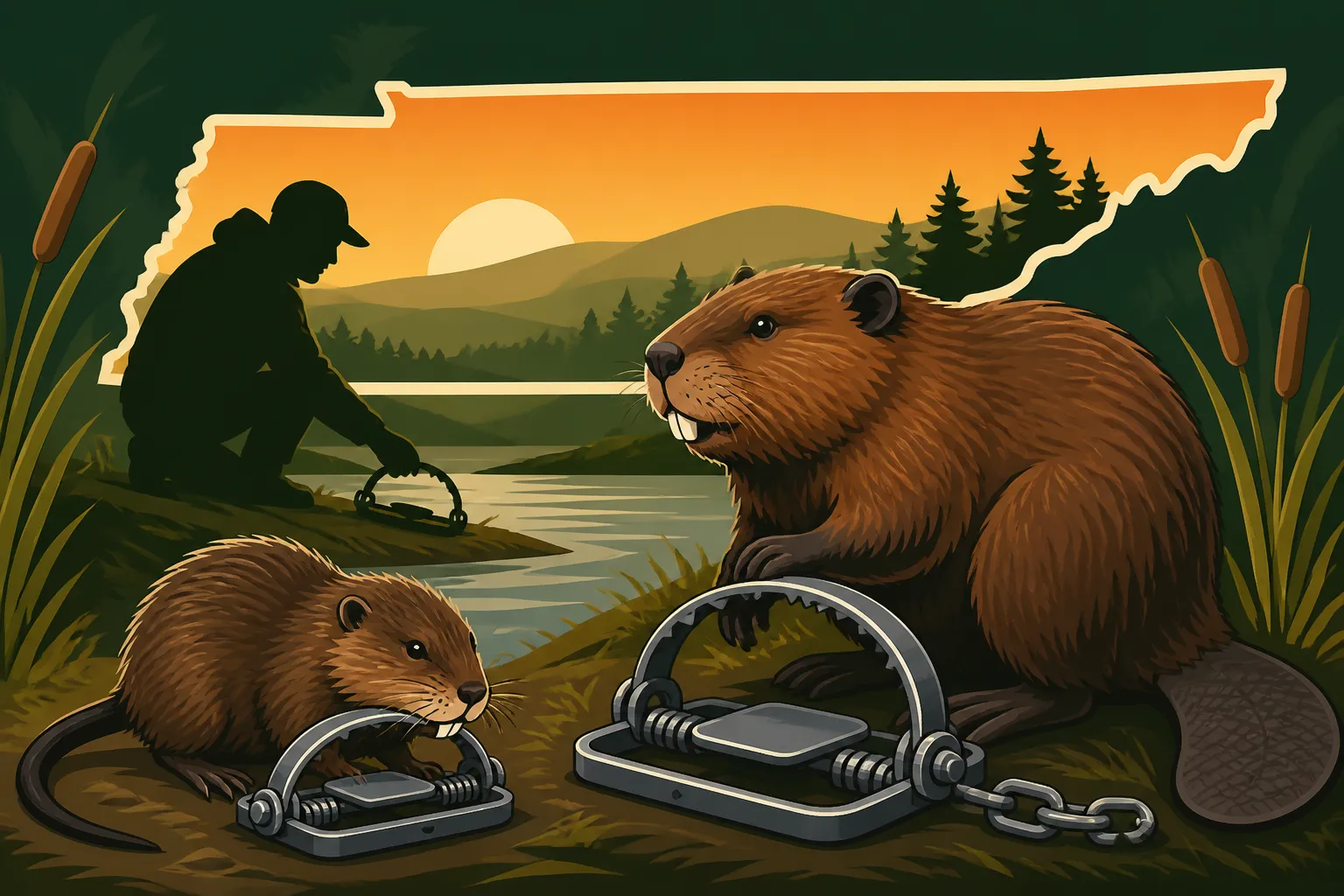
For muskrats, many trappers favor smaller body-grip traps, commonly known as Conibear traps. The 110 or 120 size is ideal for muskrats, as it's designed to dispatch the animal quickly and humanely. These traps are highly effective when placed in muskrat runs – those narrow, well-worn channels in shallow water or mud where muskrats frequently travel. You can also set them at the entrance to their lodges, feed beds, or den holes in the bank. The key is to position the trap so the muskrat must swim or walk directly through the jaws. Submerged sets are preferred to ensure a quick, clean kill and prevent the animal from struggling. Always stabilize your trap securely with stakes or wires to prevent it from being dislodged or dragged away.
Alternatively, leg-hold traps, typically size #1 or #1.5 coilsprings, can be very effective for muskrats, especially when set as a drowning rig. A "pocket set" involves digging a small hole into the bank at the water's edge, placing some lure or bait (like apple, carrot, or commercial muskrat lure) in the back, and then setting a leg-hold trap directly in front of the pocket, just under the water's surface. The trap chain is then affixed to a drowning wire or rod that leads into deep water, ensuring the captured muskrat quickly descends and drowns. A "colony trap," a specialized wire mesh trap, can also be used in muskrat runs, allowing multiple animals to enter but not exit. These are particularly good for high-traffic areas without needing bait.
Beavers require much larger, more powerful traps than muskrats, reflecting their size and strength. Body-grip traps, specifically the 330 size Conibear, are the workhorses of beaver trapping. These formidable traps deliver a quick, humane dispatch and are typically placed in channels, dam crossovers, or submerged entrances to beaver lodges and bank dens. When setting a 330, ensure it's fully submerged and stabilized with stout stakes on both sides to prevent it from being pushed aside. Funneling the beaver into the trap with natural materials like sticks or mud can significantly increase your success rate. Safety setters and safety clips are absolute necessities when deploying these powerful traps to prevent accidental injury.
Leg-hold traps are also widely used for beavers, with size #3 or #4 coilsprings or longsprings being common choices. These are almost always set as drowning rigs due to the beaver's incredible strength. A popular setup is the "castor mound set," where trappers build a small mound of mud or dirt near the water's edge and apply beaver castor lure to it, enticing beavers to investigate. A submerged leg-hold trap is then placed directly in front of the mound, with a drowning rig leading into deep water. Another effective method is a "run-through" set where a leg-hold is placed in a well-traveled beaver slide or channel, often requiring some subtle guiding with sticks. For deep-water situations, specifically designed beaver cages can also be effective, especially for nuisance removal in sensitive areas where body-grip traps might be restricted.
Here’s a quick overview of common traps for these furbearers:
| Trap Type | Target Animal | Common Sizes | Typical Placement | Pros | Cons |
|---|---|---|---|---|---|
| Body-Grip (Conibear) | Muskrat | 110, 120 | Submerged runs, den entrances, feed beds | Quick, humane kill; effective in water | Higher risk for non-target catches if not careful |
| Leg-Hold (Drowning) | Muskrat | #1, #1.5 coilspring | Pocket sets, castor mound sets, run-throughs in shallow water | Versatile, allows for lure use | Requires proper drowning setup for ethics |
| Colony Trap | Muskrat | Various wire sizes | Submerged in runs | Catches multiple animals; no bait needed | Less versatile, specific to runs |
| Body-Grip (Conibear) | Beaver | 280, 330 | Channels, dam crossovers, lodge entrances | Powerful, effective kill; good for large animals | Very dangerous to set; requires care |
| Leg-Hold (Drowning) | Beaver | #3, #4 coilspring/longspring | Castor mound sets, slides, dam breaks | Strong hold, allows for lure use | Requires robust drowning setup |
Ethical Practices and Post-Harvest Handling for Trappers
Trapping is a privilege, not a right, and maintaining the highest ethical standards is paramount for its continued acceptance and for the welfare of the animals we pursue. Responsible trapping extends beyond merely setting a legal trap; it encompasses minimizing suffering, preventing non-target catches, and properly caring for the harvested animal. The reputation of all trappers hinges on how each individual conducts themselves in the field.
A fundamental aspect of ethical trapping is checking your traps regularly. The TWRA mandates specific check times, usually within a 24- to 36-hour window, and this is for a good reason. Frequent checks ensure that any captured animal is either quickly dispatched or released if it's a non-target species. Leaving traps unchecked for extended periods is not only illegal but also incredibly inhumane, leading to unnecessary stress, exposure, or injury for the animal. When planning your trapline, factor in access and travel time to ensure you can reach every trap within the legal timeframe, regardless of weather or terrain. For remote areas, considering a well-stocked First Aid Kits for Remote Cherokee Forest Ground for yourself is also smart, as safety should always be a priority.
When a non-target animal is caught, it's a trapper's responsibility to release it unharmed if possible. This means having the tools and knowledge to safely handle various species. For smaller, non-threatening animals caught in leg-holds, a catch pole or specialized release tool can be used. For larger or more aggressive animals, extreme caution is necessary, and sometimes contacting a local TWRA officer for assistance is the safest and most responsible course of action. Preventing non-target catches begins with careful trap placement and appropriate trap selection; for instance, avoiding body-grips in areas with high domestic pet or protected species traffic. Understanding Tennessee Wildlife Violation Penalties also underscores the importance of proper trap management and ethical practices.
Once an animal is humanely dispatched, proper post-harvest handling is crucial, especially if you intend to market the fur or process the meat. For muskrats and beavers, the fur is the primary commodity, and its value is directly related to how well it's handled immediately after the catch. This involves skinning, fleshing (removing fat and membrane from the hide), and then stretching and drying the fur. Prompt processing is key, particularly in warmer weather, to prevent spoilage and ensure the highest quality pelts. Taking the time to learn proper skinning and fleshing techniques will make a significant difference in the final product.
The process of skinning and preparing the fur can be an art in itself, and there are many resources available from experienced trappers and fur buyers to guide you. Keeping your knives sharp and working in a clean environment are fundamental. For beavers, special care is needed due to their size and the thickness of their hide and fat layer. Once prepared, the pelts are typically sold to fur buyers who then process them further for the garment industry. Staying informed about Tennessee Muskrat and Mink Trapping Trends can help you understand the market value and demand for the furbearers you're harvesting. Always remember that proper handling not only ensures you get the best return for your efforts but also respects the life of the animal you've taken.
Disclaimer
The information provided in this guide is for general informational purposes only and is not a substitute for the official regulations published by the Tennessee Wildlife Resources Agency (TWRA). Hunting and trapping regulations can change frequently. It is the individual hunter's and trapper's responsibility to consult the most current TWRA Hunting and Trapping Guide and any applicable local laws or WMA regulations before participating in any hunting or trapping activities. Always prioritize safety and ethical practices in the field.