Deer Drives With Three or Four Hunters
It can be incredibly frustrating trying to move deer in Tennessee’s diverse, often thick, landscape when you’re hunting solo or with just one buddy. You know the deer are there, tucked into those deep hollers or dense cedars, but getting them to budge into a clear shooting lane feels like an impossible task. This guide is all about empowering small hunting parties of three or four to effectively execute deer drives, turning those elusive whitetails into tangible opportunities and making the most of your time in the woods.
Understanding the Dynamics of Small Deer Drives
When most hunters hear "deer drive," they often picture a large group of guys pushing a massive block of timber, a tactic that can be chaotic and even dangerous if not meticulously organized. But a small deer drive with just three or four hunters is a completely different animal. It’s a nuanced, strategic maneuver that relies on precision, communication, and a deep understanding of deer behavior, especially effective in Tennessee’s varied terrain, from the sprawling hardwoods of the Cumberland Plateau to the dense river bottoms of West Tennessee.
Why Small Drives Work in Tennessee's Terrain
Tennessee's hunting landscape is rarely flat and open. We have steep ridges, deep cuts, dense pine thickets, vast stretches of mature hardwoods, and tangled creek bottoms. These features, while challenging for still-hunting, are actually perfectly suited for small, well-executed drives. A large drive can blow deer out of an area completely, sending them scattering in unpredictable directions. A small drive, however, focuses on nudging deer just enough to get them moving along natural escape routes or through known travel corridors.
Think about a narrow finger ridge dropping into a creek bottom on public land. A single hunter might struggle to effectively still-hunt it, but with three or four hunters, you can position posts at strategic pinch points where deer are likely to cross, while one or two pushers slowly work their way through the cover. Deer often prefer to slip out the sides rather than bolt directly away from pressure, and a small, controlled drive allows you to anticipate these movements. It’s about leveraging the terrain to your advantage, identifying those bottlenecks, saddles, and creek crossings that naturally funnel deer, and using minimal pressure to guide them. This method is particularly effective in areas where deer are used to some human activity but aren't constantly being blown out by large groups.
The Role of Each Hunter
In a successful three or four-person drive, every hunter has a critical, distinct role. This isn't just about walking through the woods; it's about a coordinated effort where each person understands their objective and how it contributes to the overall success.
- The Pusher(s): Typically, one or two hunters will be the "pushers." Their job isn't to crash through the woods like a freight train, but to create just enough calculated disturbance to get deer moving. They need to move slowly, deliberately, making noise that sounds natural yet persistent. This might involve pausing, scraping a boot on the ground, snapping a small branch, or using light vocalizations. Their pace is crucial – too fast, and deer will burst out; too slow, and they'll simply lie tight or slip away undetected. They need to pay close attention to the wind, moving crosswind or upwind to push deer into the wind towards the posters, or sometimes with the wind if the terrain dictates a specific escape route. They're constantly evaluating deer sign and anticipating where the deer want to go.
- The Post(s): The remaining two or three hunters are the "posts" or "standers." These are the shooters, strategically positioned in key locations where deer are most likely to emerge. Their role demands extreme patience, quiet movement to their posts, and acute awareness of their surroundings. They need to identify their shooting lanes immediately upon getting into position, mentally marking distances and potential obstacles. Posts must remain absolutely silent and still, blending into the environment as much as possible. They are the ones who convert the pushers' efforts into a successful harvest. Understanding Wind and Thermals on a Ridge System is particularly important for posters, as deer will often use these to their advantage when escaping.
Planning Your Drive: Strategy and Communication
The success of a small deer drive hinges almost entirely on meticulous planning and flawless communication. You can't just wander into the woods and hope for the best; you need a strategy tailored to the specific piece of ground you're hunting and clear lines of communication among your team.
Scouting and Identifying Drive Corridors
Before you ever step foot in the woods on hunt day, you need to do your homework. This means serious scouting. Look for natural funnels, pinch points, dense bedding areas, and established deer trails. If you're hunting the Cumberland Plateau, this might mean identifying saddles between ridges or narrow draws that deer use to travel between feeding and bedding areas. In West Tennessee, it could be a small block of timber surrounded by fields, or a thick fencerow leading to a creek. Use mapping apps like GoHunt to mark potential drive boundaries, the location of thick cover, and optimal stand locations for your posts. This digital scouting can save you a lot of legwork and help visualize the drive before you're on the ground.
Walk the prospective drive area if possible. Look for fresh tracks, rub lines, and scrape lines that indicate current deer movement. Note where deer are likely to bed during the day. Often, deer will bed on south-facing slopes to catch the sun on cold days, or in thick cover near a reliable food source. When you're scouting, try to determine the most probable escape routes. Deer are creatures of habit and will often use the path of least resistance or a well-worn trail to avoid danger. By understanding these escape routes, you can effectively position your posts to intercept them. This pre-season reconnaissance is also a great time for Scouting Tennessee Public Land Before Season, helping you identify potential areas that hold deer.
Essential Communication and Safety Protocols
Communication is the lifeblood of a small deer drive. Before anyone moves, gather your team and clearly outline the plan. Everyone needs to know:
- The boundaries of the drive: Where it starts, where it ends, and any no-go zones.
- Each person's role: Who is pushing, who is posting, and their specific starting and ending points.
- Expected deer movement: Where you anticipate deer will come from and where they will go.
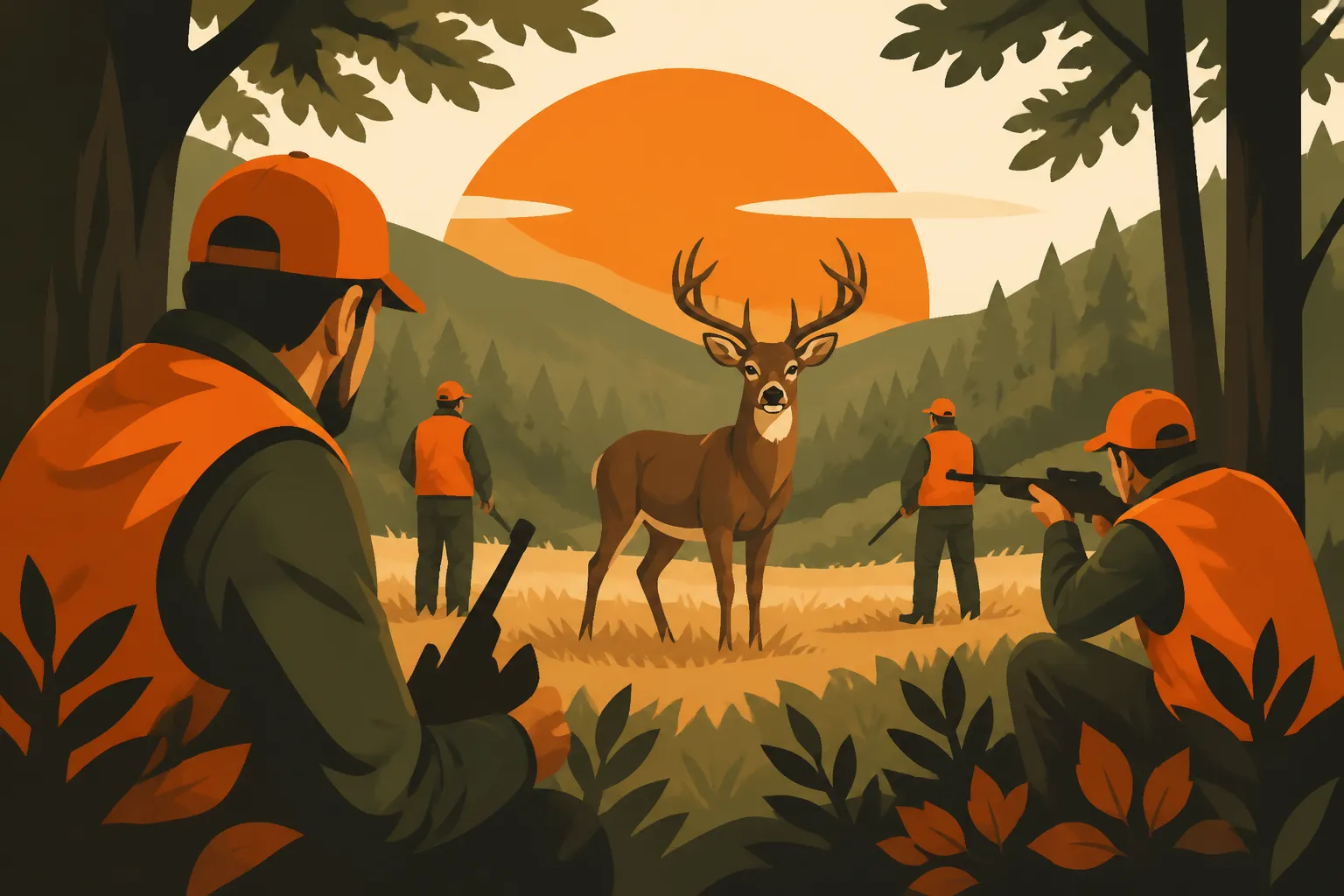
- Shooting lanes and safe zones: Establish clear zones of fire for each poster, ensuring no one is shooting in the direction of another hunter. Blaze orange is not just a recommendation; it's a critical safety measure, especially during gun season. Make sure everyone wears sufficient blaze orange or pink.
- Communication methods: Two-way radios are excellent for maintaining contact. Establish clear, concise codes or phrases. For instance, "moving" to indicate a pusher has started, "posted" when a stander is in position, or "deer moving" to alert others. Avoid unnecessary chatter.
- Contingency plans: What if a deer breaks out early? What if a pusher gets disoriented? Have a plan for regrouping or adjusting mid-drive.
One highly effective tactic is to have your posts in position and ready before the pushers start moving. Once posts are set, they can signal "all clear" to the pushers. Then, the pushers begin. This sequential setup ensures maximum safety and minimizes the chance of posts being seen or heard by deer before the push even begins. Remember to discuss retrieval plans for harvested deer. No one wants to be Tracking a Deer Through Tennessee Leaf Litter alone, especially as daylight fades. A small team can make retrieval much easier, particularly in rugged terrain.
| Hunter Role | Primary Objective | Key Actions | Safety Considerations |
|---|---|---|---|
| Pusher 1 | Gently move deer towards posts | Slow, deliberate movement; vary noise; follow terrain features. | Maintain awareness of post locations; do not rush; stay within bounds. |
| Pusher 2 | Flank the main push; cover escape routes | Move slightly wider; create side pressure; communicate deer movement. | Coordinate pace with Pusher 1; avoid pushing deer directly at posts. |
| Poster 1 | Intercept deer on anticipated path 1 | Absolute stillness; scan shooting lanes; identify deer early; shot placement. | Confirm safe backdrop; know other hunters' positions; wear blaze orange. |
| Poster 2 | Intercept deer on anticipated path 2 | Extreme patience; use natural cover; remain silent; be ready for quick shots. | Strict adherence to firing lanes; no shooting outside designated area. |
Executing the Drive: Pushing and Posting Tactics
With your plan in place and roles assigned, it's time to execute. This is where your scouting and communication pay off, turning theory into practice. Each team member has a distinct set of tactics to employ for maximum effectiveness.
The Pushing Team: Movement and Noise
For the pushing team, the art lies in consistency and subtlety. Your goal isn't to scare deer into a full-blown panic sprint, but rather to make them feel just uncomfortable enough to start moving, ideally walking or trotting, towards the perceived safety of another area – which happens to be where your posts are waiting.
Start your push slowly, allowing the deer to process the subtle increase in pressure. A pusher might start by walking at a normal pace, then pause for a minute or two, letting the woods settle before moving again. This stop-and-go method often works wonders, as deer will try to circle back or slip out quietly before they commit to a full run. When you do move, vary your noise. Don't just walk loudly. Scrape your boots through leaves, tap a tree with a stick, or make low, guttural grunts every now and then. This mimics natural animal sounds mixed with human presence, which can be more effective than constant, overwhelming noise. Your pace should be slow enough that deer have time to react, but not so slow that they simply lie down and let you pass. A good rule of thumb is to move at roughly half the pace you would if you were still-hunting, constantly scanning ahead and to the sides.
Keep an eye on any fresh deer sign as you move. If you suddenly hit a patch of hot tracks, slow down even further. This indicates deer were very recently in that spot, and they might still be nearby, trying to figure out what's happening. Use the terrain to your advantage. If you're pushing a steep hollow, try to stay on the contour or slightly above it, making deer feel pressured to move up or across to the next ridge, where your posts might be waiting. Remember that deer are experts at slipping out the sides of a drive, especially in thick cover. If you have two pushers, one can stay on the main line while the other works a slightly wider flank, adding pressure to prevent deer from breaking out prematurely. This technique is often used in Deer Drives on Tennessee Public Land, where the terrain provides ample escape cover.
The Posting Team: Positioning and Patience
The posting team has arguably the most challenging job: remaining absolutely motionless and silent, often for extended periods, and then making a quick, ethical shot when the moment arises. Your positioning is paramount. As discussed in the planning phase, you should already know your assigned post based on the expected deer movement. Once you arrive at your spot, move as quietly as humanly possible. Any snapped twigs or rustling leaves could alert a keen-nosed whitetail.
Once at your post, immediately identify your primary shooting lanes. Where are deer most likely to emerge? What obstacles are in the way? Mentally mark distances to trees or landmarks to help with range estimation. Use natural cover to break up your silhouette, whether it's the trunk of a large oak or a dense cedar thicket. Set up so you have a clear view down the expected travel corridor without exposing yourself. If you're on a field edge, consider Brushing In a Blind on a Field Edge to enhance your concealment. Then, it's a waiting game. Absolute patience is key. Deer often approach cautiously, stopping to look and listen before committing to crossing an opening. Resist the urge to fidget, check your phone, or make any unnecessary movements. Keep your rifle or shotgun shouldered, or your bow ready, pointed in a safe direction but prepared to swing into action.
When a deer appears, let it get clear of any other hunters and assess the shot. Don't rush. Wait for an ethical shot opportunity, especially if the deer is moving. If it stops, take a deep breath and make a precise shot. If it's trotting or running, lead it appropriately based on its speed and distance. Once the shot is taken, if successful, immediately communicate with your team. Even if you miss, it's important to let your team know, especially the pushers, so they can adjust their expectations. Remember, your ultimate goal is a safe and ethical harvest, and the deer drive is simply a means to create that opportunity. When you're Posting a Drive Around a River Bottom, be extra mindful of water features and their impact on deer movement.
Common Mistakes and How to Avoid Them
Even with the best planning, small deer drives can go awry. Understanding the common pitfalls and proactively addressing them can drastically improve your success rate and ensure a safer, more enjoyable hunt.
Overdriving and Under-Posting
One of the most frequent mistakes, particularly with new drive teams, is overdriving the area or, conversely, not having enough posts to cover the escape routes. Overdriving means the pushers move too fast, too loud, or cover too much ground, sending deer into a full-blown panic. When deer are truly spooked, they become unpredictable. They might run directly through a thicket, vault over a fence, or even circle back through the pushers, often avoiding the prepared posts entirely. It's like trying to catch smoke – once it's dispersed, it's nearly impossible to gather again.
To avoid overdriving, emphasize a slow, deliberate pace for your pushers. Remind them their job is to nudge, not stampede. Encourage them to pause frequently, listen, and adjust their speed. If deer are busting out early on the sides, the pushers might be moving too quickly or not covering enough width. This is where having two pushers on slightly different lines can be advantageous. On the flip side, under-posting happens when you don't have enough hunters to cover all the likely escape routes. With only three or four hunters, you simply can't cover every angle. This is where your detailed scouting comes in. You must identify the most probable escape routes and prioritize covering those. If you have a known pinch point and another less likely escape trail, focus your posts on the primary route. Sometimes, this means accepting that a deer might slip out, but you've maximized your chances where it's most likely. If you're looking for new areas, consider Finding Ground Others Walk Past to reduce competition and potentially find less pressured deer for your drives.
Losing Communication and Focus
Another critical error is the breakdown of communication or a lapse in focus. This can happen for a myriad of reasons, from dead radio batteries to hunters simply getting distracted. When communication fails, the coordinated effort falls apart. A pusher might inadvertently push deer directly towards a poster who isn't ready or isn't aware of the deer's approach. Or, a poster might get bored and start moving, spooking deer that were subtly approaching.
To prevent this, ensure all communication devices are fully charged and tested before the hunt. Establish strict guidelines for radio usage – only essential communication, clear call signs, and concise messages. Remind everyone that silence from a poster means they are focused and ready. For pushers, staying focused means constantly observing the terrain, looking for deer sign, and listening for sounds of movement ahead. It's not just about walking; it's about actively hunting with every step. For posters, maintaining focus means scanning shooting lanes continuously, anticipating where a deer might appear next, and resisting the urge to check their phone or shift around. Think of yourself as a statue, perfectly still, until the moment of truth. If you're hunting during the challenging Hunting the Late-Season January Lull, focus is even more important as deer movement might be subtle and sporadic.
Finally, always conduct a post-drive debrief. What worked well? What didn't? Did deer break out where you didn't expect them? Did someone feel unsafe at any point? Learning from each drive, whether successful or not, helps refine your tactics for the next one. This continuous improvement is key to becoming an effective small drive team in the Tennessee woods.
Disclaimer
Hunting is an inherently dangerous activity. Always prioritize safety, understand and follow all Tennessee Wildlife Resources Agency (TWRA) regulations, and ensure you have the proper licenses and permits before heading afield. The information provided here is for educational purposes only and should not replace professional instruction or local regulations.