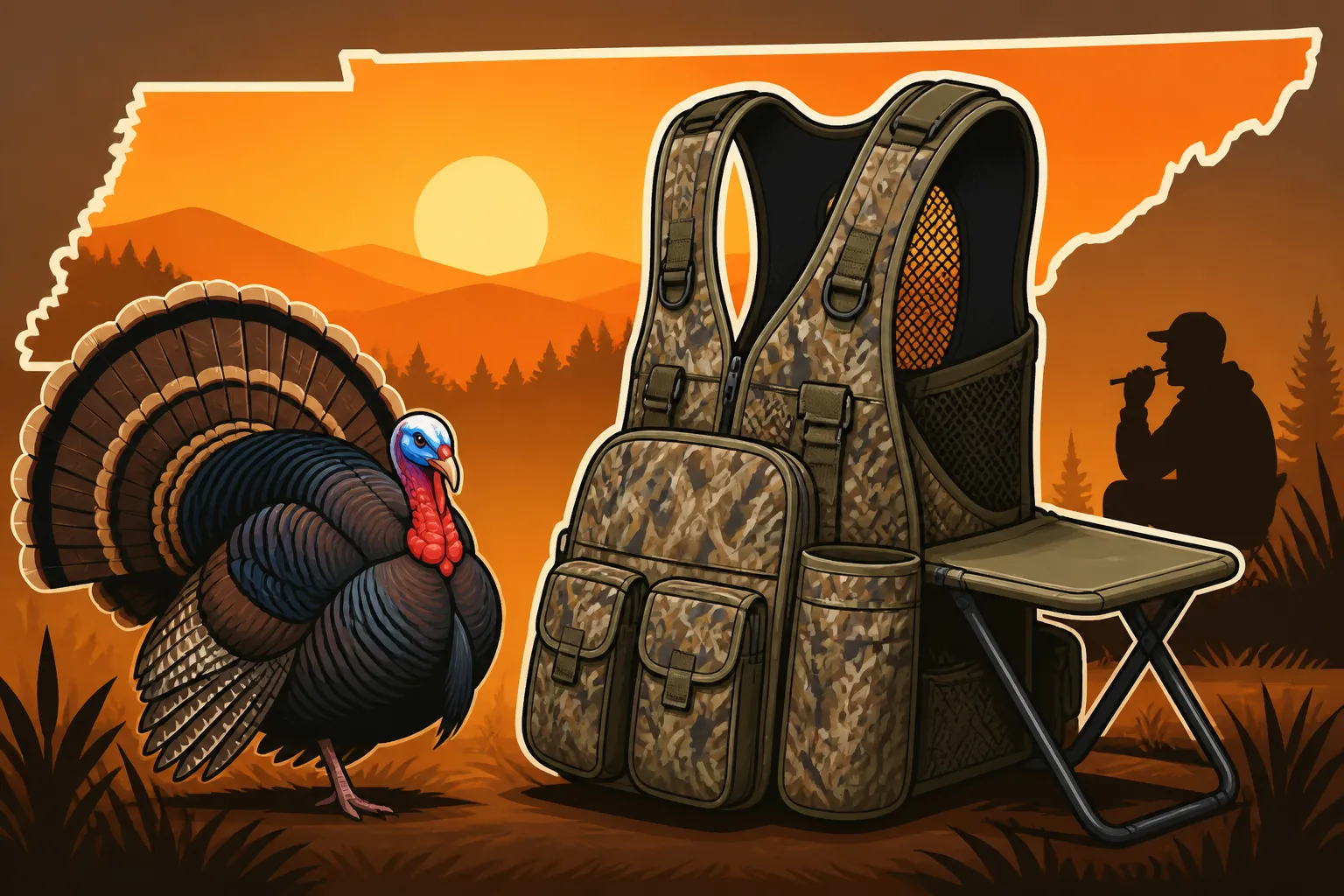
Turkey Vests With a Kickstand Seat
There's nothing quite like the sound of a spring gobbler hammering on the roost, but there's also nothing quite like the ache in your lower back after an hour or two of sitting against a hard tree trunk or on a damp, rocky hillside. For years, turkey hunters have endured uncomfortable sits, shifting constantly, trying to find that sweet spot that just doesn't exist. This guide is all about changing that experience, diving deep into the world of turkey vests equipped with a kickstand seat, and why they’ve become a game-changer for Tennessee’s dedicated gobbler chasers.
The Core Problem: Uncomfortable Waits and Back Pain
Let's be real, turkey hunting isn't always about fast-paced action and run-and-gun tactics. Often, it's a waiting game, a test of patience as you listen for that faint gobble, trying to pinpoint where that tom is heading. And during those waits, comfort can make or break your focus and ultimately, your success.
The Reality of Spring Turkey Hunting: Long Sits and Tough Terrain
Spring turkey season in Tennessee can throw a lot at you. One morning, you might be perched on a steep ridge in the Cumberland Plateau, listening to a distant gobbler, while the next you’re nestled against a lone oak on a flat West Tennessee field edge. The ground beneath you can be rocky, muddy, full of roots, or just plain uneven. It's rarely a comfortable, padded bench, and the weather can fluctuate wildly, from chilly, damp mornings to warm, sunny afternoons. You're asked to sit still, often for extended periods, without fidgeting or making noise that might give away your position. It’s a challenge to remain focused on the subtle sounds of the woods when your body is screaming at you to shift positions. This kind of discomfort can lead to premature movements, missed opportunities, and simply a less enjoyable hunt.
Imagine calling a bird in for what feels like an eternity, hearing him get closer and closer, only for a sudden cramp in your back or a numb leg to force a slight adjustment just as he steps into view. That's the heartbreak many of us have faced, and it’s a direct result of trying to find comfort in an inherently uncomfortable environment. Whether you're trying to coax a bird off the roost or calling one across a field, the need for stillness and comfort is paramount.
Why Traditional Seats Fall Short
For years, hunters have improvised. We’ve carried flimsy foam pads, inflatable cushions, or just resigned ourselves to finding the "least uncomfortable" rock or stump available. These traditional solutions often fall short in several critical ways. Foam pads might offer a thin barrier against the cold, damp ground, but they do little for actual ergonomic support. They compress, slide around, and often end up soaked or torn. Inflatable cushions are better for padding but can be noisy to adjust, prone to punctures, and still don't provide any back support.
Relying on natural elements like stumps or downed logs is often a roll of the dice. You might get lucky and find a perfectly sized, stable seat, but more often than not, you're dealing with something too tall, too short, too wobbly, or riddled with insects. And let's not forget the sheer inconvenience of trying to relocate your "perfect" stump every time you need to move a hundred yards to intercept a bird. These makeshift solutions are a testament to our desire for comfort, but they rarely deliver the consistent, reliable support a dedicated turkey hunter truly needs. We often compromise our stealth and patience trying to manage these inadequate seating options.
Enter the Kickstand Turkey Vest: A Game Changer for Comfort
This is where the kickstand turkey vest steps in, offering a revolutionary approach to hunter comfort. It's not just a vest with more pockets; it's a mobile, supportive seating system built right into your gear.
What Exactly is a Kickstand Turkey Vest?
At its heart, a kickstand turkey vest is a highly specialized hunting vest designed with an integrated, deployable seat system. Imagine a comfortable, padded seat that's always with you, along with a frame or set of "legs" that fold out from the back of the vest, allowing you to lean back and relax without a tree or natural support. When you get to your chosen setup location, whether it's against a sparse cedar tree, a fence row, or out in an open field, you simply activate the kickstand.
Typically, this involves releasing a buckle or two and deploying a sturdy frame, often made of lightweight aluminum or durable composites, that extends downwards and backwards. This frame acts like a pair of stilts, creating a stable, elevated backrest and a small, often padded, seating surface. It's designed to distribute your weight, keep you off the cold, wet ground, and most importantly, provide crucial lumbar support. The beauty of it is that it's all integrated, meaning no extra chairs to carry, no fumbling with separate pads. It's always right there, ready to give you a comfortable perch. Many hunters find resources like GoHunt incredibly useful for comparing different kickstand models and understanding their unique features.
The Ergonomics of Extended Comfort
The real magic of a kickstand turkey vest lies in its ergonomic design. Sitting comfortably for extended periods is about more than just a soft surface; it's about proper posture and support. These vests are engineered to provide just that. The integrated backrest portion supports your spine, preventing that debilitating slouch that leads to lower back pain. By elevating you slightly off the ground, it also keeps your hips and knees in a more natural, less strained position.
Think about the difference between squatting in the woods for an hour versus sitting in a comfortable chair. A kickstand vest aims to bring that chair-like comfort into the field. This support allows for better blood circulation, reduces muscle fatigue, and ultimately, helps you remain motionless and focused on the hunt for much longer. When you're not constantly shifting or trying to ease an ache, your attention is entirely on the sounds and sights of the woods, increasing your chances of spotting that wary gobbler before he spots you. This enhanced comfort is invaluable when you're trying to Hunt the Rut in Early November or simply sitting patiently for a stubborn spring bird.
Hands-Free and Ready to Shoot
Beyond just comfort, the practical advantage of a kickstand vest is significant. When you're comfortably seated and properly supported, your hands are free. No more trying to balance your shotgun while fumbling with a call or trying to brace yourself against a rough tree. You can rest your gun across your lap, have your calls easily accessible, and your body is in a relaxed, yet ready, posture.
This "ready" posture is critical when that gobbler finally commits. Because you're already stable and supported, transitioning from a seated position to shouldering your shotgun is a smoother, quieter, and quicker motion. You eliminate the need for extra fidgeting to get comfortable or stable just as the bird is stepping into range. It minimizes unnecessary movement, which can often be the difference between a successful shot and a spooked turkey. For example, if you're trying to Call a Tennessee Gobbler Off the Roost, being perfectly still and ready as he pitches down is paramount. When researching different models, online platforms like GoHunt often feature reviews highlighting how seamlessly hunters can go from rest to ready with various kickstand designs, a crucial factor for fast-action moments.
Key Features to Look for in a Kickstand Turkey Vest
Not all kickstand vests are created equal. When you're investing in one, it pays to know what features truly matter for your hunting style and the rugged landscapes of Tennessee.
The Kickstand Mechanism Itself
This is the heart of the vest, so pay close attention. You'll find a few primary designs. Some vests feature an integrated frame that folds out, often with two or four "legs" that extend to the ground. Others might have a more minimal, flip-out seat that relies on a single support leg or a rigid frame built into the lower back of the vest that simply props you up.
Consider the stability. A wider base and more contact points with the ground generally mean better stability, especially on uneven terrain like a rocky ridge or a soft creek bank. Deployment speed is also key. Can you quietly and quickly deploy the seat with minimal fumbling? In a tense situation, every second counts. Weight and bulk when folded are also factors. You don't want a vest that feels like a cumbersome backpack once the seat is stowed. Some mechanisms are sleek and integrate almost invisibly, while others might add a bit more heft. Look for durable hinges and strong materials that can withstand repeated use in the field.
Storage Capacity and Organization
A turkey vest is fundamentally a mobile command center, and a kickstand vest should be no exception. You're going to be carrying a lot of gear: multiple calls, decoys, water, snacks, gloves, a face mask, and perhaps even a Thermacell.
Look for a vest with intelligently designed pockets. Dedicated pockets for different types of calls (slate, box, mouth calls) are a huge plus, often with magnetic closures or secure flaps to keep them quiet and protected. Water bladder compatibility is a must for staying hydrated during long spring days. Many vests include external pouches or straps for carrying a small decoy or two. Don't overlook smaller details like secure zipper pulls that won't jingle, ample internal pockets for licenses and other essentials, and quick-access pouches for your phone or rangefinder. Consider what you typically carry and whether the vest has a logical place for everything. It's often helpful to consult gear reviews on sites like GoHunt to see real-world feedback on a vest's organization and storage.
| Feature | Description | Benefits for Turkey Hunters |
|---|---|---|
| Kickstand Type | Integrated frame (2-4 legs) vs. rigid backrest/single leg | Stability: Better on uneven ground. Speed: Quick, quiet deployment. Comfort: Consistent back support. |
| Call Pockets | Dedicated, padded pockets for slate, box, mouth calls, striker sleeves | Organization: Keeps calls quiet, protected, and easily accessible. |
| Water Bladder | Internal sleeve and hose routing for hydration pack | Hydration: Stays hydrated hands-free during long sits. |
| Decoy Storage | External mesh pockets or compression straps for fanning or full-body decoys | Versatility: Carries decoys efficiently without adding bulk to main compartment. |
| Material/Weight | Durable, quiet fabrics (e.g., ripstop nylon, quiet fleece) vs. heavy canvas. Lightweight frames (aluminum, carbon fiber) | Durability: Withstands harsh conditions. Stealth: Reduces noise. Comfort: Less fatigue on long walks. |
| Adjustability | Padded shoulder straps, waist belt, sternum strap, torso length adjustments | Fit: Custom fit for comfort and weight distribution. Mobility: Prevents rubbing and bouncing during movement. |
Materials, Durability, and Weight
A good turkey vest, especially one with a kickstand, needs to be built tough to withstand the rigors of Tennessee's varied terrain and weather. Look for durable, abrasion-resistant fabrics that are also quiet. Ripstop nylon or heavy-duty polyester are common choices. Some vests might incorporate quieter materials like brushed tricot or fleece in key areas to prevent noise when moving or reaching for calls.
Weather resistance is another factor. While few vests are fully waterproof, many offer DWR (Durable Water Repellent) coatings or integrate water-resistant panels to keep your gear dry during a sudden spring shower. The frame material for the kickstand itself should be robust yet lightweight, often aluminum or a high-strength composite.
Finally, consider the overall weight. While a kickstand vest inherently adds a little more weight than a minimalist vest, the benefit of comfort usually outweighs the extra ounces. However, if you do a lot of Run-and-Gun Turkey Tactics on Public Land or often find yourself covering significant ground, a lighter model will be appreciated. Balance durability with reasonable weight.
Adjustability and Fit
Just like a good backpack, a good turkey vest needs to fit you. A poorly fitting vest can cause chafing, uneven weight distribution, and general discomfort, negating some of the benefits of the kickstand. Look for vests with adjustable shoulder straps, a padded waist belt (which helps distribute weight from your shoulders to your hips), and a sternum strap.
Some high-end vests even offer adjustable torso lengths, allowing for a truly custom fit. Try on the vest with all your typical gear loaded into it to get a realistic sense of its fit and feel. Walk around, sit down, deploy the kickstand, and see how it moves with your body. A well-fitting vest will feel like an extension of yourself, allowing you to move freely and quietly without hindrance, whether you're climbing up to Reading a Ridge for East Tennessee Deer during scouting or slipping through thickets after a gobbler.
Practical Considerations for Tennessee Turkey Hunters
Bringing a kickstand turkey vest into the field in Tennessee requires a bit of thought about how it integrates with our unique hunting environments and styles.
Navigating Varied Tennessee Terrain
Tennessee's diverse geography, from the rugged slopes of the Appalachians to the rolling hills of the Cumberland Plateau and the flat, fertile river bottoms of West Tennessee, presents different challenges. A kickstand vest needs to be versatile enough to handle it all.
On steep, rocky terrain, the stability of your kickstand mechanism becomes paramount. A vest with a wider, more robust base will prevent wobbling or tipping on uneven ground. When setting up against a leaning tree or on a slight incline, the ability to adjust the angle of the seat can be a huge advantage. In dense cover, often found in parts of the Cherokee National Forest or even some of the thicker WMA sections, you'll appreciate a vest that folds compactly and doesn't snag on branches as you move.
Conversely, when hunting Turkey Tactics for Farmland Field Edges in West Tennessee, where natural backrests might be sparse, the kickstand truly shines. You can plop down virtually anywhere and have instant, comfortable support. This adaptability means you're not limited to hunting only where a perfect tree or rock exists, giving you more freedom to choose the best ambush point based on the birds' movement, rather than available seating. This flexibility is key to consistent success across our varied landscapes.
Public Land Ethics and Mobility
Hunting public land in Tennessee, whether it's a WMA like Chuck Swan or portions of the Cherokee National Forest, often means covering a lot of ground and sometimes dealing with other hunters. A kickstand vest can greatly enhance your ability to Finding Ground Others Walk Past by allowing you to get further off the beaten path without sacrificing comfort. The ability to sit comfortably in a less-than-ideal location means you can access spots others might avoid because they lack suitable natural cover or seating.
However, mobility remains crucial. Even with a kickstand, you still need to be able to move quickly and quietly if a bird hangs up or moves in an unexpected direction. Choose a vest that allows for quick deployment and stowing of the kickstand. It should be intuitive, quiet, and not require you to take the vest off to adjust. This balance between comfortable sitting and agile movement is essential for adapting to the unpredictable nature of public land turkeys, especially when engaging in tactics like Run-and-Gun Turkey Tactics on Public Land. You want to be able to jump up and reposition without making a commotion.
Dressing for the Weather
Tennessee spring weather is notoriously fickle. A morning might start in the low 40s with a damp chill, demanding warm layers, only to warm up to the 70s by midday, requiring you to shed clothing. Your kickstand vest needs to work seamlessly with your layering system.
Look for vests that have ample room for layering underneath without feeling constricting. Adjustable straps are important here, allowing you to cinch down the vest over minimal layers or expand it over bulkier insulated jackets. Good ventilation, perhaps through mesh panels on the back or sides, can help prevent overheating during warmer parts of the day, especially if you're hiking a lot. Consider the material of the seat itself; some are made with quick-drying, breathable fabrics, which is a blessing if you're sitting on damp ground or work up a sweat. Ultimately, the vest should be a comfortable, functional part of your overall Clothing for a Tennessee Late Season strategy, not an impediment.
Conclusion
The kickstand turkey vest truly represents a significant leap forward in hunter comfort and efficiency, especially for those of us who spend countless hours chasing gobblers across Tennessee's beautiful, yet often challenging, terrain. It eliminates the constant discomfort and distraction of finding a suitable seat, freeing you up to focus on the subtle whispers of the woods, the approaching footsteps, and that heart-stopping gobble that makes it all worthwhile. By providing stable, ergonomic support, these vests not only enhance your physical comfort but also improve your readiness and stealth, giving you a better chance at success. If you're tired of aching backs and numb legs, a kickstand turkey vest might just be the upgrade you need to make your next spring turkey season in Tennessee the most comfortable and rewarding yet.
Disclaimer
This article is for general informational purposes only and does not constitute professional advice. Laws, prices and regulations vary by location and change over time. Consult a qualified professional for guidance on your specific situation.