Slate and Glass Calls in Wet Weather
There's nothing quite as frustrating as waking up to a promising spring morning in Tennessee, only to find the humidity so thick you can cut it with a knife, or worse, a light drizzle has started, making your trusted slate or glass turkey call utterly useless. Many of us have been there, watching a gobbler strut just out of range, unable to coax him closer because our friction call sounds more like a wet squeak than a hen's enticing purr. This guide is here to help you navigate those damp conditions, ensuring your slate and glass calls remain effective when the weather turns against you.
The Frustration of Friction Calls in the Rain
We've all experienced it: that moment when the air is heavy, the woods are damp, and you pull out your favorite friction call, only to have it sound completely dead. It’s a common scenario that can ruin an otherwise perfect setup, especially when you've done all the scouting, found the birds, and the conditions for a gobbler to commit are otherwise ideal. Tennessee's spring weather can be notoriously unpredictable, swinging from clear, crisp mornings to heavy fog and persistent drizzle in a matter of hours. This variability makes relying solely on friction calls a gamble if you're not prepared for moisture.
The Silent Killer: When Calls Fail
Imagine this: you've hiked deep into the Cherokee National Forest, found a ridge-top saddle where two long-spurred gobblers were roosting yesterday evening, and you know they're close. You hear the first tree yelp, followed by a thunderous gobble. Your heart is pounding. You pull out your prized slate call, conditioned meticulously, and your favorite striker. You try to lay down a soft tree yelp, but instead of the crisp, clear note you're used to, you get a raspy, dampened scrape. You try again, pressing harder, but it's no use. The call is dead. The gobbler gobbles again, but farther away this time, clearly uninterested in your pathetic attempts. That feeling of helplessness is a real punch to the gut. The humidity and condensation have rendered your call ineffective, and with it, your chances for that gobbler. It’s a unique frustration that only turkey hunters who rely on friction calls truly understand.
Why Friction is Key, and How Moisture Destroyed It
At its core, a friction call works on a simple principle: the friction created by rubbing a striker across a calling surface produces vibrations, which in turn create sound. Think about rubbing your finger around the rim of a crystal glass – it's the same idea. The quality of the sound, its pitch, tone, and volume, all depend on the consistent, uninterrupted friction between the striker and the calling surface.
When moisture enters the equation, it acts as a lubricant. Even a microscopic film of water, whether from heavy dew, fog, or a light rain, can drastically reduce that essential friction. Instead of the striker "grabbing" the surface and vibrating effectively, it slides, creating a muffled, often higher-pitched, and weak sound. For turkeys, which have incredibly sensitive hearing and are attuned to the nuances of natural turkey sounds, this unnatural noise is often a red flag. They might associate it with a distressed bird, or simply not recognize it as a hen, causing them to hang up or move away. The very mechanism that makes these calls so effective in dry weather becomes their greatest weakness when dampness sets in.
Understanding How Moisture Affects Your Calls
It’s not just pouring rain that can silence your calls. Often, it's the subtle, pervasive moisture that you might not even notice until your call stops working. Understanding the different ways moisture can interfere with your calls is the first step to combating the problem effectively.
The Enemy: Condensation and Direct Rain
Tennessee's spring mornings are often characterized by heavy dew, especially in river bottoms and low-lying areas. This dew can condense on your call face and striker as the air warms. Then there's the fog that sometimes rolls in, leaving everything with a fine, persistent dampness. Beyond these, you have the actual precipitation: a light drizzle, a steady rain, or even just melting frost. Each of these forms of moisture presents a unique challenge to your friction calls.
Consider a scenario where you're sitting in a ground blind near a field edge, and a thick fog rolls in right at daylight. You can feel the moisture in the air, clinging to your clothing. Your slate call, which was perfectly dry when you left the truck, now has a thin, invisible film of water on its surface. When you try to make a soft purr, the striker glides almost silently across the wet slate. Direct rain, of course, is even more obvious. A few drops landing on the call surface will completely drown out any friction. Even your striker, especially if it's made of wood, can absorb ambient moisture, swelling slightly and losing its ability to create crisp sounds. This absorption can lead to inconsistent calling and, ultimately, frustration when a gobbler is just out of reach. For insights into scouting for conditions like these, checking weather forecasts with tools like GoHunt can be a real game-changer, helping you anticipate damp mornings.
Different Materials, Different Challenges
Not all friction calls react to moisture in the same way, and understanding these differences can help you choose the right call for the conditions, or at least understand why your current one is failing.
| Call Material | Response to Moisture | Key Challenge | Best Strategy |
|---|---|---|---|
| Slate | Highly absorbent, quickly becomes slick and silent | Absorbs water, loses friction easily | Keep meticulously dry, rough up frequently |
| Glass | Surface film forms, can become slick, less absorbent | Less absorbent, but surface water still kills friction | Wipe clean, re-scuff surface, can recover quicker than slate |
| Ceramic | Similar to glass, sometimes more forgiving | Similar to glass, often good in high humidity | Wipe, scuff, generally performs well in dampness |
| Wood Strikers | Swells, absorbs water, loses grit | Becomes smooth, ineffective | Keep dry, use synthetic alternatives, or rough up constantly |
| Carbon Strikers | Non-absorbent, less affected by moisture | Maintains performance, but can still transfer moisture | Excellent choice for wet weather, pair with a clean call surface |
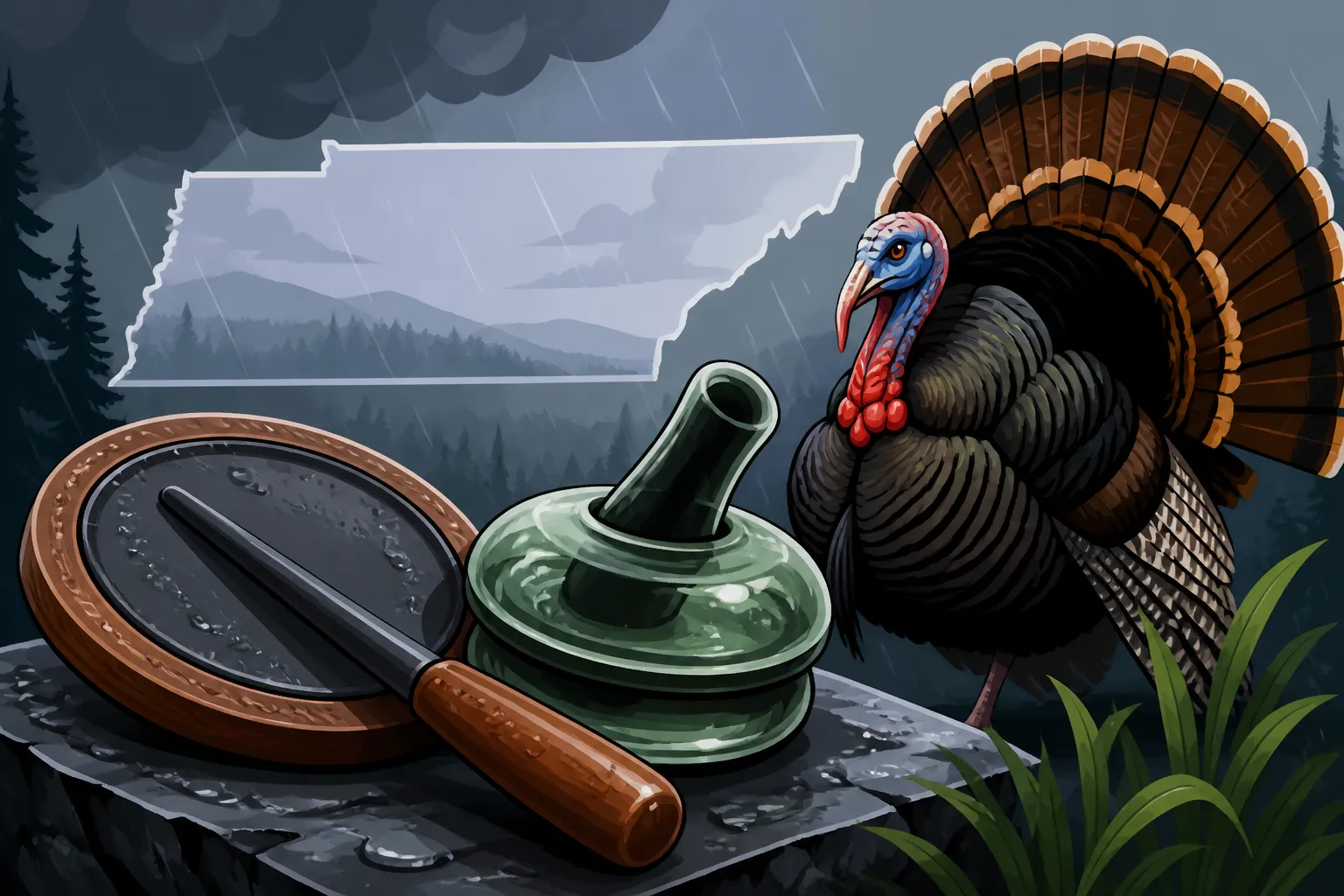
Slate calls, made from a naturally porous stone, are notorious for soaking up moisture. Once wet, the surface becomes incredibly slick, and it's almost impossible to get a good sound out of them until they are completely dry and re-conditioned. It's like trying to write on wet paper with a pencil – it just won't work right.
Glass calls, on the other hand, are less absorbent. The problem isn't so much absorption as it is a film of water forming on the surface. While this film can also make the call slick, a quick wipe down can often bring a glass call back to life faster than a soaked slate. However, if the moisture is persistent, like in a steady drizzle, even glass calls will struggle. Slate and Glass Calls in Wet Weather is a common issue for hunters.
Then there are your strikers. Wooden strikers, especially those made from softer woods, can absorb a surprising amount of moisture. When this happens, the tip can swell or simply lose its frictional properties, becoming smooth and ineffective even on a dry call surface. Carbon, synthetic, or even some plastic strikers are far less susceptible to moisture absorption, making them a crucial tool in your wet-weather arsenal.
Strategies for Using Slate and Glass Calls in Wet Conditions
Knowing how moisture affects your calls is one thing; having a game plan to deal with it in the field is another. The good news is, with a few proactive steps and smart choices, you can keep your friction calls singing, even when the air feels like a sponge.
Field Solutions and Quick Fixes
When you're out there, miles from the truck, and the fog or rain rolls in, you need immediate solutions. The first and most critical rule is to keep your calls as dry as possible. This sounds obvious, but many hunters simply stuff their calls into a vest pocket where they're exposed to body sweat, humidity, or direct rain.
Invest in small, waterproof pouches or even simple Ziploc bags for each of your friction calls. Keep them sealed until the moment you need to make a call, and put them back immediately afterward. This protects them from ambient moisture. When you do pull them out, if there's any visible moisture, use a small, dedicated microfiber cloth or even a piece of paper towel to quickly wipe down the calling surface and the tip of your striker. Don't use your hands, as the oils and dirt can also impact friction.
If your call still sounds dead, it’s time to rough up the surface and striker. Most friction calls come with a conditioning pad or sandpaper. Keep a small piece of fine-grit sandpaper (around 120-180 grit) or the conditioning pad in your call pouch. A quick, firm scuffing of the call surface – just enough to create a slightly chalky texture – will often restore the necessary friction. Do the same for your striker tip, ensuring it has a rough, flat surface. This can be a lifesaver when a gobbler is responding but your call is struggling. For more on preparing your gear, check out Turkey Gear for a Tennessee Spring.
Choosing the Right Strikers
While the call surface itself is critical, the striker often gets overlooked when thinking about wet-weather performance. This is a mistake. A good striker, especially one less susceptible to moisture, can make a huge difference.
- Carbon Strikers: These are perhaps the best choice for wet conditions. Carbon fiber does not absorb water, and its abrasive nature holds up well, allowing it to maintain friction on damp surfaces. If you know you're heading out on a humid or rainy day, make a carbon striker your primary.
- Synthetic or Plastic Strikers: Many companies now make strikers from various synthetic materials like acrylic or specialized plastics. Like carbon, these are non-porous and will not swell or become slick from moisture. They can be a good backup or primary choice for damp hunts.
- Treated Wood Strikers: Some wooden strikers are made from dense, treated hardwoods that are more resistant to moisture absorption. While not as impervious as carbon, they can perform better than untreated, softer woods. Always have a few different options.
- Keeping Multiple Strikers: Carry at least three strikers. Designate one as your "wet weather" striker (likely carbon or synthetic) that you keep completely dry until needed. If one gets damp, swap it out. Having a variety allows you to experiment with what works best on a given call surface in the prevailing conditions. A valuable tip when planning a hunt in potentially damp weather is to consult resources like GoHunt for detailed forecasts and mapping tools that can help you plan your approach and call selection.
Alternative Calling Options
While this article focuses on friction calls, it's always wise to have a backup plan for especially challenging wet conditions. Mouth calls (diaphragm calls) are completely impervious to external moisture. They rely on your breath and mouth movements, making them a fantastic choice for torrential downpours or when your hands need to be free to operate your gun. Mastering a few basic yelps and clucks on a mouth call can save a hunt when friction calls fail. You can learn more about different types of calls in Box Calls Versus Mouth Calls.
Box calls can also be affected by moisture, as the lid and sound boards are typically wood. However, some box calls are treated with water-resistant finishes, or their design allows for quicker drying. If using a box call in the wet, ensure you keep the friction surfaces (where the lid rubs the sides) as dry as possible. A quick wipe and a gentle re-chalking can sometimes restore their sound. However, the internal components of a box call can get waterlogged, making them difficult to dry quickly in the field. Ultimately, while having a mouth call as a "never fail" option is smart, implementing the above strategies for your slate and glass calls should allow you to stick with your preferred friction call method in most damp conditions. For more general turkey tactics, considering the weather is critical, especially when Roost Hunting Tennessee Gobblers.
Maintenance and Storage for Longevity
Proper care for your friction calls extends beyond the hunt itself. How you maintain and store them, especially after exposure to moisture, significantly impacts their performance and lifespan. Neglecting these steps can lead to calls that are perpetually difficult to get sound from, even in dry weather.
Post-Hunt Care for Wet Calls
The moment you get home from a damp hunt, resist the urge to just toss your calls into your vest pocket or gear bag. Calls that have been exposed to moisture need immediate attention. First, gently wipe down the calling surface and your strikers with a clean, dry cloth. If the call surface is slate, you might even notice it has a darker, more saturated appearance due to absorbed water.
The most important step is to allow your calls to air dry thoroughly. Don't put them in direct sunlight or expose them to extreme heat, as this can warp wooden parts of the call or cause the slate/glass to crack. Instead, place them on a countertop or shelf in a dry room, allowing air to circulate around them. This might take several hours or even a full day, depending on how wet they got.
Once completely dry, it's a good practice to re-condition your call surfaces. Lightly scuff the slate or glass with the conditioning pad or sandpaper provided with your call. This cleans off any residue and restores the optimal friction surface. For your wooden strikers, if they feel slightly rough or have swollen, a very light sanding with fine-grit paper can smooth them out. Store your calls in a dry, breathable container, away from drastic temperature changes. This diligence ensures your calls are always ready for your next outing, whether it's Hunting the Statewide Turkey Opener in April or a late-season hunt.
Preparing for a Rainy Forecast
Proactive preparation is always better than reactive fixes in the field. Before heading out into predicted wet weather, there are a few things you can do to give yourself an advantage.
First, if you have multiple friction calls, consider designating a "wet weather" setup. This might involve a glass or ceramic call, paired exclusively with carbon or synthetic strikers, stored in a heavy-duty waterproof pouch. Keep this setup pristine and untouched until you truly need it.
For wooden strikers, some hunters advocate for very light sealing or conditioning with certain oils or waxes to repel water. However, be extremely cautious with this, as applying the wrong substance can permanently alter the striker's ability to create friction. Always test any treatment on an old or spare striker first. Generally, it's safer and more effective to rely on non-absorbent striker materials.
Finally, always pack extra conditioning pads and dry cloths. There's no such thing as being too prepared when it comes to keeping your calls working. Knowing that you have reliable gear, coupled with the strategic planning you might do with tools like GoHunt for understanding terrain and weather patterns, sets you up for success. Whether you're working a logging road or trying Turkey Tactics for Farmland Field Edges, having your calls ready is paramount.
Table: Wet Weather Performance Comparison
Understanding which call materials perform best in damp conditions can help you choose your primary and backup calls for unpredictable Tennessee spring weather.
| Feature / Call Type | Slate Calls | Glass Calls | Ceramic Calls |
|---|---|---|---|
| Material Porosity | High (absorbs water easily) | Low (surface film) | Low (surface film) |
| Sound in Wetness | Muffled, silent, difficult to produce | Muffled, slick, can be restored with wiping | Muffled, can be slick, often more forgiving |
| Drying Time | Slowest (due to absorption) | Moderate (surface wipe helps immensely) | Moderate (surface wipe helps immensely) |
| Maintenance | Requires thorough drying and re-scuffing | Requires wiping and light re-scuffing | Requires wiping and light re-scuffing |
| Best Strikers | Carbon, synthetic (to minimize water transfer) | Carbon, synthetic (good on damp surface) | Carbon, synthetic (very compatible) |
| Field Recovery | Challenging, may need significant drying time | Quick (if wiped and re-scuffed) | Quick (if wiped and re-scuffed) |
| Ideal Conditions | Dry, low humidity | Dry to moderate humidity, light dew | Moderate to high humidity, light dampness |
| Backup Potential | Poor for persistent wetness | Good (with proper wiping/striker choice) | Excellent (often performs well in damp conditions) |
This table should give you a quick reference point when you're deciding which call to grab, or which one to prioritize protecting, when the weather looks less than ideal. Always be ready to adapt, and you'll find more success Calling a Tennessee Gobbler Off the Roost in diverse conditions.
Conclusion
Dealing with wet weather and its impact on your slate and glass calls is a challenge every Tennessee turkey hunter faces. It’s not about avoiding the rain entirely – sometimes you just can't – but about being prepared and knowing how to adapt. By understanding how moisture affects different call materials, keeping your calls and strikers dry, and having the right strategies and backup options, you can ensure your hen sounds remain convincing, no matter what Mother Nature throws at you. Don't let a little dampness silence your calls; arm yourself with knowledge and the right gear, and those spring gobblers will still be within reach.
Disclaimer
This article is for general informational purposes only and does not constitute professional advice. Laws, prices and regulations vary by location and change over time. Consult a qualified professional for guidance on your specific situation.