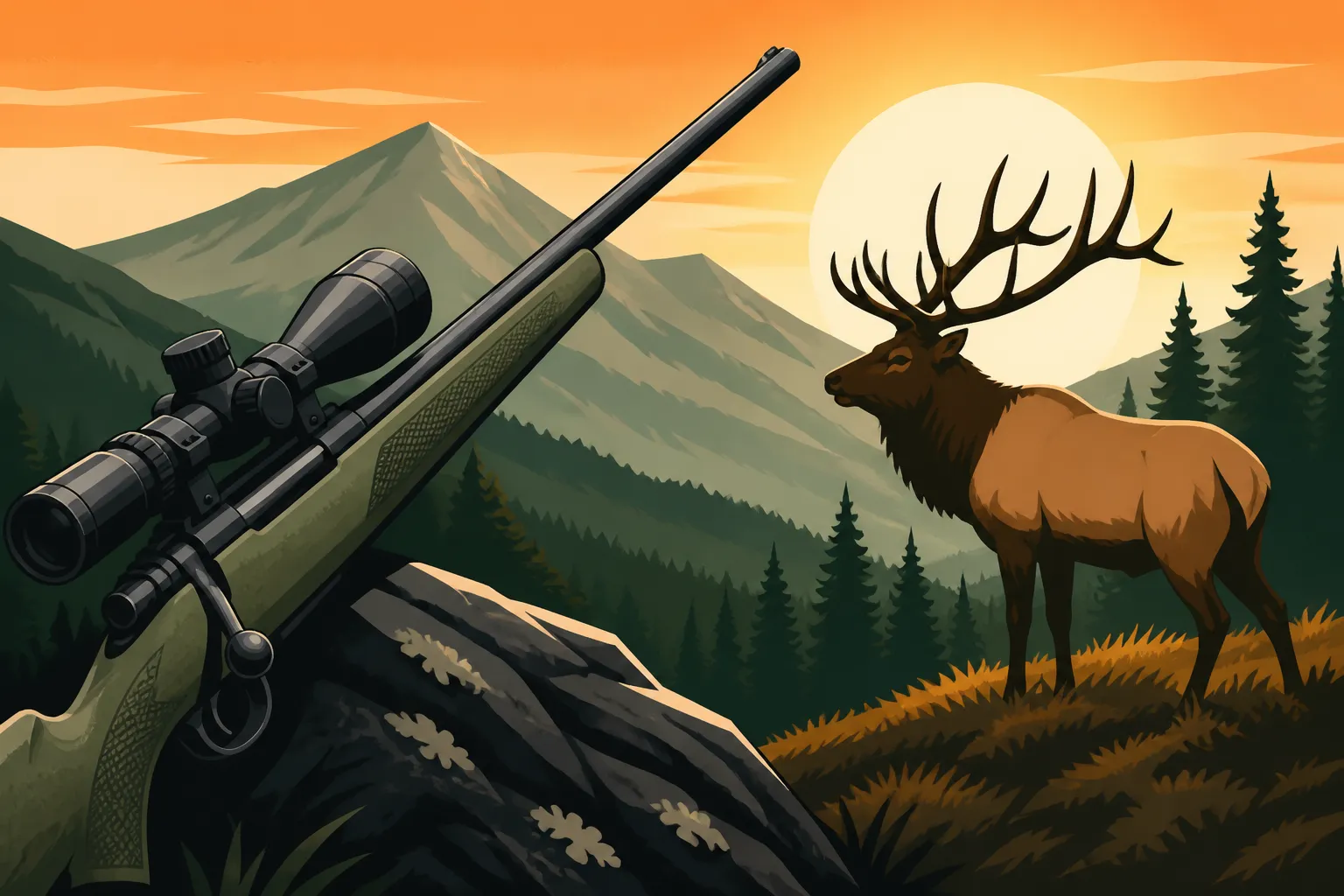
Rifles Built for a North Cumberland Elk Hunt
The call to hunt elk in Tennessee is a truly special one, a once-in-a-lifetime opportunity for many. But the rugged terrain of the North Cumberland region, combined with the sheer power and resilience of an elk, means your choice of rifle isn't just a detail – it's absolutely critical for a successful and ethical hunt. This guide will walk you through everything you need to consider when building or selecting a rifle setup specifically for pursuing these magnificent animals in the challenging East Tennessee landscape.
Understanding the North Cumberland Elk Hunt
Before we even talk about specific rifles, it’s crucial to grasp what a North Cumberland elk hunt actually entails. This isn't your flatland deer hunt; it's a unique experience demanding specific gear and preparation. The landscape itself, combined with the behavior of these majestic animals, dictates much of our equipment choices.
The Terrain and Its Demands
The North Cumberland Wildlife Management Area, spanning parts of Scott, Campbell, Claiborne, Morgan, and Anderson counties, is characterized by steep, heavily timbered ridges, deep hollows, and dense undergrowth. While there are some open logging roads, clear-cuts, and food plots, a significant portion of the hunt will involve navigating thick cover and challenging inclines. You'll be walking up and down steep grades, pushing through rhododendron thickets, and potentially needing to make a shot in fairly tight windows, sometimes at surprising distances across hollows. This means your rifle needs to be durable, manageable to carry all day, and capable of both close-range precision and longer-range accuracy. It’s a far cry from sitting in a cozy box blind overlooking a vast bean field.
Imagine cresting a steep ridge, your lungs burning, only to spot a bull grazing a hundred yards away in a relatively open cut. Then, later that day, you might be still-hunting a creek bottom and suddenly have a cow elk bust out of a laurel thicket at 40 yards. Your rifle needs to handle both scenarios, and everything in between, with consistent performance. The weight of your rifle will become incredibly important after a few miles of climbing, especially if you're carrying a pack with extra clothing, water, and other necessities. When you're Preparing for a North Cumberland Elk Hunt, every ounce counts, and a heavy, unwieldy rifle can quickly become a detriment, impacting your ability to hold steady for a shot.
Elk Behavior and Shot Opportunity
North Cumberland elk, while part of a managed herd, are truly wild animals. They are intelligent, wary, and accustomed to the challenging environment. Unlike deer that might hold tight in heavy cover, elk often move through it with surprising speed and can disappear in an instant. This means shot opportunities can be fleeting. You might have a narrow window through timber, or a brief moment as an animal crosses a clear-cut. Shots often present themselves quickly, requiring you to get on target and make a precise shot under pressure.
Their sheer size also plays a significant role. An adult bull elk can weigh upwards of 700-1000 pounds, standing five feet tall at the shoulder. Their bone structure is robust, and they carry a tremendous amount of muscle. This isn't to say they're invulnerable, but it does mean that shot placement is paramount, and your chosen cartridge needs to deliver enough energy to penetrate deeply and dispatch the animal humanely. A marginal shot with an underpowered cartridge is a recipe for a long, potentially unsuccessful, tracking job in unforgiving terrain.
Essential Rifle Characteristics for Elk
When selecting a rifle for elk, especially in a place like North Cumberland, you're looking for a balance of power, precision, and practical handling. This isn't a bench-rest competition; it's a real-world hunting scenario where durability and reliability often trump absolute sub-MOA accuracy if it comes at the cost of excessive weight or delicate parts.
Action Types: Reliability Above All
For hunting big game like elk, bolt-action rifles are overwhelmingly the most popular choice, and for good reason. They are renowned for their accuracy, reliability, and robust construction. A well-maintained bolt-action will function flawlessly in adverse weather conditions – be it rain, snow, or mud – which you might encounter during the Tennessee General Firearms Elk Season Dates.
- Bolt-Action: This is the gold standard. Simple, strong, and highly accurate. The controlled feed actions found in some rifles, like the Winchester Model 70 or Mauser 98 derivatives, are particularly favored by many big game hunters for their positive feeding and extraction, even when things get dirty or rushed. Push-feed actions are also perfectly viable and very common. The key is to practice cycling your chosen rifle until it's second nature. You don't want to fumble a follow-up shot when a bull is trying to disappear into the timber.
- Lever-Action: While iconic for deer hunting, traditional lever-actions firing pistol-caliber or rimmed cartridges often lack the range and power needed for ethical elk hunting. However, some modern lever-action rifles chambered in potent, flat-shooting cartridges like .30-30, .45-70 Gov't (with modern loads), or even .308 Marlin Express can be viable for shorter-range elk hunting, especially in dense cover. For North Cumberland, where longer shots across hollows might present themselves, most hunters lean towards bolt-actions.
- Semi-Automatic: While some modern sporting rifles (MSRs) are chambered in powerful calibers like .308 Winchester or 6.5 Creedmoor, they are less common for elk hunting. Their primary advantage is rapid follow-up shots, but their weight, sometimes less inherent accuracy compared to a good bolt action, and potential for more complex field maintenance often push hunters towards bolt guns. Also, some regulations or WMA rules might have restrictions on magazine capacity, so always double-check.
Barrel Length and Weight: Balancing Carry and Performance
This is where the North Cumberland terrain really comes into play. A long, heavy barrel might offer exceptional accuracy on a bench, but it becomes a major liability when climbing steep hills and weaving through dense brush.
- Barrel Length: Most elk rifles feature barrel lengths ranging from 20 to 24 inches. A 22-inch barrel is a popular compromise, offering good velocity for most cartridges without being overly long or cumbersome. A 20-inch barrel can be excellent for maneuverability in thick timber, but some magnum cartridges might experience a slight velocity loss, which could affect long-range performance. Anything longer than 24 inches typically becomes too unwieldy for mountainous hunting, catching on branches and making quick target acquisition more difficult.
- Rifle Weight: For the sheer amount of walking and climbing you'll do, a rifle that balances between 7 and 8.5 pounds (without optics) is often ideal. Lighter rifles (under 7 pounds) can be a joy to carry, but they tend to amplify recoil, making accurate follow-up shots harder, and can be harder to hold steady in off-hand shooting positions. Heavier rifles (over 9 pounds) become a burden after a few hours, leading to fatigue that can impact your shooting. This is where modern materials like synthetic stocks and fluted barrels can help shave off crucial ounces without compromising strength. A good sling is non-negotiable, allowing you to carry the rifle comfortably for extended periods.
Stock Materials: Durability and Weather Resistance
The stock of your rifle needs to withstand bumps, scrapes, and the unpredictable weather of East Tennessee. Traditional wooden stocks are beautiful, but they can swell, warp, and lose zero with changes in humidity and temperature. For a serious elk hunt, synthetic or composite stocks are often preferred.
- Synthetic/Composite Stocks: These are typically made from fiberglass, carbon fiber, or various polymers. They are lightweight, extremely durable, and impervious to weather changes, meaning your point of impact won't shift when it rains or the temperature drops significantly. They are also much more resistant to dings and scratches. Many excellent factory rifles, including those by Savage, Ruger, and Remington, come with high-quality synthetic stocks that are ready for the field.
- Laminate Stocks: These are made from multiple layers of wood glued together, offering greater stability than traditional solid wood stocks. They are durable and weather-resistant, though often heavier than synthetic options.
- Wood Stocks: While beautiful and classic, traditional wood stocks require more care and are more susceptible to environmental factors. If you choose a wood stock, ensure it's well-sealed and understand its limitations in harsh weather.
Caliber Considerations for Tennessee Elk
Choosing the right caliber is perhaps the most debated aspect of elk hunting. The goal is to select a cartridge that delivers sufficient energy for a humane kill, offers a relatively flat trajectory for varying shot distances, and whose recoil you can manage effectively for accurate shot placement. For Rifle Calibers for Tennessee Elk, there are plenty of opinions, but some clear front-runners emerge.
Minimum Requirements and Ethical Considerations
While Tennessee doesn't specify a minimum caliber for elk, general ethical hunting practices for large, tough animals like elk suggest a minimum of a .270 Winchester or 7mm-08 Remington, paired with quality, heavy-for-caliber bullets. These cartridges, when placed precisely, are fully capable of dispatching an elk. However, many experienced elk hunters prefer something with a bit more punch, especially if longer shots or less-than-ideal angles are a possibility.
The key isn't just raw power; it's the combination of bullet construction, velocity, and energy delivered to the target. A bullet that fragments too quickly or doesn't penetrate deeply enough, regardless of its initial velocity, can lead to a wounded animal. Always prioritize shot placement, and choose a caliber that allows you to confidently make that precise shot. Remember, an accurate shot with a smaller, manageable caliber is always better than a flinched shot with a magnum you can't control.
Popular Calibers and Their Performance
Let's look at some of the most popular and effective calibers for North Cumberland elk:
- .270 Winchester: A classic, flat-shooting round beloved by many. With 140-150 grain premium bullets, it's very effective for elk. It offers manageable recoil and excellent accuracy.
- .308 Winchester: Another highly versatile and popular cartridge. The .308 excels in shorter barrels and can handle a wide range of bullet weights (150-180 grains), making it a solid choice. Recoil is moderate, and ammunition is widely available.
- 6.5 Creedmoor: While often praised for its accuracy and mild recoil, some hunters question its terminal energy for elk, especially at longer ranges. However, with modern, heavy-for-caliber bullets (140-150 grains) designed for deep penetration, it can be effective for elk if shot placement is impeccable and range is kept reasonable. It's an excellent choice if recoil is a major concern.
- .30-06 Springfield: The quintessential American hunting cartridge. It's powerful, versatile, and has taken countless elk over the decades. It handles 165-200 grain bullets very well, providing ample energy for elk, and its recoil is stout but manageable for most hunters. It's a fantastic all-around choice.
- 7mm Remington Magnum: Moving into the magnum class, the 7mm Rem Mag offers a flatter trajectory and more energy than the .30-06, making it excellent for potentially longer shots across hollows. It shines with 160-175 grain bullets. Recoil is noticeably higher than the standard calibers, so practice is essential.
- .300 Winchester Magnum (and similar .30 cal magnums like .300 WSM, .300 PRC): These cartridges offer maximum power and flat trajectories, making them excellent choices for elk, particularly if long-range opportunities might arise. They handle 180-200+ grain bullets with authority. The trade-off is significantly increased recoil, which requires dedicated practice to master. If you can shoot a .300 Win Mag accurately, it's arguably one of the best elk cartridges available.
Here's a quick comparison of some popular elk calibers:
| Caliber | Common Bullet Weights (grains) | Pros | Cons | Typical Effective Range (Elk) |
|---|---|---|---|---|
| .270 Winchester | 130-150 | Flat trajectory, mild recoil, accurate | Less energy than magnums, requires premium bullets | Up to 300-350 yards |
| .308 Winchester | 150-180 | Good energy, moderate recoil, accurate, compact rifles | Not as flat-shooting as magnums, less energy than .30-06 | Up to 300 yards |
| 6.5 Creedmoor | 140-150 | Very low recoil, excellent accuracy, compact rifles | Marginal energy for elk, requires heavy, bonded bullets, range limited | Up to 250-300 yards |
| .30-06 Springfield | 165-200 | Excellent energy, versatile, widely available, proven | More recoil than .270/.308, not a "magnum" | Up to 350-400 yards |
| 7mm Remington Magnum | 160-175 | Very flat trajectory, high energy, good for longer shots | Noticeable recoil, expensive ammo | Up to 400-500 yards |
| .300 Winchester Magnum | 180-200+ | Max energy, very flat trajectory, excellent for any range | Heavy recoil, expensive ammo, potential for muzzle blast | 400-600+ yards |
Recoil Management
Managing recoil is paramount to accurate shooting. If you flinch or anticipate the shot, even the most powerful cartridge is useless.
- Practice: The best way to manage recoil is through consistent practice. Shoot your chosen rifle frequently until you are comfortable with its report and kick.
- Rifle Fit: Ensure the rifle fits you properly. The length of pull, comb height, and grip all influence how recoil is absorbed.
- Muzzle Brakes: These devices attach to the end of the barrel and redirect gases to reduce felt recoil significantly. The downside is increased muzzle blast and noise, which necessitates hearing protection.
- Recoil Pads: Modern recoil pads are highly effective at absorbing energy. Many rifles come with excellent factory pads, but aftermarket options can further improve comfort.
- Weight: As mentioned, a slightly heavier rifle (7.5-8.5 lbs) will absorb more recoil than a featherweight model.
Optics: Seeing Your Target Clearly
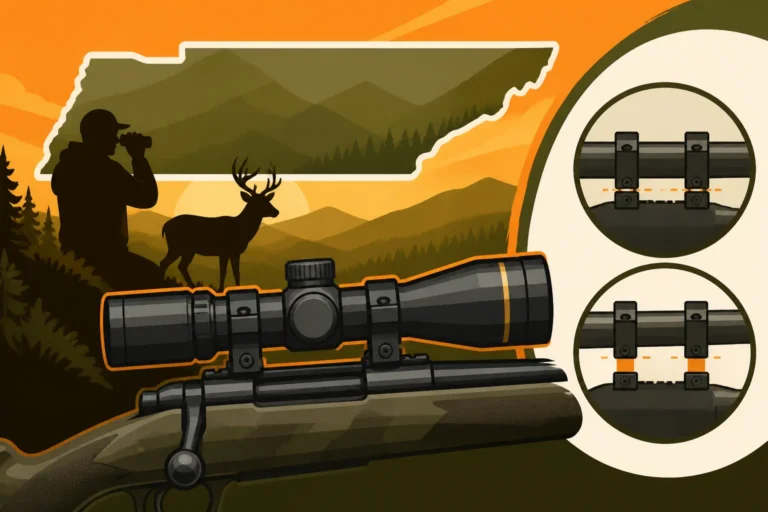
Your rifle is only as good as the optics sitting atop it. In the varying light conditions and often dense cover of North Cumberland, having reliable, clear, and bright glass is non-negotiable. Don't skimp here; quality optics are an investment that pays off every time you raise your rifle. Optics for Glassing Elk Meadows often need a higher magnification, but your rifle scope needs to be versatile.
Magnification Range and Objective Lens
For an elk hunt, a versatile scope that can handle both close-range timber shots and longer shots across clear-cuts is ideal.
- Magnification: A scope with a variable power range such as 3-9x, 3.5-10x, or even 4-12x is excellent. The lower end (3x or 4x) is perfect for quick shots in thick cover, providing a wide field of view. The higher end (9x to 12x) allows for precise shot placement on longer-range targets. Avoid excessively high magnification scopes (e.g., 6-24x) unless you are absolutely certain you will only be taking very long shots. They tend to be heavier, have a narrower field of view, and can make it harder to quickly find an animal in thick brush.
- Objective Lens: The objective lens is the front lens of the scope. A larger objective lens (e.g., 40mm, 44mm, 50mm) gathers more light, which is crucial for low-light conditions common at dawn and dusk. For a balance of light gathering and compact size, a 40mm or 44mm objective lens is usually a good choice. A 50mm objective lens will gather more light but will typically sit higher on the rifle and add more weight. Modern coatings and glass quality are often more important than objective size alone for light transmission.
Reticle Types and Adjustment Turrets
The reticle is your aiming point, and having one that is clear and useful without being overly cluttered is key.
- Reticle Types:
- Duplex/Plex Reticle: A classic, simple crosshair that thickens towards the edges. It's clean, fast to acquire, and excellent for general hunting.
- BDC (Bullet Drop Compensating) Reticles: These have additional aiming points below the main crosshair, calibrated for specific distances with certain loads. They can be very useful for quick adjustments at varying ranges without dialing turrets, but require practice to master and often work best with specific loads.
- Illuminated Reticles: Can be a lifesaver in low light or against dark timber, helping you see your aiming point clearly. However, ensure the illumination can be turned down low enough not to "bloom" and obscure the target.
- Adjustment Turrets: Capped hunting turrets are generally preferred for elk rifles, as they are less likely to be bumped off zero while walking through brush. If you plan to dial for longer shots, exposed target turrets with positive, repeatable clicks are necessary, but make sure they have a zero-stop feature and are rugged enough for field use. Always practice dialing your scope at the range.
Rangefinders: Knowing Your Distance
A quality laser rangefinder is an indispensable tool for elk hunting in North Cumberland. Estimating distances accurately in rolling, wooded terrain is incredibly difficult, and a few yards can make a significant difference in bullet drop, especially with longer shots. Brands like Vortex, Leupold, and Sig Sauer offer excellent hunting-specific rangefinders.
- Angle Compensation: Many modern rangefinders offer angle compensation, which is crucial in mountainous terrain. A shot uphill or downhill requires a different hold than a flat shot over the same horizontal distance. An angle-compensating rangefinder will give you the "shoot-to" distance, simplifying your aiming.
- Speed and Clarity: Look for a rangefinder that gives fast, accurate readings, even on dark or non-reflective targets like elk, and one that performs well in light rain or fog. The optical clarity of the rangefinder is also a factor, making it easier to pinpoint your target. Even if you're an experienced hunter who can judge distances well, the varied topography of North Cumberland makes a rangefinder a critical piece of gear.
Ammunition Selection: Power and Precision
Once you've chosen your rifle and scope, selecting the right ammunition is the final, crucial step. It's not just about the caliber; it's about the bullet itself. For elk, you need a bullet designed for deep penetration and controlled expansion, ensuring it reaches vital organs and creates a devastating wound channel.
Bullet Construction for Elk
Forget cheap cup-and-core bullets for elk. You need premium, bonded, or monolithic bullets designed for tough game. These bullets are engineered to hold together, retain weight, and penetrate deeply, even after hitting bone.
- Bonded Core Bullets: These bullets have their lead core chemically bonded to the copper jacket, preventing separation upon impact. Examples include Federal Terminal Ascent, Nosler AccuBond, Swift A-Frame, and Hornady InterBond. They expand reliably and retain a high percentage of their original weight, driving deep.
- Monolithic (Solid Copper) Bullets: Made entirely of copper or gilding metal, these bullets offer nearly 100% weight retention and typically penetrate even deeper than bonded bullets. Examples include Barnes TSX/TTSX, Hornady GMX, and Federal Trophy Copper. They expand in a controlled, petal-like fashion. They can be particularly effective in calibers where maximum penetration is desired.
- Partition Style Bullets: Bullets like the Nosler Partition have a front section designed for rapid expansion and a rear section that remains intact for deep penetration. They are a proven elk killer.
For any chosen caliber, select the heaviest bullet weight that your rifle shoots accurately. Heavier bullets typically carry more energy, retain more velocity downrange, and offer better penetration. For instance, if you're shooting a .30-06, a 180-grain or even 200-grain premium bullet will be a more effective elk stopper than a 150-grain deer bullet.
Ballistics and Trajectory
Understanding your chosen bullet's ballistic performance is vital, especially when facing unknown distances in the field.
- Zeroing: Zero your rifle appropriately for your cartridge and typical expected hunting distances. Many hunters zero their elk rifles for 200 yards, which means shots out to 250-300 yards will require minimal holdover.
- Ballistic Charts/Apps: Carry a ballistic chart or use a phone app (like those offered by GoHunt or similar outdoor platforms) that shows your bullet's drop and wind drift at various ranges. This will help you make quick, informed decisions if a longer shot presents itself. Practice with these tools at the range. Knowing your rifle's capabilities and your bullet's trajectory is essential for ethical long-range shooting.
- Wind: While wind isn't often a primary factor in heavily timbered hollows, it can be a significant concern across open clear-cuts or high ridges. Practice shooting in varying wind conditions if possible, and understand how your bullet drifts.
Practice and Preparation
Having the best rifle and ammunition in the world won't matter if you can't shoot it accurately under hunting conditions. The North Cumberland elk hunt is physically demanding, and stress can impact your shooting. Consistent practice is the only way to build confidence and proficiency.
Range Time: Beyond the Bench
Don't just shoot from a bench rest. While establishing your rifle's zero and verifying its accuracy from a stable platform is important, it's only the first step.
- Field Positions: Practice shooting from kneeling, sitting, and standing positions. You won't always have a perfect rest in the field. Using shooting sticks or bracing against a tree are common field techniques you should master.
- Varying Distances: Shoot at various distances, from 50 yards out to your maximum ethical range. This helps you understand bullet drop and how to compensate.
- Simulated Pressure: Try shooting after a brisk walk or some jumping jacks to simulate the elevated heart rate you'll have after climbing a steep hill. This helps you learn to control your breathing and make a steady shot under stress.
- Rapid Target Acquisition: Practice quickly shouldering your rifle, finding your target in the scope, and making a clean break on the trigger. Elk don't always stand still waiting for you.
Scouting and Physical Conditioning
Your rifle is one piece of the puzzle; your physical condition and knowledge of the area are equally important.
- Scouting: Even if you can't scout the specific unit beforehand, studying topographical maps, aerial photos, and using tools like the GoHunt mapping layers can give you a significant advantage. Look for natural funnels, bedding areas, water sources, and feeding areas. Understanding Tennessee's Ten Elk Hunt Zones and the lay of the land will direct your hunting efforts.
- Physical Conditioning: Start a workout regimen months before your hunt. Focus on cardio, leg strength, and endurance. Hiking with a weighted pack (similar to your hunting pack) is excellent preparation. The better your physical condition, the better you'll be able to navigate the terrain, remain focused, and make a steady shot when the opportunity arises.
The North Cumberland elk hunt is an adventure that few hunters ever get to experience. By carefully selecting a robust, accurate rifle in an appropriate caliber, topping it with quality optics, and pairing it with premium ammunition, you'll be well-equipped. Combine that gear with dedicated practice and solid physical preparation, and you'll dramatically increase your chances of a successful and ethical harvest. Good luck, and may your aim be true!
Disclaimer
This article is for general informational purposes only and does not constitute professional advice. Laws, prices and regulations vary by location and change over time. Consult a qualified professional for guidance on your specific situation.