Elk Hunting Gear for North Cumberland
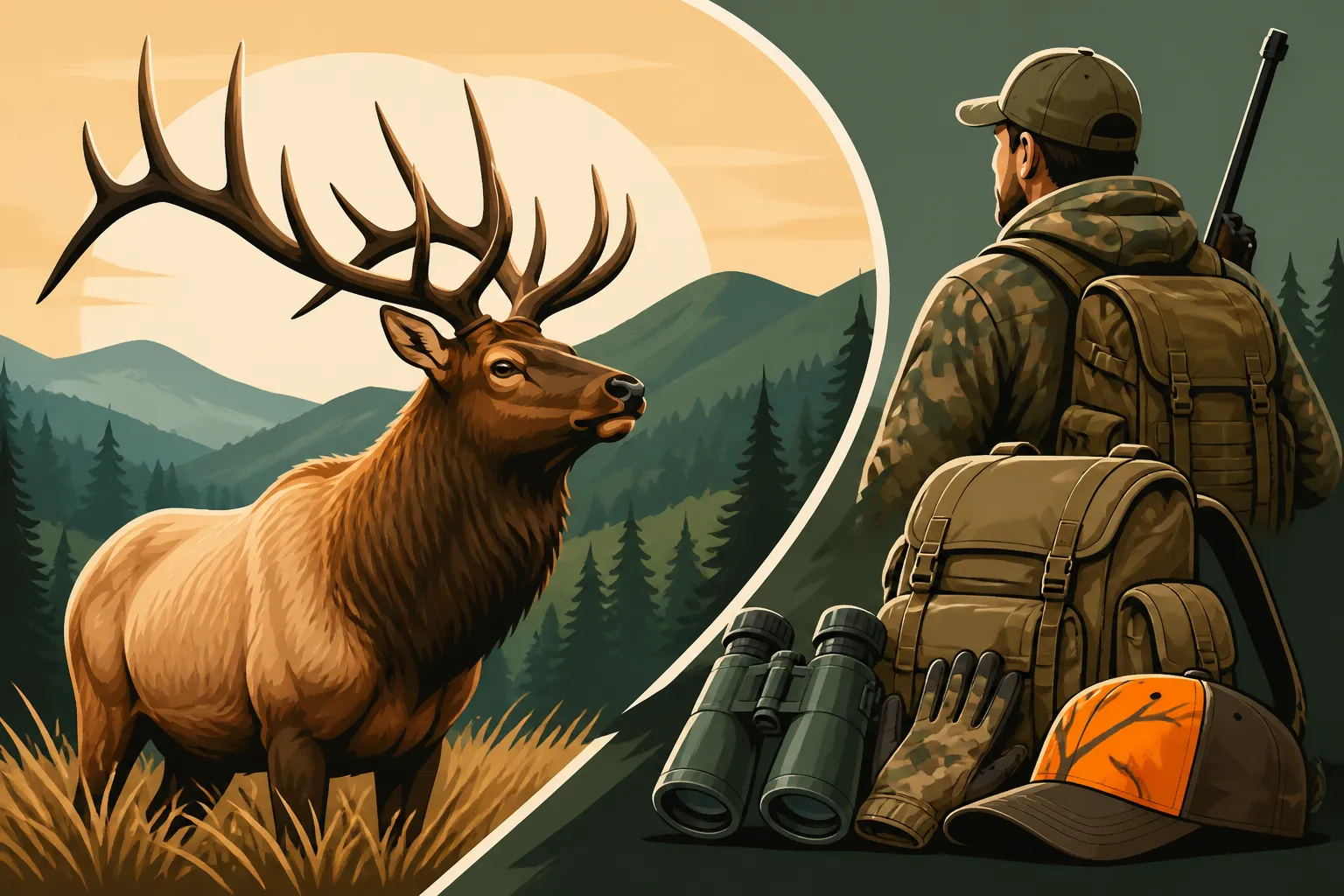
Elk hunting in the rugged terrain of North Cumberland is an adventure unlike any other in Tennessee, a true test of preparation, skill, and sheer grit. This isn't your typical whitetail hunt; the animals are bigger, the country is tougher, and the demands on your gear are significantly higher. You're facing steep climbs, thick timber, open meadows, and potentially rapidly changing weather. Heading into the North Cumberland Wildlife Management Area unprepared with subpar equipment is a recipe for frustration, or worse, a dangerous situation. This comprehensive guide is designed to walk you through every critical piece of gear you'll need, ensuring you're outfitted for success and safety when chasing Tennessee's majestic elk herd.
Rifles, Ammunition, and Ballistics for North Cumberland Elk
Hunting elk demands a rifle and ammunition combination that offers both power and precision, capable of delivering a humane and ethical shot under challenging conditions. North Cumberland's varied landscape means you might encounter an elk in dense timber at close range or across a sprawling clear-cut at a considerable distance.
Choosing the Right Caliber and Rifle Type
When it comes to elk, you're looking for a cartridge with ample energy and bullet weight to ensure deep penetration and effective tissue damage. While many deer calibers can technically kill an elk, they often lack the knockdown power or trajectory for consistent ethical kills in unpredictable mountain scenarios. Common and highly effective calibers for elk include the .30-06 Springfield, .300 Winchester Magnum, 7mm Remington Magnum, and for those seeking even more power, the .338 Winchester Magnum. Each has its devotees, but they all share the characteristic of being potent enough for the job.
Consider the rifle itself. A reliable bolt-action rifle is the workhorse of elk hunting. Its simplicity, accuracy, and robust design make it ideal for the abuse of a backcountry hunt. Weight is a significant factor; a lighter rifle is a joy to carry up those steep inclines but can be harder to shoot accurately without proper support. Conversely, a heavier rifle absorbs recoil better and is often inherently more stable, but it can become a burden during long days of hiking. Find a balance that suits your physical conditioning and shooting style. Durability is paramount – your rifle will inevitably get bumped, scraped, and exposed to the elements.
Ammunition Selection and Practical Ranges
The bullet you load into your rifle is arguably more important than the caliber itself. For elk, you need a premium bullet designed for controlled expansion and high weight retention. Think bonded bullets, monolithic copper projectiles, or those with heavy jackets designed to hold together on impact. These bullets penetrate deeply through heavy bone and muscle, reaching vital organs even on less-than-perfect angles. Avoid varmint or thin-jacketed deer bullets; they simply won't perform consistently on an animal as large and tough as an elk.
Practicing with your chosen ammunition is non-negotiable. Knowing your rifle's capabilities and your own shooting proficiency is crucial. North Cumberland can present shots from 50 yards in the thick stuff to 300 or even 400 yards across an old logging cut or powerline right-of-way. You need to be intimately familiar with your bullet's trajectory at various distances. Practice shooting from unsupported positions, off shooting sticks, and from kneeling or sitting, as these are real-world scenarios you'll likely encounter. Remember to factor in elevation changes; an uphill or downhill shot significantly affects your point of impact compared to a flat range. Ethical elk hunting means knowing your personal maximum effective range and sticking to it, no matter how tempting a longer shot might be.
Shooting Support and Accessories
After hours of hiking up and down mountainsides, your heart will be pounding, and your muscles will be fatigued. Trying to hold a heavy rifle steady for a shot can be nearly impossible without some form of support. This is where shooting accessories become invaluable. A good quality rifle sling is essential for carrying your rifle comfortably and securely, keeping your hands free for climbing or navigating difficult terrain. Look for a wide, padded sling that won't dig into your shoulder.
Beyond carrying, consider how you'll stabilize your shot. Shooting sticks are highly recommended; they're lightweight, quick to deploy, and provide a stable rest in various situations, from standing in tall grass to kneeling behind a log. Some hunters prefer a bipod attached to their rifle, which offers excellent stability from a prone position, but might be less versatile in thick cover or on uneven ground. Practice using these supports religiously. The goal is to quickly and quietly get into a stable shooting position when the moment of truth arrives. A solid recoil pad on your rifle can also make a huge difference, especially when practicing with magnum calibers, helping you maintain good shooting form and reduce flinching.
Optics for Spotting, Scouting, and Shot Placement
Finding elk in the vastness of North Cumberland is often like finding a needle in a haystack, and that's where high-quality optics earn their keep. From glassing distant ridges to making a precise shot, your vision aids are critical.
Binoculars and Spotting Scopes for Distant Glassing
Your primary tool for locating elk will be a good pair of binoculars. For the open and semi-open terrain of North Cumberland, most hunters find 10×42 or 12×50 binoculars to be excellent choices. The higher magnification (12x) can be advantageous for picking apart distant timber lines or brushy draws, though it requires a steadier hand or a tripod mount for prolonged viewing. Look for binoculars with excellent low-light gathering capabilities, as elk are often most active during dawn and dusk. Quality glass reduces eye strain during long hours of glassing, which you will certainly be doing.
A spotting scope, typically ranging from 20-60x magnification, is not always necessary for elk hunting in all areas, but in North Cumberland, where Glassing a North Cumberland Elk Meadow or picking apart distant slopes is common, it can be a game-changer. It allows you to confirm if that dark spot on a faraway ridge is a stump or a bedded bull, to count antler points, and to judge an animal's size and age without spooking it. A lightweight spotting scope with a small objective lens (e.g., 65mm) is often preferred for backpack hunting to minimize weight. Always pair your spotting scope with a sturdy, lightweight tripod for rock-solid stability.
Rangefinders for Ethical Shooting
In the mountains, judging distance accurately with the naked eye is notoriously difficult due to the vast scale and varying terrain. A quality angle-compensating rangefinder is an absolute must-have for ethical elk hunting. This device measures not just the straight-line distance to your target, but also calculates the "shoot-to" distance based on the angle of the shot, which is critical for uphill or downhill shots. Missing high or low on an elk due to misjudging an angle is a common mistake and one easily avoided with the right tool.
Practice ranging everything in sight when you're out scouting or even just hiking around home. Get quick and comfortable with its use. Before you ever pull the trigger, range the animal. Then, range prominent features around it – trees, rocks, the edge of a meadow – so you have reference points if the animal moves. Speed and accuracy in ranging can mean the difference between a clean shot and a missed opportunity. Remember to carry an extra battery!
Rifle Scopes for Precision and Low Light
Your rifle scope needs to be as tough and reliable as your rifle itself. For elk hunting in North Cumberland, a variable power scope with a magnification range from roughly 3-9x, 4-12x, or even 4-16x is generally ideal. The lower magnification settings are perfect for quick shots in close timber, providing a wide field of view, while the higher settings allow for precise aim on longer shots across open areas.
Prioritize scopes known for their durability, waterproofness, and fog-proof performance. The last thing you want is a fogged-up reticle when a bull steps out on a frosty morning. Excellent low-light performance is also paramount, as many elk encounters happen during the golden hours of dawn and dusk. This means a scope with a larger objective lens (40mm or 50mm) and high-quality lens coatings. An illuminated reticle can be a significant advantage in low light or against dark timber, helping you quickly acquire your aiming point. Make sure your scope is securely mounted with quality rings and that you've thoroughly zeroed it at the range before your hunt.
Essential Clothing and Layering Systems for Mountain Hunting
North Cumberland's weather can be fickle, swinging from crisp, frosty mornings to surprisingly warm afternoons, or from clear skies to driving rain and even snow. A well-thought-out clothing system isn't just about comfort; it's about safety and your ability to stay in the field.
Base Layers and Mid-Layers for Temperature Regulation
Cotton kills in the backcountry. Period. When wet, cotton loses all insulating properties and takes forever to dry, leading to dangerous hypothermia. For your base layers – those garments worn directly against your skin – invest in merino wool or high-quality synthetic materials. These fabrics excel at wicking moisture away from your body, even when you're sweating profusely from a strenuous climb, and retaining some insulating value when damp. Merino wool also has natural anti-odor properties, which is a bonus on multi-day hunts. Pack at least two sets of base layers so you can swap them out as needed.
Your mid-layers provide the bulk of your insulation. Again, think merino wool or synthetics like fleece or down. The beauty of a layering system is its versatility. You can shed layers as you climb to prevent overheating and sweating excessively, then quickly add them back on when you stop to glass or sit on a stand in the cold. A good puffy jacket, whether down or synthetic fill, is a common mid-layer for its excellent warmth-to-weight ratio and compressibility. Layering allows you to adapt to changing conditions and activity levels, ensuring you stay warm, dry, and comfortable throughout your hunt.
Outerwear for Protection Against Elements
Your outer layers are your first line of defense against the elements. You need a shell that is fully waterproof, windproof, and breathable. Look for durable fabrics that can withstand busting through thick brush and climbing over downed timber without tearing. Gore-Tex or similar proprietary membranes are excellent for keeping you dry in a Tennessee downpour while allowing perspiration vapor to escape. A good outer shell should also be quiet; rustling fabric can easily spook a wary elk.
Consider the camouflage pattern. While solid earth tones are perfectly fine, many hunters prefer patterns that blend with the specific terrain of North Cumberland, which includes mixed hardwoods, pine thickets, and rocky outcrops. The key is to break up your outline, not necessarily disappear entirely. Ensure your outerwear has features like adjustable cuffs, a functional hood, and pit zips for ventilation. Some hunters choose to carry a lightweight rain jacket and pants separately from their insulated outerwear, allowing them to quickly adapt to sudden precipitation without adding too much bulk or warmth.
Footwear and Headwear for Comfort and Safety
Your feet are your most important asset on an elk hunt. Invest in high-quality, waterproof, and well-broken-in hunting boots with excellent ankle support. The terrain in North Cumberland is unforgiving, with uneven ground, loose rocks, and potentially mud or snow. Boots that can handle steep ascents and descents while keeping your feet dry are crucial. Full-grain leather or durable synthetic boots are popular choices. The level of insulation will depend on the time of year you're hunting; early season might only require light insulation, while late season could demand heavy insulation.
Pair your boots with good quality wool or synthetic blend socks. Avoid cotton at all costs, as it will cause blisters and offer no warmth when wet. Carry at least two or three pairs of socks and change them daily, allowing damp pairs to dry. Gaiters are also highly recommended to keep burrs, mud, snow, and small rocks out of your boots and prevent moisture from creeping in through your boot tops, especially when Hunting the Cumberland Plateau. For headwear, a warm beanie or stocking cap is essential for cold mornings and evenings, as a significant amount of body heat is lost through the head. A brimmed hat can offer protection from sun, rain, and glare during the day.
Navigation, Communication, and Safety Gear
Getting lost or encountering an emergency in the vast, often remote areas of North Cumberland is a serious concern. Proper navigation tools, reliable communication, and a well-stocked safety kit are non-negotiable for any elk hunter.
GPS, Maps, and Digital Navigation
Reliance solely on your phone's GPS can be risky in areas with no cell service, which is common throughout North Cumberland. A dedicated handheld GPS unit is a robust choice, offering reliable tracking and waypoint marking without needing a signal. However, many modern hunters utilize advanced mapping apps on their smartphones. These apps, like GoHunt, allow you to download detailed topographic maps and satellite imagery for offline use, providing invaluable information on terrain, property boundaries, and potential travel routes. This digital mapping capability is especially useful for Scouting Tennessee Public Land Before Season to identify promising areas.
Regardless of your primary navigation method, always carry a backup. A traditional compass and a paper map of the area are essential. Learn how to use them together, even if you rarely have to. Batteries die, electronics fail, and a physical map won't let you down. Mark your starting point, known water sources, and important landmarks on both your digital and paper maps.
Communication Devices for Remote Areas
Cell service is often non-existent in the deep hollows and remote ridges of North Cumberland. Relying on your cell phone for emergency communication is a gamble you cannot afford to take. A satellite messenger or personal locator beacon (PLB), such as a Garmin inReach or a SPOT device, is crucial. These devices allow you to send emergency messages, communicate with family or friends via satellite text, and track your movements, even when completely out of cell range. They are literally lifesaesavers in a true emergency.
If hunting with a partner, two-way radios can be incredibly useful for short-range communication, especially when coordinating stalks or drives. Make sure they are durable, waterproof, and have sufficient range for the terrain. Establish clear communication protocols before you head into the woods. Even a simple whistle, carried by every member of your hunting party, can be a vital signaling device.
First Aid and Emergency Preparedness
A comprehensive first-aid kit is a critical piece of gear. It should go beyond basic band-aids and include items for treating serious cuts, sprains, burns, and allergic reactions. Include pain relievers, blister treatment, gauze, medical tape, and any personal medications you might need. Consider taking a wilderness first-aid course to confidently handle common backcountry injuries.
Beyond medical supplies, think about essential survival items. A reliable fire starter (waterproof matches, lighter, fire steel), a headlamp with spare batteries, a water filter or purification tablets, an emergency blanket or small tarp for shelter, and extra high-calorie food are all vital. A small repair kit with duct tape, zip ties, and cordage can fix minor gear failures in the field. North Cumberland can be unforgiving, so being prepared for an unexpected night out or a minor injury can prevent a bad situation from becoming catastrophic.
Backpacks and Hauling Systems
Elk hunting isn't just about finding and shooting an animal; it's about the monumental task of getting hundreds of pounds of meat and antlers out of rough country. The right pack system is indispensable for both daily hunting and the arduous pack-out.
Day Packs for Daily Essentials
For your daily hunt, you'll need a comfortable, quiet, and properly sized day pack. A capacity of 2500 to 4000 cubic inches is generally suitable, providing enough space for your extra layers, water, snacks, first-aid kit, calls, knife, and any other essentials you need for a full day in the woods. Look for packs made from durable, quiet materials that won't rustle and spook game.
Comfort is paramount, especially when carrying a pack for 8-12 hours a day over uneven ground. Ensure the pack has a good suspension system, well-padded shoulder straps, and a sturdy waist belt that effectively transfers weight to your hips. External pockets and straps for securing a spotting scope or trekking poles can be very useful. The ability to compress the pack when it's not full helps keep your gear tight and prevents snagging.
Frame Packs for Meat Hauling
This is where elk hunting really differentiates itself from most other hunts. When you harvest an elk, you'll be faced with quartering it and packing out hundreds of pounds of meat, hide, and antlers. A dedicated internal or external frame pack designed for heavy hauling is essential. These packs are built to carry 100+ pounds comfortably (as much as "comfortably" can mean with that kind of weight).
Many elk hunters use a two-part system: a lightweight day pack that can attach to a larger external frame, or a hunting pack with a built-in load shelf that allows you to sandwich meat quarters between the frame and the main bag. Invest in high-quality game bags made from breathable, synthetic material to protect your meat during the pack-out. Practice hiking with significant weight in your pack before your hunt. There's no substitute for getting your body accustomed to carrying heavy loads over steep, uneven terrain. This preparation is as important as your shooting practice.
Pack Organization and Hydration
Staying organized within your pack saves time and frustration. Use dry bags or stuff sacks to keep electronics, extra clothing, and sensitive items protected from moisture. Group similar items together in small pouches so you can quickly find what you need without rummaging through your entire pack. Consider the Packs for a Cherokee Forest Day Hunt advice as many principles apply to North Cumberland.
Hydration is critical, especially during strenuous activity in the mountains. A hydration bladder system (2-3 liters) with a drinking tube is convenient, allowing you to sip water throughout the day without stopping to reach for a bottle. Alternatively, carry multiple water bottles, especially if you're concerned about bladders freezing in cold weather. Always have a backup method for purifying water, like a filter or tablets, as finding reliable water sources in North Cumberland might be necessary on longer excursions.
Elk Calling and Decoy Strategies
One of the most thrilling aspects of elk hunting is the interaction you can have with these magnificent animals through calling. In North Cumberland, mastering a few key calls can be the difference between hearing a distant bugle and a bull coming into range.
Bugle Tubes and Diaphragm Calls
The deep, resonant bugle of a bull elk is iconic, and learning to mimic it can be highly effective during the rut. A good bugle tube, combined with a diaphragm call, allows you to produce a full range of sounds – from aggressive challenge bugles to pleading cow calls. Diaphragm calls take practice to master but are invaluable because they allow you to call hands-free, keeping your rifle or bow ready.
Focus on sounding realistic. Elk are incredibly vocal, and their calls convey different messages. Practice the various sounds: challenge bugles, excited bugles, glunking, chuckling, and the crucial cow and calf calls. Listening to recordings and practicing regularly before your hunt will increase your confidence and effectiveness. When Calling a North Cumberland Bull Elk, knowing when to be aggressive and when to be subtle is key.
External Reed Calls and Locator Calls
External reed calls, which you blow through, are often easier for beginners to learn than diaphragm calls, and they can produce very realistic cow and calf sounds. These are excellent for drawing in bulls that are curious about nearby cows or for eliciting a response from a bull that might be hesitant to commit. A lost calf call can sometimes trigger a protective cow to respond, which in turn might bring in a bull.
Locator calls aren't used to mimic elk directly but rather to provoke a vocal response from a bull. Coyote howls, owl hoots, or crow caws can sometimes make a bull bugle, revealing his location without him knowing you're a threat. This can be a great way to pinpoint an elk's position in thick timber or before dawn.
Decoys and Scent Control
While not always necessary, a lightweight, packable cow or small bull decoy can sometimes provide that extra visual stimulus needed to draw in a hesitant bull. If a bull hangs up out of range, seeing what he thinks is another elk can sometimes be enough to make him take those few extra steps. The decoy should be easy to deploy quickly and quietly.
Scent control, while perhaps not as critical as for whitetails (elk don't have quite the same olfactory prowess as deer), is still important, especially for close-quarters encounters. Use scent-free detergents for your hunting clothes and store them in airtight bags. While in the field, use natural cover scents if you choose, but primarily focus on playing the wind. Elk might not pinpoint your exact location from afar solely by scent, but up close, a human scent is a definite alarm bell. GoHunt offers great resources on strategic calling and scent control tips tailored for Western elk, many of which are applicable to Tennessee's herd.
Game Processing and Recovery Essentials
The moment you harvest an elk, a new phase of the hunt begins: processing the animal and getting the meat out of the woods. This is physically demanding work, and having the right tools makes it safer and more efficient.
Field Dressing and Butchering Tools
A sharp, sturdy knife is your most important tool after the shot. Many hunters prefer a fixed-blade knife with a comfortable grip for initial field dressing. Some also carry a replaceable-blade knife system, which allows for consistently sharp edges without the need for field sharpening. A gut hook can be useful for opening the body cavity without puncturing organs. For quartering and deboning, a bone saw or a good fixed-blade knife with a strong spine for prying can be beneficial.
Don't forget proper hygiene. Carry several pairs of disposable gloves to protect yourself and to keep the meat clean. Investing in a good set of breathable, synthetic game bags is paramount. Unlike cotton, these bags allow the meat to cool down while protecting it from flies, dirt, and debris. They are crucial for preserving the quality of your hard-earned elk meat. These tools are universal; much of the advice on Field Dressing a Deer in Cold Weather applies directly to elk.
Recovery and Transport Aids
Once the elk is on the ground, the reality of its immense size sets in. You'll likely be quartering the animal and making multiple trips. A sturdy, lightweight rope can be invaluable for dragging quarters a short distance, securing them to your pack, or even creating a makeshift pulley system if you need to hoist a quarter up to cool. A small tarp or lightweight sled can help protect meat as you drag it, especially over rough ground.
For tracking a wounded animal, a bright headlamp with a red light option is essential. The red light helps preserve your night vision and often makes blood trails stand out more clearly, especially when Blood Trailing After Dark in Tennessee. Ensure you have fresh batteries and a spare set. The intensity of an elk's body heat can degrade meat quickly, so efficient and quick processing is key.
Cooling and Meat Preservation
Getting the meat cooled down as quickly as possible is arguably the most critical step in preserving its quality. Once quarters are in game bags and separated from the carcass, hang them in the shade if possible, allowing air to circulate. If temperatures are mild or warm, you'll need to work even faster.
Once the meat is back at your vehicle or camp, transfer it to large coolers packed with ice. Keep the drain plugs open to allow melted ice water to escape, preventing the meat from sitting in water, which can spoil it. If you have a long drive home, plan to replenish ice as needed. Consider bringing large canvas or insulated bags to cover the coolers if they're exposed to direct sunlight during transport. The effort you put into proper meat care is just as important as the effort you put into the hunt itself.
| Gear Category | Key Items | Why It's Crucial for North Cumberland Elk Hunting |
|---|---|---|
| Rifles & Ammo | High-power rifle, premium bullets | Ethical kills on large animals, varied range capability |
| Optics | 10-12x Binos, Spotting Scope, Rangefinder | Locating elk in vast terrain, accurate shot placement |
| Clothing | Merino/synthetic layers, waterproof shell | Adapting to dynamic weather, moisture management, warmth |
| Navigation | GPS/Mapping App, paper map, compass | Preventing getting lost, finding elk in remote areas |
| Communication | Satellite messenger, 2-way radios | Emergency contact, coordinating with partners |
| Backpacks | Day pack, frame pack w/ load shelf | Carrying essentials, hauling hundreds of pounds of meat |
| Game Processing | Sharp knives, game bags, gloves | Efficient, sanitary field dressing and meat preservation |
| Calling | Bugle tube, diaphragm calls, cow calls | Locating elk, drawing them into range |
| Safety/Survival | First-aid kit, fire starter, water filter | Handling injuries, unexpected overnights, staying hydrated |
Disclaimer
This article is for general informational purposes only and does not constitute professional advice. Laws, prices and regulations vary by location and change over time. Consult a qualified professional for guidance on your specific situation.