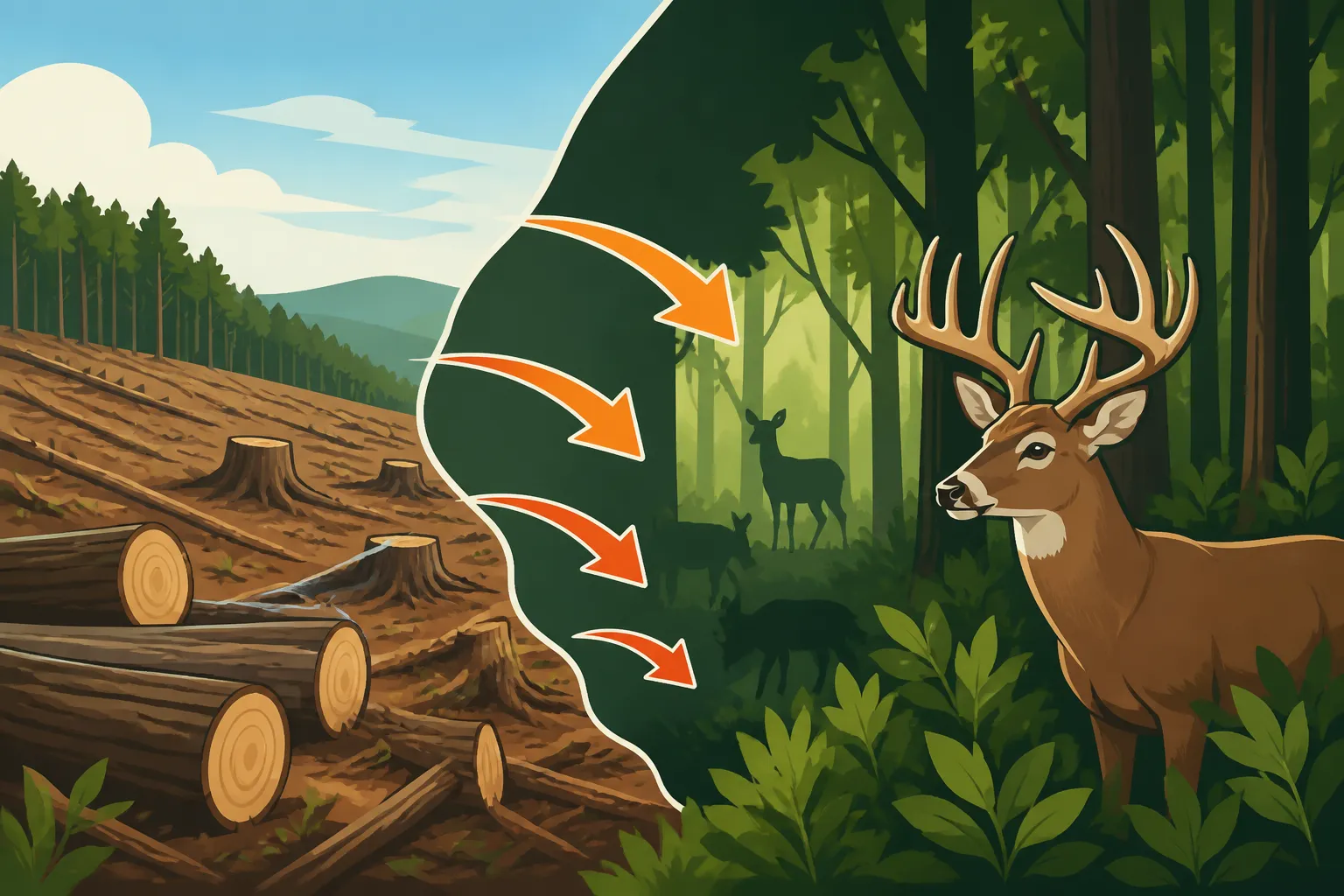
Timber Cuts and Where Deer Move After
There's nothing quite like returning to your favorite hunting spot, only to find it's been clear-cut, or that familiar ridge has been heavily thinned. It feels like someone just tore down your deer's living room, and your carefully laid plans instantly go up in smoke. But don't despair! Understanding how deer react to timber cuts in Tennessee is one of the most powerful tools you can add to your hunting arsenal, turning what seems like a ruined spot into a new opportunity. This guide will walk you through the immediate and long-term impacts of logging on deer movement and behavior, helping you adapt your strategies to find success in these ever-changing landscapes.
Understanding the Immediate Impact of Timber Cuts on Deer
When the chainsaws start humming and the heavy equipment rolls in, it's a shock to the system for local wildlife, including our beloved whitetails. The immediate aftermath of a timber cut can drastically alter deer patterns, but not always in the way you might expect.
Initial Disruption and Displacement
Picture this: you've got a secluded hollow or a mature hardwood ridge where you consistently see deer. Then, one day, the loggers move in. The constant noise of felling trees, the rumbling of skidders, and the sheer human presence can cause an immediate, albeit often temporary, displacement of deer. For a few days, or even a week or two during active logging, deer will typically vacate the immediate area. They don't vanish entirely from the landscape, but they'll shift to adjacent cover that offers security and quiet. This might mean moving to a nearby unlogged patch of woods, a dense creek bottom, or even across a ridge into an entirely different drainage. It's their instinct to avoid danger and seek refuge, and a logging operation certainly feels like danger to them.
However, this initial displacement is rarely permanent. Deer are incredibly resilient and adaptive creatures. Once the most intense activity subsides, or if the logging is intermittent, deer will often begin to filter back in, drawn by new opportunities. They're constantly assessing their environment for food, cover, and safety, and a fresh cut, despite the initial disturbance, quickly starts to offer all three in different ways. Hunters who understand this can start to look for movement along the edges of the newly disturbed areas, where deer might be staging before re-entering or simply passing through to connect familiar feeding and bedding sites.
Short-Term Food and Cover Changes
The moment a tree falls, it creates new possibilities for deer. Initially, the ground disturbance from equipment creates exposed mineral soil, which can lead to a flush of new herbaceous growth. More importantly, the tops of the felled trees themselves become an instant buffet. Twigs, buds, and young leaves that were previously out of reach are now easily accessible. Deer, especially in late fall and winter, will move into fresh cuts to browse on this windfall of nutrition. It's like an all-you-can-eat salad bar suddenly appearing in their backyard. This period of browsing on fresh tops can last for weeks, especially if the weather is cold and other food sources are scarce.
Beyond the immediate browse, the sheer chaos of a timber cut also provides short-term cover. Piles of logs, brush tops, and even upturned root balls create temporary hiding spots and visual barriers. While not ideal for long-term bedding, these areas can be used for quick concealment or as staging points before moving into more open areas. The increase in sunlight hitting the forest floor also kickstarts the growth of various weeds and forbs that deer love, providing a temporary bump in forage diversity. This initial stage is crucial for hunters to recognize; deer aren't just fleeing, they're assessing and exploiting these new resources almost immediately. Looking for fresh tracks and droppings among the logging debris can quickly tell you if deer have returned to sample the goods.
The Long-Term Habitat Evolution and Deer Adaptation
While the immediate impact of logging can be jarring, the true magic for deer hunting often unfolds in the years following the cut. The forest doesn't stay barren; it undergoes a remarkable transformation that profoundly influences deer behavior for decades.
Regrowth as New Food Sources
As the initial shock wears off and sunlight bathes the forest floor, a rapid explosion of plant growth begins. This is where timber cuts become deer magnets. Young saplings, briars, forbs, and grasses that couldn't thrive under the dense canopy now flourish. Think about the thickets of blackberry, greenbrier, sumac, and young oaks or sweetgums that emerge. These plants offer an incredible diversity of browse throughout the year. In spring and summer, succulent new shoots are prime forage. In fall and winter, the woody stems, buds, and residual berries provide critical sustenance when other foods are scarce. This is particularly vital in areas like the Cumberland Plateau Ridgelines, where mature timber can sometimes lack diverse understory browse.
Over time, this regrowth also introduces new mast opportunities. While it takes years for oak and hickory saplings to produce, the initial flush of other food sources sustains the deer herd. A timber cut effectively resets the forest succession, creating a continuous cycle of fresh, nutritious forage that attracts deer from surrounding, less productive mature timber. Smart hunters know that finding these areas of diverse regrowth, especially those bordering older timber or agricultural fields, is key to consistent success. Deer will travel significant distances to take advantage of these abundant food plots created by nature.
Emergence of Thicket Cover
Beyond food, the dense regrowth in a timber cut provides unparalleled security cover. What starts as an open, logged area quickly transforms into an impenetrable jungle of briars, young trees, and woody shrubs. Deer, especially mature bucks, crave dense cover where they can bed down and feel safe from predators and human disturbance. These thickets offer thermal cover in winter, shade in summer, and most importantly, visual security. A deer bedded in a young clear-cut can be incredibly difficult to spot, even from a short distance.
These areas become prime bedding sites, particularly when they are located near food sources or water. Deer will often bed inside these thickets during the day and then move out to feed at dawn and dusk. The edges of these thickets, where the dense cover meets more open timber or fields, become natural travel corridors and ambush points. Understanding the stages of regrowth is crucial: a cut that is 3-7 years old, for instance, often offers the perfect combination of browse and bedding density. This is where you might find a mature buck hunkered down, feeling invisible. Hunting Where the Antlerless Limit Drops to Two means focusing on areas with plenty of security cover to hold those deer.
Edge Effect and Increased Activity
The "edge effect" is a well-known ecological principle that states that diversity and abundance of wildlife are often greatest where two habitat types meet. Timber cuts, by their very nature, create extensive new edges. Whether it's the sharp line between a clear-cut and an old-growth forest, or the irregular boundary of a selective cut, these transition zones become hubs of deer activity. Deer love to walk these edges, using the cover of the uncut timber for security while simultaneously browsing on the new growth in the cut.
These edges are prime locations for rub lines, scrape lines, and general travel corridors. They offer a perfect balance: easy access to new food, but immediate escape cover if danger arises. Hunters should pay close attention to where these edges intersect with other natural features like creek bottoms, old logging roads, or terrain funnels. A funnel between two bottoms, for example, that also happens to be a fresh cut edge, can be an absolute hotspot. This phenomenon is why scouting with tools like onX Hunt or GoHunt to identify these new edges on aerial imagery can give you a massive advantage before you even set foot in the woods. These apps can highlight recent clearings or changes in canopy density that indicate new edges have formed.
Scouting and Hunting Strategies for Timber Cuts
Okay, so we know deer eventually love timber cuts. But how do you actually hunt them effectively? It's not as simple as just walking into the new growth. Successful hunting in these areas requires a tailored approach to scouting and stand placement.
Reading the Signs in a Fresh Cut
When you first venture into a recently logged area, it can feel like a bomb went off. It's messy, loud, and disorienting. But amidst the chaos, deer sign is often abundant. Start by looking for tracks in the disturbed soil. The muddy trails left by skidders and logging trucks often get used by deer as easy travel lanes, especially if they parallel a contour or lead towards a thicker area. Pay close attention to these tracks: are they fresh? Are there multiple sets? Are there signs of browsing on the freshly felled tree tops? You'll often see distinct clipping marks on young saplings or exposed branches where deer have been feeding.
Also, look for droppings. An abundance of deer droppings, particularly fresh ones, confirms that deer are utilizing the area for feeding or bedding. Don't forget about rubs and scrapes, especially along the edges of the cut where bucks might be marking territory. Sometimes, these will be on smaller saplings within the cut itself, or on the larger trees just inside the standing timber line. The more disturbed the area, the more distinct these signs often appear against the broken ground. You're looking for patterns in the chaos.
Utilizing Technology for Scouting
Modern hunting technology has revolutionized how we approach timber cuts. Instead of blindly hiking miles, you can now do significant scouting from your couch. GoHunt and onX Hunt are fantastic tools for this. Before you even head to the field, use the satellite imagery on these apps to identify recent timber cuts. Look for areas where the forest canopy has dramatically changed or been removed. Many times, these images are updated frequently enough to show changes from the previous year. You can also identify adjacent cover, potential travel corridors, and access points.
Once you've identified a promising cut, use the layering features to check property boundaries, locate old logging roads (which often become deer trails), and mark potential stand sites. You can drop pins on fresh deer sign you find on the ground and then use the app to understand its relationship to the surrounding habitat. For example, if you find heavy browse in a 3-year-old clear-cut, you can use the app to identify the thickest part of that cut for potential bedding and then locate a strategic ambush point on the downwind side, along an old logging road. This kind of pre-hunt analysis, combined with on-the-ground validation, is incredibly efficient. When Scouting Tennessee Public Land Before Season, these digital maps become indispensable.
Hunting Tactics for Different Stages of Regrowth
The best hunting strategy depends heavily on the age of the timber cut:
- Fresh Cuts (0-2 years old): These areas are primarily food sources. Deer will move in to browse on fallen tops and new herbaceous growth. Focus on still-hunting or setting up stands along the very edges, particularly where the cut meets dense, unlogged cover. Deer will often filter in during daylight hours. Long-range shooting can be a possibility in these more open areas, so ensure your rifle is sighted in for varied distances. Opening Weekend Tactics for Tennessee Gun Season often involve finding these fresh feeding grounds.
- Young Regrowth (3-7 years old): This is often the sweet spot. The cut has transformed into dense, impenetrable bedding cover with abundant browse. Deer will live here. This is perfect for still-hunting slowly through the thickets, paying close attention to wind direction and thermal currents, or setting up ground blinds or ladder stands on the fringes where deer exit and enter. Look for small pockets of slightly older trees or topographical features within the cut that might create natural funnels.
- Intermediate Regrowth (8-15 years old): The trees are getting taller, and the thicket might be thinning slightly as some species outcompete others. Deer still use these areas, but travel lanes might become more defined, and bedding could shift to the densest remaining patches. Look for established trails that weave through the growing timber, especially those connecting to mature timber or other food sources. This stage can be great for archery hunting as deer might feel more comfortable moving through the slightly more open, but still dense, cover.
- Mature Regrowth (15+ years old): As the forest matures, it will eventually lose its "cut" characteristics, and deer patterns will revert to those of a mature forest, albeit with a potentially different species composition. You'll be back to focusing on mast crops, specific browse patches, and established travel routes.
Specific Tennessee Timber Cut Scenarios and Deer Behavior
Tennessee's diverse landscape means timber cuts vary widely in their execution and impact. Understanding these regional differences can further refine your hunting approach.
Clear-Cuts in West Tennessee Bottomlands
West Tennessee is known for its rolling farmland and rich river bottoms. Clear-cutting here often occurs to convert timberland into agricultural fields or to replant a single species, like pines. These clear-cuts, especially those adjacent to standing agricultural crops like corn or soybeans, become absolute magnets for deer. The rich bottomland soil ensures rapid regrowth of browse, and the proximity to high-energy food sources (the crops) creates a perfect scenario.
Deer in these areas will often bed deep within the dense clear-cut thickets during the day, emerging at dusk to feed in the crops. Hunting the edges of these clear-cuts, particularly where they meet a standing crop field or a narrow finger of unlogged timber, can be incredibly productive. You're essentially setting up on a deer's dining room door. Look for entry routes through standing beans or parallel to a creek bottom that borders the cut. Hunting West Tennessee Bottomland Deer means understanding these specific habitat dynamics.
Select Cuts on Cumberland Plateau Ridges
The Cumberland Plateau is characterized by its steep, rugged terrain, rocky outcrops, and mixed hardwood forests. Selective cutting is more common here, where loggers remove specific trees, leaving the majority of the canopy intact. This type of cut creates pockets of increased sunlight and browse within an otherwise mature forest. Deer often utilize these areas by moving through the remaining timber, pausing to browse in the sunlight-drenched openings, and then continuing to their bedding areas on the leeward sides of the ridges.
For hunters, this means focusing on the "soft edges" within the selectively cut areas. Look for natural funnels that lead deer through these newly opened patches, especially saddles or draws. These selective cuts increase browse availability, making them good places to find deer during the day, particularly if you're Still-Hunting Cumberland Plateau Ridges. Pay attention to wind and thermals, as deer will often navigate these broken landscapes using subtle air currents.
Thinned Timber in Cherokee National Forest
The Cherokee National Forest Hunting area, with its vast tracts of public land in East Tennessee, often sees timber thinning operations for forest health or timber production. Thinning involves removing a percentage of trees to reduce competition, allowing the remaining trees to grow larger. This doesn't create the dense, impenetrable thickets of a clear-cut, but it does allow more sunlight to reach the forest floor, promoting an increase in herbaceous browse.
Deer in thinned timber will often browse through these more open understories during the day, finding new food sources without the extreme exposure of a clear-cut. This makes them good areas for still-hunting or setting up mobile treestands. Look for areas within the thinned timber where dense laurel or rhododendron thickets provide security cover, or where terrain features create natural travel corridors. The increased visibility in thinned timber can also make it easier to spot deer from a distance, but also makes you more visible, requiring extra caution.
Here’s a quick overview of how deer react to different timber cut scenarios:
| Timber Cut Type | Immediate Deer Use | Long-Term Deer Use (Regrowth Stage) | Hunting Strategy Focus | Best Time of Day |
|---|---|---|---|---|
| Clear-Cut | Browsing on fallen tops; temporary displacement | Dense bedding cover; abundant new browse; travel corridors | Edges meeting mature timber/crops; still-hunting interior | Dawn/Dusk (entry/exit); Mid-day (interior bedding) |
| Selective Cut | Browsing on new growth; increased visibility | Enhanced understory browse; travel through | Intersections of openings/dense cover; interior funnels | All day, especially mid-morning and late afternoon |
| Thinned Timber | Browsing on new herbaceous growth; increased travel | More open browse; slightly better visibility; security cover | Still-hunting through; mobile treestands near thicker patches | Mid-day browsing; connecting traditional travel routes |
By understanding the unique ways deer respond to various timber cuts in our diverse Tennessee landscape, you're not just adapting to change – you're actively exploiting it. Whether it’s a fresh clear-cut in a west Tennessee river bottom or a thinned area in the mountains, a changing landscape offers some of the best hunting opportunities available.
Disclaimer
This article is for general informational purposes only and does not constitute professional advice. Laws, prices and regulations vary by location and change over time. Consult a qualified professional for guidance on your specific situation.