How TWRA Counts the Tennessee Deer Herd
Tennessee Wildlife Resources Agency methods for counting deer populations using hunter harvest reports and scientific data models.
Know what you’re after.
Big game, small game, upland birds, and waterfowl — identification, behavior, rut and migration timing, and how each species moves through the season.

Tennessee Wildlife Resources Agency methods for counting deer populations using hunter harvest reports and scientific data models.

Tennessee whitetail antler shedding timelines, driven by hormones and health, span from late January through early March.

Tennessee deer meat yield calculates from live weight, field dressed weight, and deboned processed weight for your freezer.
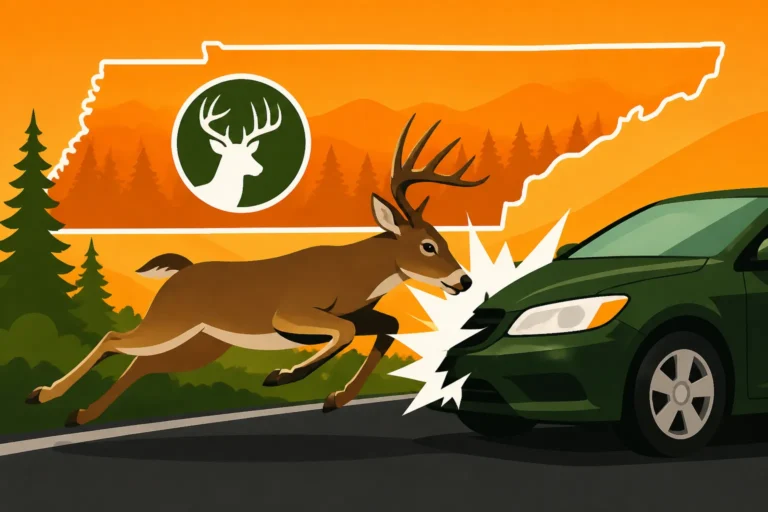
Tennessee deer vehicle collisions peak at dawn, dusk, and late fall, threatening drivers across rural and suburban roadways.
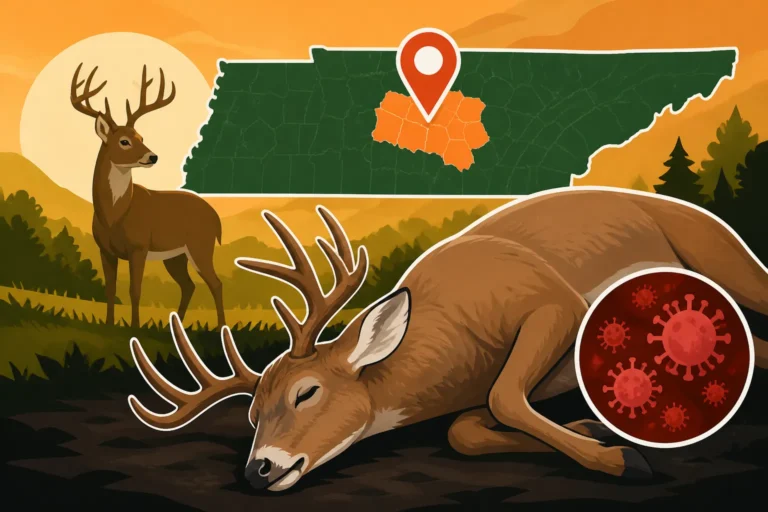
Epizootic Hemorrhagic Disease causes viral Tennessee deer die-offs transmitted by biting midges during late summer droughts.
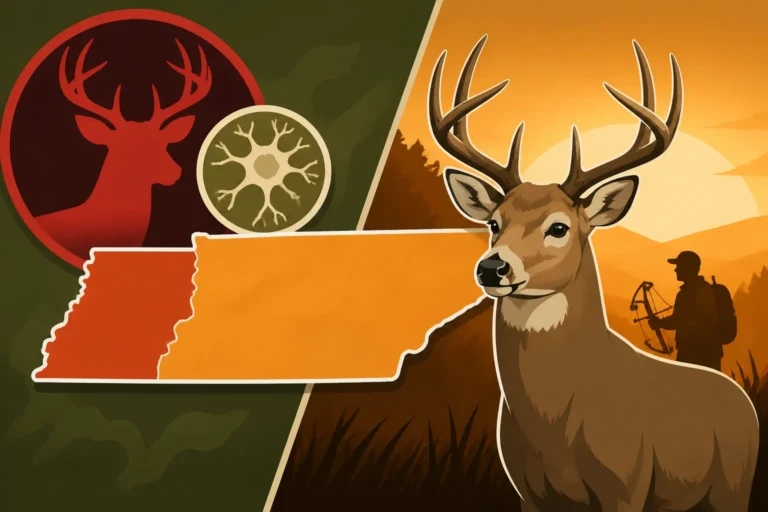
Chronic Wasting Disease prevalence in West Tennessee deer herds, transmission methods, and management strategies for hunters.

Williamson County’s first chronic wasting disease case surprised Tennessee hunters by jumping far eastward from the initial western outbreak.

Chronic Wasting Disease appearing in Dickson County marks a significant eastward spread affecting local deer management.
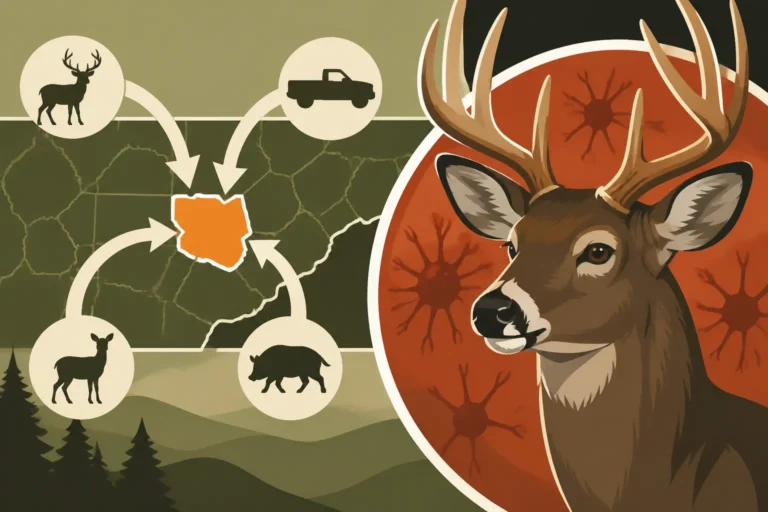
Chronic Wasting Disease spreading to Humphreys County brings new regulations and concerns for deer hunters in Tennessee.
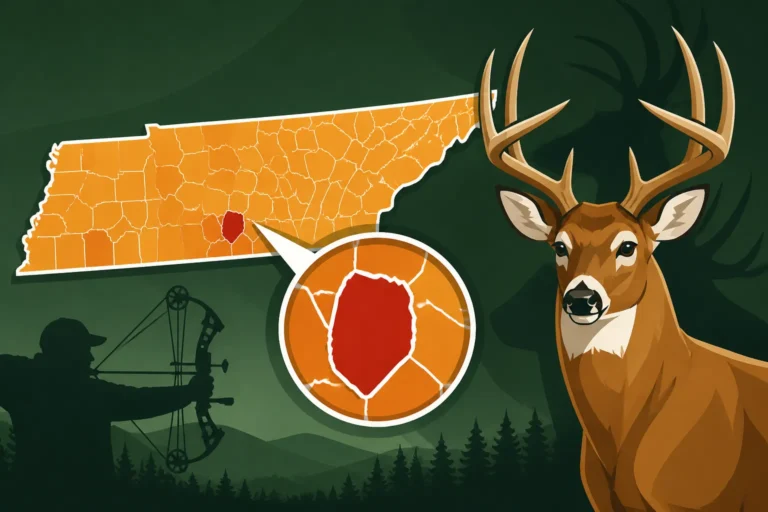
Fayette County holds Tennessee’s first confirmed Chronic Wasting Disease case, detected in a white-tailed deer in late 2018.