Tennessee Bison History Before Settlement
It's easy to look across the rolling hills and deep hollows of Tennessee today and imagine its wilderness history through the lens of deer, bear, and turkey. But there's a vital, often forgotten chapter in our state's natural story: the thunderous presence of bison. These magnificent animals once roamed Tennessee in vast numbers, shaping the landscape and influencing every creature, including humans, who shared their domain. This guide will take you back in time to explore the incredible history of bison in Tennessee before European settlers arrived, helping you understand the true wild spirit of our land.
The Ghost of the Prairies: Bison in Tennessee's Ancient Landscape
Many folks think of bison as creatures of the western plains, thundering across Nebraska or Montana. But for thousands of years, North America's largest land mammal was just as at home right here in the Appalachian foothills and fertile river bottoms of Tennessee. Imagine vast herds grazing not on sagebrush, but on the rich native grasses of what would become the Cumberland Plateau, or wallowing in the mud of the Mississippi River floodplain. This wasn't some isolated pocket; these were healthy, thriving populations that were an integral part of the ecosystem.
The geological history of Tennessee created perfect conditions for bison. Our state's varied topography, from the wide-open spaces of the western plains-like regions to the more broken, forested areas of the east, provided a mosaic of habitats. Bison, while often associated with treeless plains, were quite adaptable and thrived in open woodlands, canebrakes, and prairies within the forests. They were ecological engineers, constantly shaping their environment through grazing, trampling, and creating wallows that became temporary wetlands, benefiting countless other species. Their presence was a testament to the incredible biodiversity and vastness of the pre-settlement Tennessee wilderness.
Climate and Habitat That Supported Giant Herds
Before the axes and plows of European settlers drastically altered the landscape, Tennessee was a patchwork of open grasslands, old-growth forests, and dense canebrakes, particularly in the western and central parts of the state. These areas offered an abundant food source of native grasses and forbs, critical for supporting animals as large and numerous as bison. The climate, with its warm growing seasons and milder winters compared to the far north, allowed for year-round foraging, albeit with seasonal shifts in diet.
The fertile river valleys, like those of the Tennessee and Cumberland Rivers, provided ideal wintering grounds, with ample forage and natural shelter from harsh weather. In fact, many of Tennessee’s major waterways and geographic features derive their names or historical significance from the very pathways these animals created. It's truly fascinating to consider how the very ground we walk on was once trodden by thousands upon thousands of these giants. Just as White-Tailed Deer Across Tennessee utilize diverse habitats today, bison exploited the full spectrum of Tennessee's ecological offerings.
Archaeological Evidence of Bison Presence
We don't just rely on old maps or settler accounts to know bison were here; the earth itself tells us. Archaeological digs across Tennessee have uncovered bison remains, indicating their widespread distribution and long-term presence. Stone tools found alongside these remains suggest a long history of human interaction and hunting. Imagine ancient inhabitants tracking a herd along a game trail near what is now Nashville or Memphis, a path carved by generations of bison.
These findings help paint a vivid picture of a landscape teeming with life, where bison were not an anomaly but a dominant force. From artifacts found in the Cumberland River basin to relics unearthed in West Tennessee, the evidence is consistent: bison were a significant part of the fauna for millennia. This rich history makes discussions about Tennessee Bison History Before Settlement so compelling, reminding us of the dynamic past of our natural world.
Bison Traces: The Ancient Highways of Tennessee
One of the most profound impacts bison had on the Tennessee landscape was through the creation of their "traces" or trails. These weren't just random paths; they were well-worn, deeply rutted highways, often several feet wide and sometimes even eroded into shallow troughs, created by generations of migrating herds moving between feeding grounds, water sources, and salt licks. These traces became foundational elements of the landscape, influencing everything from human migration to modern road infrastructure.
These traces weren't just for bison; they became superhighways for other wildlife too. Deer, elk, bears, and smaller game all utilized these established routes, finding the easiest paths through dense forests or across challenging terrain. This network of trails effectively organized the movement of animals across the entire state. Understanding these ancient routes is like looking at a topographical map of pre-settlement Tennessee, revealing how the land was used and traversed by its wild inhabitants.
How Bison Carved the Land
The sheer weight and numbers of bison herds meant their movements had a significant geological impact. Their hooves compacted soil, cleared vegetation, and channeled water, especially during migrations. This created corridors that were less dense with vegetation, often running for miles. Picture thousands of animals, each weighing over a thousand pounds, moving purposefully through a landscape, year after year, century after century. The cumulative effect was immense.
These traces often followed the paths of least resistance – ridge lines, river valleys, and natural saddles. They provided clear arteries through what would otherwise be impenetrable wilderness. Think about how deer today follow subtle changes in topography to travel efficiently; bison did this on a grander, more impactful scale. The traces were not just paths; they were ecological features in their own right, shaping drainage patterns and influencing plant communities along their edges.
From Bison Traces to Human Paths and Modern Roads
Perhaps the most fascinating legacy of the bison traces is how they dictated human movement and, eventually, settlement patterns. When early indigenous peoples traversed Tennessee, they naturally utilized these pre-existing, efficient pathways. Why hack a new trail through dense woods when a perfectly good, well-maintained trace already existed? These traces became the arteries of early human travel, facilitating trade, communication, and hunting expeditions.
Later, as European long hunters and settlers ventured into the territory, they too discovered the utility of these ancient highways. Many of Tennessee's earliest roads and even modern interstate routes often follow the general direction of these original bison traces. What started as a path for migrating buffalo became a path for wagons, and eventually, pavement. For example, parts of the Natchez Trace Parkway or sections of the original Wilderness Road bear striking resemblances to the known routes of historic bison migrations. It gives a whole new meaning to "taking the scenic route" when you realize you might be driving on a path trod by bison thousands of years ago. We can still see echoes of these natural corridors when Reading Aerial Photos for Cumberland Plateau Deer today, noting how game animals still prefer certain topographical features.
The Dance of Survival: Early Humans and Bison in Tennessee
For the indigenous peoples who inhabited Tennessee for millennia, bison were far more than just another animal; they were a central pillar of survival and culture. The relationship was complex, involving skilled hunting techniques, respectful resource management, and a deep understanding of the animal's behavior and migrations. Hunting a bison was no small feat, requiring courage, teamwork, and an intimate knowledge of the land and the prey.
Unlike modern hunting, where success is often measured by a single animal, the ancient hunt for bison was often a communal effort, sometimes involving entire tribes. The rewards, however, were immense: not just meat for sustenance, but hides for shelter and clothing, bones for tools, and sinew for cordage. Every part of the animal was utilized, reflecting a profound connection to the natural world and a sustainable approach to living off the land. This contrasts sharply with the often-destructive methods that would later lead to the bison's near extinction.
Hunting Methods of Indigenous Peoples
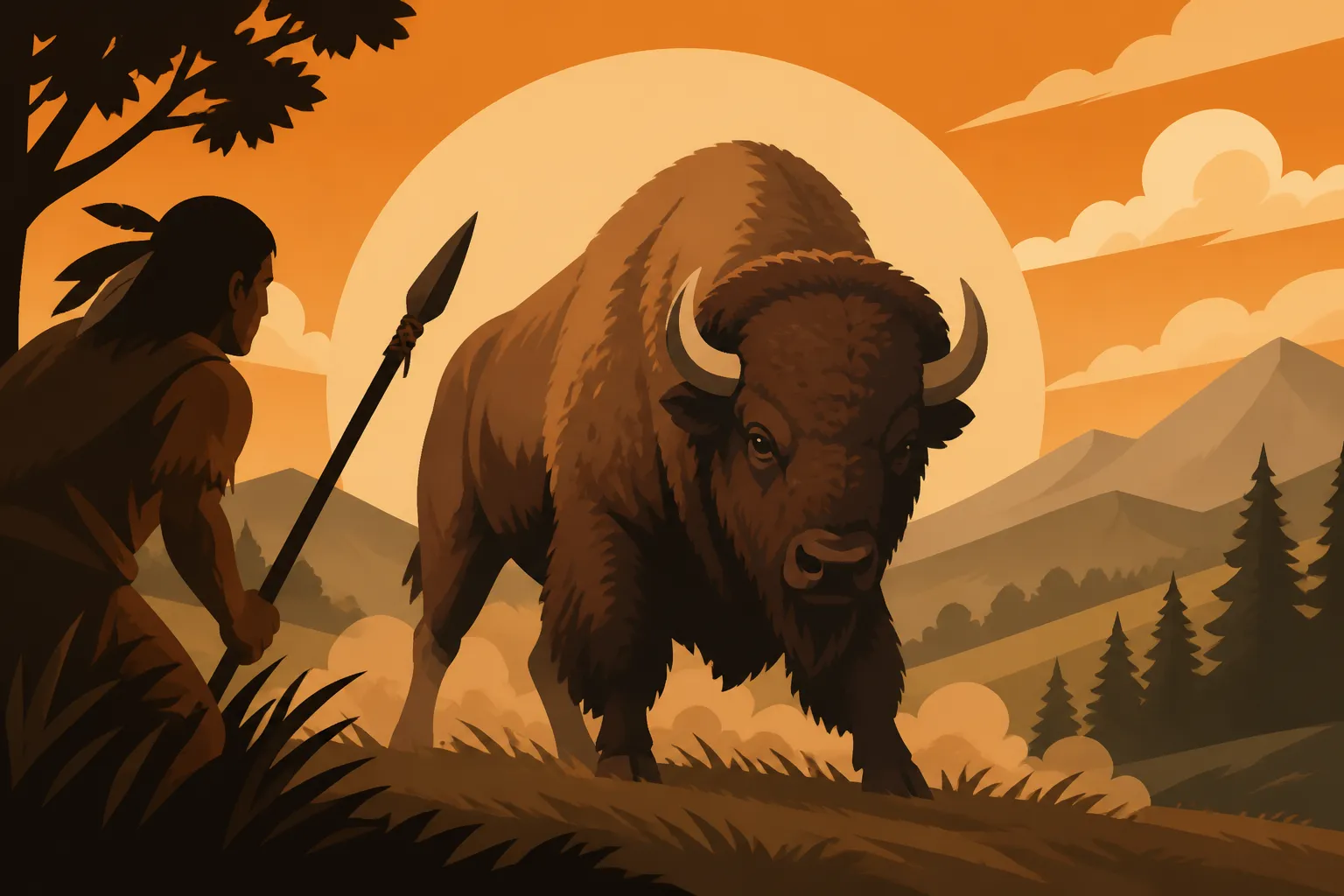
Imagine hunting a thousand-pound animal with spears and bows made of wood, stone, and sinew. It required incredible strategy and skill. While the iconic "buffalo jump" might be associated with the western plains, in Tennessee's more varied landscape, other methods were likely more common. These included ambushing bison in natural funnels, driving them into natural enclosures or corrals, or employing fire to direct herds.
Individual stalking and hunting with atlatls (spear throwers) or early bows were also practiced, especially for smaller groups or for targeting individual animals. The hunter had to understand the bison's senses, its habits, and how to approach without spooking the entire herd. It was a dangerous endeavor, but one that provided crucial resources for survival in the wilderness. This relationship was a stark contrast to modern methods like Deer Drives With Three or Four Hunters, highlighting the different scales of the hunt.
Cultural Significance and Resource Utilization
Beyond food, bison held deep cultural and spiritual significance for many indigenous groups in Tennessee. Their strength, resilience, and life-giving qualities were likely revered. Stories, dances, and ceremonies often revolved around the bison, celebrating its role in sustaining life and ensuring the well-being of the community. The animal wasn't just meat on the bone; it was a sacred entity, a giver of life.
Every part of the bison was used:
- Meat: A primary source of protein, often dried or smoked for preservation.
- Hides: Used for tipis, clothing, blankets, and moccasins.
- Bones: Fashioned into tools, needles, and decorative items.
- Horns: Used for cups, spoons, and ceremonial objects.
- Tendon/Sinew: Strong fibers for bowstrings, sewing, and lashing.
- Fat: Rendered for cooking, fuel for lamps, and making pemmican (a nutritious survival food).
This comprehensive use of resources speaks to a profound understanding of the natural world and a sustainable approach to living. It reminds us of a time when people lived truly off the land, with an appreciation for every gift it provided.
| Resource Category | Bison Use by Indigenous Peoples | Modern Analog (if any) |
|---|---|---|
| Sustenance | Meat, Marrow, Organ Meats | Venison, Elk Meat |
| Shelter/Clothing | Hides for tipis, cloaks, shoes | Leather products |
| Tools | Bones for awls, scrapers, hoes | Steel tools |
| Adornment | Horns, teeth, bone carvings | Antler art, jewelry |
| Energy | Fat for cooking, lamps | Cooking oils, fuels |
| Cordage | Sinew for sewing, bowstrings | Synthetic rope, thread |
The Retreat of the Herds: Bison Decline Before European Settlement
While European settlement and market hunting delivered the final, devastating blow to bison populations across North America, including Tennessee, it's important to understand that some decline or shifting of populations may have already been underway. The causes of this pre-colonial decline are complex and often debated, but likely included a combination of localized overhunting by burgeoning indigenous populations, disease, and subtle climate shifts that affected their preferred habitats.
The notion that bison were only abundant out West and then completely wiped out by settlers oversimplifies a much longer and more nuanced ecological history. While their numbers here were impressive, they weren't necessarily immune to environmental pressures or human impacts even before sustained European contact. The disappearance of these majestic animals from Tennessee's landscape was a process, not a singular event.
Natural Environmental Pressures
Just like any wild population, bison were subject to natural fluctuations. Severe winters, prolonged droughts, or widespread disease could significantly impact herd numbers. While bison are incredibly resilient, large-scale events, especially when combined with other pressures, could lead to localized declines. For example, a particularly harsh winter might weaken herds, making them more susceptible to disease or predation.
The periodic shifts in climate, even minor ones, could also alter the composition of grasslands or the availability of water, compelling herds to move or reducing their reproductive success. Such natural cycles, while generally part of a healthy ecosystem, could contribute to a gradual reduction in population density in certain areas over long periods. This is a reminder that ecosystems are constantly in flux, a concept still relevant when discussing Tennessee Deer Population Estimate and their health today.
Human Impact Prior to European Arrival
While indigenous hunting was generally sustainable, there's evidence that in some areas, growing human populations and intensified hunting could have put pressure on local bison herds. As agricultural practices became more widespread among certain groups, some bison habitat might have been converted to fields, or hunting pressure increased to provide food for larger, more sedentary communities.
It's a delicate balance. While indigenous cultures deeply respected the bison and often practiced communal, conservation-minded hunting, the sheer scale of human population growth over centuries could, in localized instances, have led to overharvesting or displacement of herds. This is not to diminish the impact of European market hunting, but rather to acknowledge the complex interplay of factors that affect any large game species over thousands of years. The decline of species like Tennessee Wolf History and Extirpation or Tennessee Ruffed Grouse Decline demonstrate how vulnerable even robust populations can be to a combination of factors, both natural and human-induced.
The Final Chapter: Reimagining Tennessee's Wildness
The last wild bison in Tennessee were likely seen in the early 19th century, pushed out by increasing settlement, loss of habitat, and relentless hunting pressure. Their disappearance marked a profound change in the ecological character of the state. Imagine a landscape without the massive presence of these grazers, the intricate web of life that depended on them, suddenly unraveling.
Today, while we don't have wild bison roaming Tennessee, we can learn from their history. Understanding their role helps us appreciate the scale of change our landscape has undergone and reinforces the importance of conservation efforts for species like Tennessee's Restored Elk Herd and Tennessee's Black Bear Population. It encourages us to look at our forests and fields with a deeper historical perspective, recognizing the "ghosts" of the prairies that once thundered across our beloved Tennessee.
Disclaimer
This article is for general informational purposes only and does not constitute professional advice. Laws, prices and regulations vary by location and change over time. Consult a qualified professional for guidance on your specific situation.