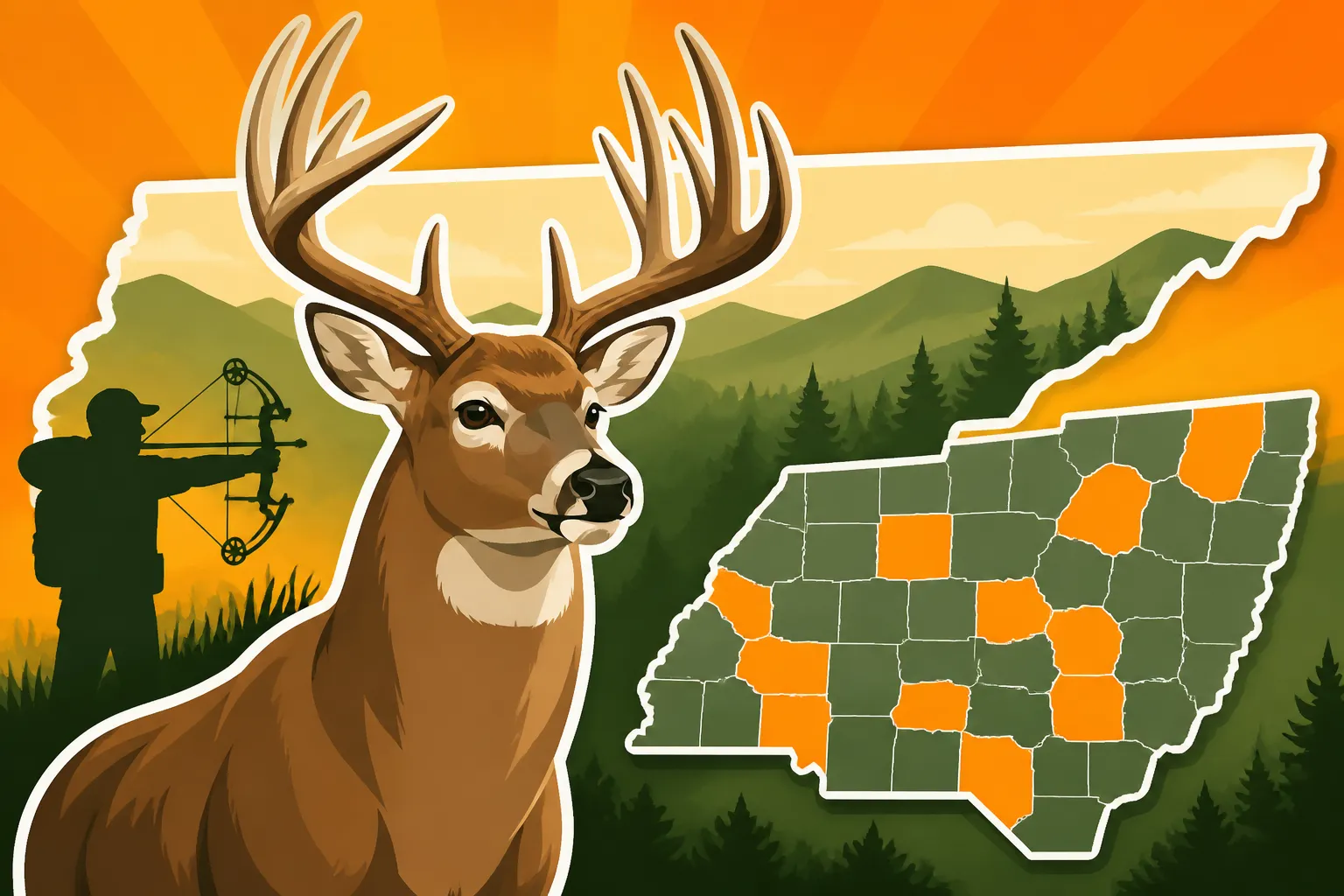
Best Tennessee Counties for Big Bucks
Tennessee is a state rich with diverse landscapes, from the cypress swamps of the west to the rugged peaks of the east. For many deer hunters, the ultimate goal isn't just to fill a tag, but to connect with one of the state's elusive big bucks. But where do you even begin to look for those giants? It can feel like an overwhelming task, but understanding what makes certain counties shine can dramatically improve your odds. This guide will walk you through the factors that contribute to trophy deer potential and point you toward some of Tennessee's most promising hotspots.
Understanding What Makes a County a "Big Buck" Hotspot
It's not just luck when certain areas consistently produce larger deer. There's a science to it, a combination of environmental factors and management strategies that allow bucks to reach their full potential. If you understand these elements, you can better target your efforts, whether you're scouting new public land or trying to improve your private ground.
Habitat and Nutrition: The Foundation for Growth
Just like with any animal, the quality and abundance of food sources are paramount for deer, especially when it comes to antler growth. Bucks need a consistent supply of high-protein forage, crucial for body development and then for translating that energy into antler mass.
Imagine a county dominated by rich agricultural fields – corn, soybeans, winter wheat. These areas act like giant buffet lines for deer, providing a consistent, high-calorie, and nutrient-dense diet throughout the year. The deer in these regions often show impressive body weights, which directly correlates to their antler development. Beyond agriculture, diverse natural habitats play a huge role too. Large blocks of mature hardwoods, especially those with an abundance of mast crops like acorns and pecans, provide critical energy boosts, particularly in the fall. Bottomlands with lush vegetation and varied browse also contribute significantly. The underlying soil quality, rich in minerals, directly impacts the minerals available in the forage, which are then absorbed by the deer and contribute to stronger, larger antlers. A county with a diverse and rich food base is almost always going to have a leg up.
Genetics and Age Structure: The Hidden Variables
Even with the best food, a buck won't grow a massive rack if he doesn't have the genetic blueprint for it or isn't given enough time to mature. This is where genetics and age structure come into play, often overlooked but incredibly important.
Every deer carries a unique genetic code, and some simply have the potential to grow larger antlers than others. While you can't really control the genetics of a wild deer herd, what you can influence, to an extent, is the age structure. A young buck, even with great genes and food, simply hasn't had enough seasons to express his full antler potential. Most truly "big" bucks are typically three-and-a-half years old or older. Counties where hunting pressure is managed, or where there are significant areas of refuge, allow a greater percentage of bucks to survive into these older age classes. This natural selection, combined with good habitat, means more opportunities for those impressive racks to develop. Sometimes, it's not about more deer, but older deer.
Hunting Pressure and Refuge Areas
Hunting pressure is a double-edged sword. While it's what makes deer hunting a sport, too much pressure can keep bucks from reaching older age classes and make them incredibly nocturnal and hard to hunt. Counties that consistently produce big bucks often have areas where deer can escape.
Think about large tracts of private land that are minimally hunted, or vast public lands with areas so rugged or remote that they see very little human intrusion. These serve as sanctuaries where bucks can grow old relatively undisturbed. Even within heavily hunted counties, there are often overlooked pockets – thick cedar swamps, dense clear-cuts, steep hollows, or even small, awkward woodlots that hunters walk past. These areas allow bucks to establish safe havens, feed, and mature. When researching potential counties, consider not just the overall deer population but also how that population is distributed and where the deer might be finding refuge from constant human presence. It's often in these less-traveled spots where a true giant is able to live out his years relatively unmolested, building the impressive rack we all dream about. Using mapping tools like GoHunt to identify dense cover, inaccessible terrain, or large tracts of private land can be incredibly insightful.
Top Regional Contenders for Trophy Whitetails
While a trophy buck can turn up anywhere in Tennessee, certain regions consistently stand out due to their unique blend of habitat, land use, and deer management history. Knowing these regional strengths can help you focus your scouting and hunting efforts.
West Tennessee's Agricultural Powerhouse
If you're chasing sheer body size and impressive racks, West Tennessee is often the first place hunters mention. This region is a flat, fertile breadbasket for good reason, and what's good for crops is great for deer.
The expansive river bottoms and rich, loamy soils of counties like Obion, Dyer, Gibson, Weakley, and Lake are dominated by row crops – corn, soybeans, and wheat stretch for miles. This agricultural abundance provides an unrivaled, year-round smorgasbord for deer, fueling incredible growth. You'll often hear stories of West Tennessee bucks with exceptional body weights, which translates directly to their antler mass. The relatively flat terrain also means that deer can move freely between feeding and bedding areas, often in thick bottomland cover or dense fencerows. While much of this land is private, savvy hunters who gain access to these farms often find themselves in some of the state's best big buck territory. It's a prime example of how nutrition drives antler development. If you're looking for more details on hunting these unique areas, check out our guide on Why West Tennessee Bottomland Grows Older Bucks. When scouting these areas, GoHunt's satellite imagery can be incredibly useful for pinpointing small woodlots, creek bottoms, and fencerows adjacent to vast fields that bucks will use for cover and travel.
Middle Tennessee's Underrated Gems
Middle Tennessee might not always get the same fanfare as the western counties for big bucks, but it holds some truly underrated gems, especially for those willing to do their homework. This region offers a diverse landscape that can surprise hunters.
Here, you'll find a mosaic of rolling hills, mixed hardwoods, smaller agricultural fields, and even suburban fringes. Counties like Maury, Williamson, Giles, and Lawrence often have a mix of land types. The key here is often the presence of large, often minimally pressured private tracts – old family farms, sprawling estates, or industrial lands – that inadvertently act as sanctuaries for deer. While the overall deer densities might not be as high as in some western counties, the quality can be exceptional. Bucks in these areas often have access to diverse natural forage, combined with smaller pockets of agriculture, allowing them to grow to maturity with less consistent hunting pressure. Hunters who are diligent in Knocking on Doors in West Tennessee Farm Country or scouting for overlooked patches of public land might discover a true sleeper buck haven here.
The Cumberland Plateau and Eastern Foothills
The Cumberland Plateau and the eastern foothills of Tennessee present a different kind of big buck challenge. This is rugged, mountainous country, heavily forested and often demanding more physical effort, but it can reward persistence.
Counties such as Fentress, Morgan, Cumberland, and Van Buren are characterized by steep ridges, deep hollows, and extensive hardwood forests. While agriculture is less prevalent here, the natural mast crop – especially acorns from the abundant oak trees – provides a critical food source. The sheer ruggedness of the terrain, particularly in areas like the Cherokee National Forest or certain Wildlife Management Areas, means that many areas see significantly less hunting pressure. Bucks can grow old in these secluded hollows and thick timber, becoming masters of their mountainous domain. Hunting these areas requires excellent physical conditioning and a solid understanding of deer movement on contour, but the rewards can be substantial. For those who brave the terrain, understanding Where Cumberland Plateau Bucks Bed is key. Using a detailed mapping application like GoHunt can be indispensable here, as it allows you to study topography, identify saddles, benches, and potential bedding areas in remote country long before you ever set foot in the woods.
Strategizing Your Hunt for a Tennessee Giant
Identifying a "big buck county" is only the first step. To actually connect with a trophy whitetail, you need a strategy that goes beyond county lines and focuses on the micro-details of the land, while also understanding the broader challenges of hunting in Tennessee.
Going Beyond County Lines: Spotting Micro-Habitats
Even in the most renowned big buck counties, not every acre holds a giant. The real magic happens when you can identify those specific, often small, micro-habitats that big bucks favor within a larger area.
Think of it like this: a county might have excellent overall potential, but a particular creek bottom, an old-growth timber stand adjacent to a thick clear-cut, an unpressured corner of public land, or a dense cedar thicket can be the precise spot where a mature buck chooses to live. These are the areas that offer the ideal combination of food, water, and security cover. They might be funnel points between bedding and feeding, secluded benches on a ridge, or a hidden field edge. Learning to read the landscape, whether through boots-on-the-ground scouting or using aerial photos and topographic maps, is crucial. Tools like GoHunt can help you analyze terrain features, identify subtle funnels, and pinpoint potential bedding areas. Don't just look for "deer country"; look for "big buck country" within that deer country. You can learn a lot from Reading Aerial Photos for Cumberland Plateau Deer or by Scouting With the Tennessee TWRA App before you ever step foot on the ground.
Managing Expectations and Understanding the Long Game
Hunting truly big bucks in Tennessee is rarely an overnight success story. It requires dedication, patience, and a realistic understanding of the challenges involved.
The truth is, mature bucks are rare, cunning, and have survived multiple hunting seasons for a reason. They are masters of evasion. Consistency is key – consistent scouting, consistent effort in the field, and a consistent commitment to learning your specific hunting areas. It often takes years to truly understand the patterns of mature deer on a particular property, whether it's public or private. Don't get discouraged if you don't tag a giant your first season in a new area. Instead, focus on learning, observing, and adapting. Every hunt, every scouting trip, every trail camera pull provides valuable data. Remember, the journey itself, the pursuit of that elusive trophy, is a significant part of the experience. It's about enjoying the process and appreciating the challenge that these magnificent animals present. Consider the impact of Hunting Pressure on Tennessee Public Land and actively seek out ground others walk past.
Navigating Challenges: CWD and Access
While chasing big bucks is exciting, it's important to be aware of the real-world challenges facing Tennessee hunters, particularly regarding Chronic Wasting Disease (CWD) and land access.
Tennessee, like many states, has areas designated as Chronic Wasting Disease (CWD) management zones. These zones have specific regulations regarding deer harvest, carcass transport, and mandatory testing. Before you plan your hunt, always check the current CWD status of the county you intend to hunt. Understanding Tennessee's Chronic Wasting Disease Management Zone is not just about compliance, it's about being a responsible hunter and contributing to herd health. Additionally, finding quality hunting access, especially on private land in prime big buck counties, can be a significant hurdle. Many top properties are leased or exclusively managed. Public lands offer opportunities, but often come with increased hunting pressure. Utilizing mapping applications can help identify public land boundaries and potential access points. GoHunt, for example, often provides property lines which can be invaluable for understanding land ownership when trying to gain permission or avoid trespassing. Always respect private property and seek permission before hunting.
Here's a quick look at how different Tennessee regions stack up in terms of big buck potential:
| Region | Key Characteristics | Big Buck Potential | Typical Antler Size Drivers |
|---|---|---|---|
| West Tennessee | Vast agriculture (corn, soybeans), rich river bottoms, flat terrain, dense fencerows. | High | Abundant, high-quality nutrition; older age class if less pressure. |
| Middle Tennessee | Rolling hills, mixed hardwoods, smaller agriculture, suburban fringe, large private tracts. | Moderate to High | Refuge on private lands, diverse forage, less consistent pressure. |
| Cumberland Plateau | Rugged, heavily forested, steep ridges, deep hollows, abundant mast crops. | Moderate | Limited pressure in remote areas, natural mast, older age class. |
| East Tennessee | Mountainous, Cherokee National Forest, lower agricultural presence, less dense deer herds. | Low to Moderate | Very low pressure in remote areas; lower nutrition overall. |
Disclaimer
This article is for general informational purposes only and does not constitute professional advice. Laws, prices and regulations vary by location and change over time. Consult a qualified professional for guidance on your specific situation.