Glassing a North Cumberland Elk Meadow
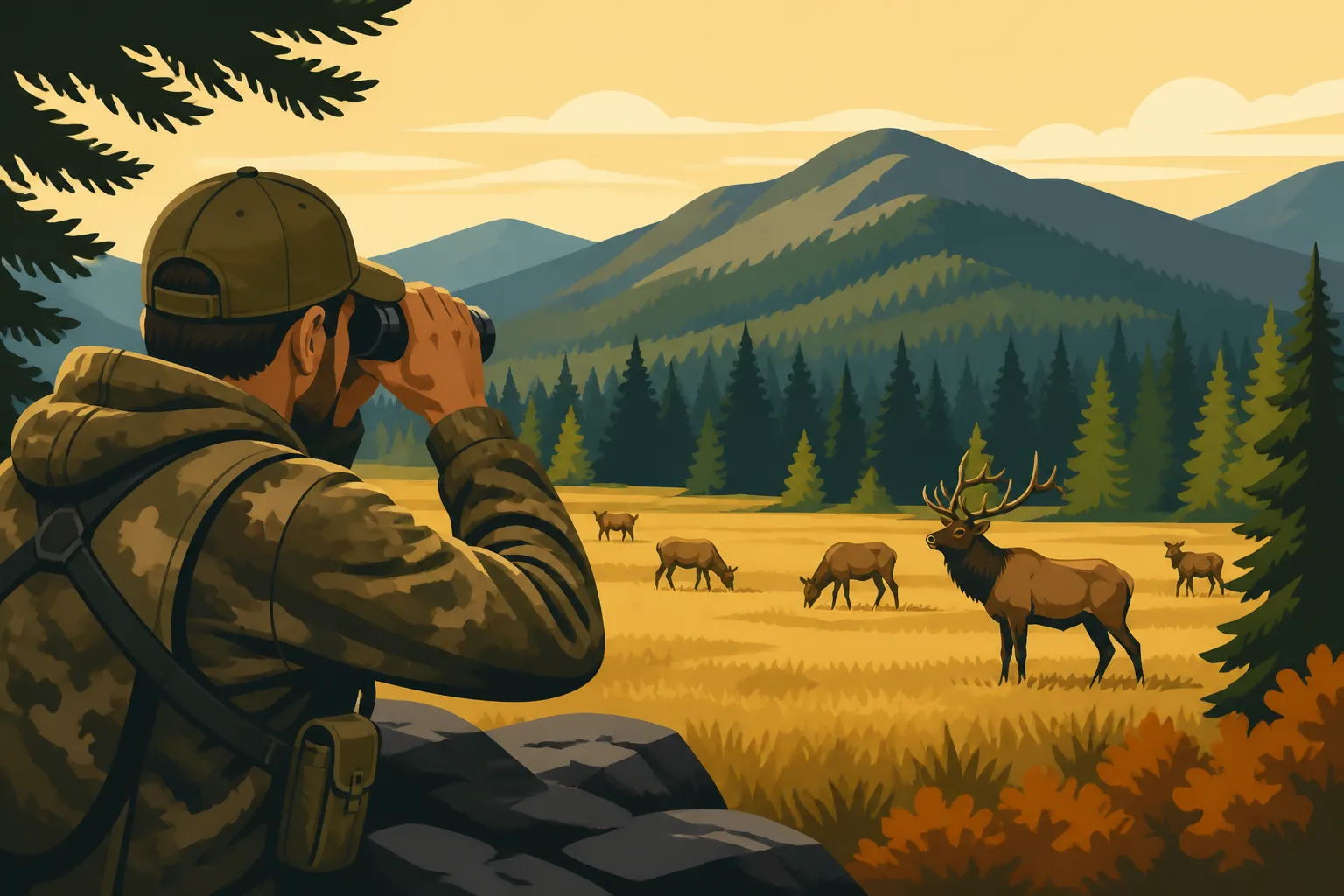
Anyone who's spent time trying to locate elk in the vast, rugged landscape of North Cumberland knows the sheer frustration of looking at what seems like an endless expanse of trees and meadows, wondering where on earth those majestic animals could be hiding. It's not like spotting a deer in a small woodlot; these mountains and reclaimed lands demand a different kind of patience and precision. This guide is all about honing those vital glassing skills specifically for the unique challenges and opportunities presented by North Cumberland's elk meadows, helping you turn those frustrating blank stares into exciting detections.
Understanding North Cumberland's Elk Habitat and Terrain
North Cumberland is a truly special place, a mosaic of steep Appalachian ridges, deep hollows, and, crucially for elk hunters, expansive reclaimed mine lands and natural clearings. This diverse landscape offers elk everything they need – thick cover for bedding, water sources, and, of course, the nutrient-rich forage found in these meadows. But knowing they're there and actually seeing them are two very different things.
Identifying Prime Meadow Locations
When you're looking at a map or walking the ground in North Cumberland, not all meadows are created equal. You're not just looking for any open patch of grass; you're looking for elk meadows. These often come in a few forms:
- Reclaimed Strip Mine Areas: These are perhaps the most iconic elk habitat in North Cumberland. Once scarred by coal mining, these areas have been reseeded with grasses and legumes, creating vast, undulating grasslands interspersed with islands of timber. Elk absolutely love these areas for feeding, especially during the cooler parts of the day.
- Natural Clearings and Old Farmsteads: Less common but still important are natural clearings or areas where old farmsteads have reverted to open fields. These are typically smaller than the reclaimed mines but can be hot spots if they offer good forage and are nestled close to dense cover.
- Food Plots: The TWRA and various conservation groups actively plant food plots within the elk zone, specifically designed to attract and hold elk. These are goldmines for glassing, as the elk know exactly where the good groceries are. Using tools like the GoHunt app can help you identify these managed areas, making your scouting much more efficient.
The real key isn't just the meadow itself, but its relation to the surrounding topography. Look for meadows that are bordered by dense stands of timber, especially on north-facing slopes where elk might bed down during warmer days. Also, pay close attention to any saddles, benches, or natural draws that connect the meadow to deeper cover. These are the highways elk use to enter and exit, and catching them in transition can be just as effective as finding them feeding in the open. Understanding Tennessee Elk Zone Boundaries Explained can also help you focus your efforts on areas with higher elk concentrations.
Elk Behavior in Openings
Elk are creatures of habit, but also incredibly wary. Their use of meadows often follows a predictable pattern, influenced by time of day, weather, and hunting pressure.
- Dawn and Dusk: This is primetime. As the first rays of light kiss the mountain peaks or as the sun dips below the horizon, elk will typically move out of their bedding areas and into the open meadows to feed. They feel safest under the cloak of low light, which offers them some concealment from predators, including hunters. During the cooler seasons, they might linger longer in the mornings or emerge earlier in the evenings.
- Mid-day Movement: Don't rule out mid-day. While less common, elk will sometimes move across meadows during the middle of the day, especially if they are pushed by other hunters, if there's a significant weather change, or if they're moving between different bedding areas. During the rut, a bull might be tirelessly searching for cows, making him less predictable.
- Travel Corridors: Elk rarely just "appear" in a meadow. They use specific travel corridors, often along the edges of timber, down draws, or along subtle changes in elevation, to access these feeding grounds. By identifying these funnels and focusing your glassing efforts on where these corridors meet the meadow, you significantly increase your chances of spotting an animal in transition. It's similar to Reading Aerial Photos for Cumberland Plateau Deer but on a larger scale for elk.
During the Hunting the Rut in Early November, bulls can be much more visible as they actively pursue cows, often venturing into more open areas during daylight hours than they would typically. However, their natural wariness means they're constantly scanning their surroundings. They'll often pause at the edge of the timber, testing the wind and surveying the meadow before committing to stepping out into the open. Patience is not just a virtue here; it's a necessity.
Essential Glassing Gear for Elk Meadows
Trying to glass a vast North Cumberland meadow with a cheap pair of binoculars is like trying to paint a masterpiece with a tiny, worn-out brush – you're just not going to get the detail you need, and you'll miss a lot. Quality optics are not a luxury; they are a fundamental tool for successful elk hunting in this terrain.
Binoculars and Spotting Scopes
Your primary tools for picking apart the distant landscape will be your binoculars and, for those truly long-range observations, a spotting scope.
- Binoculars: For general scanning and locating elk at moderate distances (say, out to 500-700 yards), a good pair of 10x or 12x binoculars is indispensable. Many hunters find 10×42 a great all-around choice, offering a good balance of magnification, field of view, and light-gathering capability. For those who want a bit more reach, 12x50s can be excellent, though they can be harder to hold steady freehand. The key is clarity and light transmission, especially in those crucial dawn and dusk hours. Brands like Vortex, Leupold, and Maven offer excellent quality without always breaking the bank.
- Spotting Scopes: When you need to really reach out and confirm what you're seeing, or to pick apart distant timber edges, a spotting scope (typically 20-60x magnification) becomes invaluable. If you've spotted something with your binoculars and can't quite make it out, switching to the spotting scope can confirm whether it's an elk, a deer, or just a stump playing tricks on your eyes. They're also essential for assessing antler size from a distance, which is critical when you only have a limited number of Tennessee Elk Quota Hunt Rules to abide by. You'll definitely want a sturdy tripod for a spotting scope – trying to hold one steady by hand is an exercise in futility.
Speaking of tripods, this isn't an optional accessory; it's absolutely critical for effective glassing, whether you're using binoculars or a spotting scope. Even the steadiest hands will shake after a few minutes, leading to eye strain and missed details. A good lightweight carbon fiber tripod with a fluid head will allow you to scan smoothly and hold your optics perfectly still, letting your eyes do their job without fighting a shaky image. This applies just as much to Optics for Cumberland Plateau Ridges when you're deer hunting, ensuring you can pick apart every detail.
| Optic Type | Magnification | Ideal Use Case | Key Benefit | Consideration |
|---|---|---|---|---|
| Binoculars | 8x to 10x | General scanning, closer range (under 500 yards), quick target acquisition | Wide field of view, easy to hand-hold | Limited detail at extreme distances |
| Binoculars | 12x to 15x | Moderate to long-range scanning (500-1000 yards), open country | More detail than 10x, still somewhat portable | Harder to hand-hold steady, narrower field of view |
| Spotting Scope | 20x to 60x | Extreme long-range observation (1000+ yards), antler scoring, detailed viewing | Maximum magnification and detail | Requires tripod, heavier, bulkier, narrow field of view |
Supporting Gear for Extended Glassing Sessions
Glassing for elk isn't a five-minute affair. You might be set up in one spot for hours, especially during those prime morning and evening windows. Being comfortable and prepared for the elements is key to maintaining focus and stamina.
- Comfort and Stealth: A small, lightweight cushion or knee pads can make a world of difference when you're sitting or kneeling on hard ground for extended periods. Dress in layers, as temperatures in North Cumberland can fluctuate wildly from dawn to mid-day and into evening. Think quiet fabrics that won't rustle when you adjust your position. Being able to sit still and silent allows you to truly immerse yourself in the landscape and pick up subtle movements.
- Protection from the Elements: Rain gear, even if the forecast looks clear, is always a good idea in the mountains. A wide-brimmed hat or a baseball cap can help cut glare and keep sun out of your eyes, which is crucial when Glassing a Powerline Cut at Last Light or early morning. Sunscreen is often overlooked but important for long days in open country. A headlamp is also non-negotiable for getting to and from your glassing point in the dark.
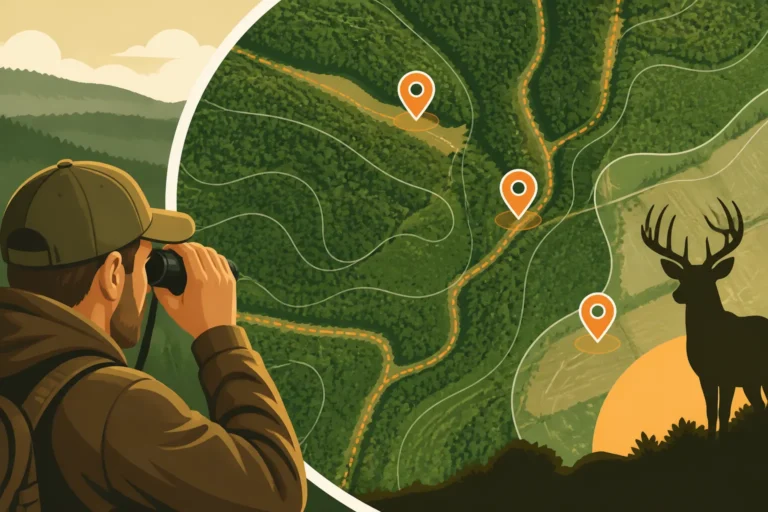
- Navigation and Planning: Beyond your optics, a reliable GPS unit or a mapping app like GoHunt on your phone is essential. Before you even head out, you can use these tools to identify potential glassing knobs or ridges that overlook multiple meadows. You can mark specific "focus areas" within a meadow where elk sign is often found, or where known travel corridors converge. This kind of detailed Scouting Tennessee Public Land Before Season can give you a significant advantage, ensuring you're setting up in the most opportune spots. Having extra batteries or a power bank for your devices is also a smart move, as cell service can be spotty in the more remote corners of the North Cumberland WMA. When you're Preparing for a North Cumberland Elk Hunt, ensuring your gear covers all these bases will significantly improve your chances.
Strategic Glassing Techniques for North Cumberland
You've got the right gear, you're in a good location, now it's time to actually put those eyes to work. Effective glassing isn't just staring in a general direction; it's a methodical process that requires patience, discipline, and an understanding of how light and terrain interact.
The Grid and Zone Approach
This is where the rubber meets the road. Simply sweeping your binoculars back and forth across a meadow is the quickest way to miss an elk. Instead, you need a systematic approach.
- Divide and Conquer: Mentally, or even physically with a rangefinder, divide the entire meadow into smaller, manageable zones. If it's a huge reclaimed strip mine, this might mean breaking it into a dozen smaller rectangles or squares. Start with the closest zone, then move to the next, and so on, until you've covered the entire area you intend to glass.
- The Grid Scan: Within each zone, employ a grid pattern. Start at one edge of the zone (e.g., top left corner) and slowly, painstakingly, scan horizontally across, taking in every detail. Then, drop your optics slightly (just enough to overlap your previous scan) and scan back horizontally in the opposite direction. Repeat this process, moving down the zone until you've covered it entirely. This method is incredibly slow, but it's designed to force your eyes to examine every square inch.
- Focus on Edges and Transitions: Pay extra attention to where the meadow meets the timber. Elk love to blend into the shadows at these edges, often just a few feet inside the tree line, before stepping out. Look for anything that breaks up the natural patterns – a horizontal line in a vertical forest, a patch of different color, or simply a "hole" in the timber that shouldn't be there. These are often the first things you'll spot.
The most common mistake hunters make is moving their optics too quickly. Your brain needs time to process the image and distinguish an animal from its surroundings. Think about it like reading a book – you wouldn't skim every page; you read each word. Treat the landscape the same way. When you're trying to figure out How Many Elk Live in North Cumberland, this meticulous approach helps you avoid double-counting or missing elk entirely.
Capitalizing on Light Conditions
Light is either your best friend or your worst enemy when glassing, and understanding how it impacts visibility is crucial.
- Golden Hours are Key: Early morning and late evening are called the "golden hours" for a reason. The low angle of the sun creates long shadows and dramatic contrasts, which can help reveal the shape of an animal. Elk are often most active during these times, moving to and from bedding areas. Position yourself so the sun is at your back, illuminating the area you're glassing. This reduces glare in your optics and makes it easier to see into shadowy areas.
- Avoiding Glare: Conversely, never glass directly into the sun. The glare will wash out details and cause severe eye strain, rendering your efforts useless. If you have to move, or the sun shifts, adjust your position to maintain that advantageous lighting. Sometimes, waiting a few minutes for the sun to rise higher or dip lower can make a significant difference.
- Shadow Play: Shadows can be tricky. They can hide an elk perfectly, making it blend in seamlessly, but they can also create distinct outlines. Look for subtle movements within deep shadows or for a shape that doesn't quite match the surrounding rocks or trees. A quality pair of binoculars with good light-gathering capabilities, like those used for Rifles Built for a North Cumberland Elk Hunt where a clear target is essential, will be invaluable in these low-light scenarios.
Remember, the goal is not to find a perfectly clear, well-lit elk standing in the middle of a meadow. It's to find a part of an elk – an ear flick, a leg movement, a hint of its body shape against a distant tree line. This is where patience and persistence pay off.
Recognizing Elk Sign and Silhouettes
Your brain is hardwired to recognize complete animals, but in challenging terrain like North Cumberland, you often have to train it to pick up much subtler cues.
- The "Elk Bits" Method: Don't just look for a whole elk. Look for "elk bits." That might be the horizontal line of an elk's back in a sea of vertical trees, the darker patch of a body against lighter foliage, or the flicker of an ear in the distant shadows. Often, you'll spot a portion of an animal and then have to let your optics sit on it, waiting for a confirming movement or for more of the animal to reveal itself.
- Distinguishing from Other Animals: North Cumberland is home to plenty of deer, and from a distance, a deer can easily be mistaken for a smaller elk, especially in poor light. Pay attention to body size and shape. Elk are significantly larger and have a distinct barrel chest. Their coloration is also typically different, with a lighter rump and a darker main body. A trained eye can also distinguish the head and antler shapes. If you spot something, keep watching. Deer typically move differently and don't have the same majestic gait as an elk.
- The Power of Re-Scanning: After you've completed a thorough grid search, don't just pack up. Take a break, let your eyes rest, and then re-scan the entire area. Light conditions might have changed, an elk might have moved into a more visible spot, or your fresh eyes might pick up something you completely missed the first time. This is particularly true when Hunting the Archery-Only Elk Season, where close observation is paramount before making a move. Elk are masters of camouflage, and it often takes multiple passes to reveal their presence. Tools like GoHunt can help you mark specific points of interest for repeated scrutiny.
Disclaimer
Hunting is an inherently dangerous activity. This article provides general information and should not be considered a substitute for professional training, adherence to all local, state, and federal hunting regulations, or personal responsibility. Always prioritize safety, understand your equipment, and respect wildlife and the environment. Consult the Tennessee Wildlife Resources Agency (TWRA) for the most current rules and regulations.