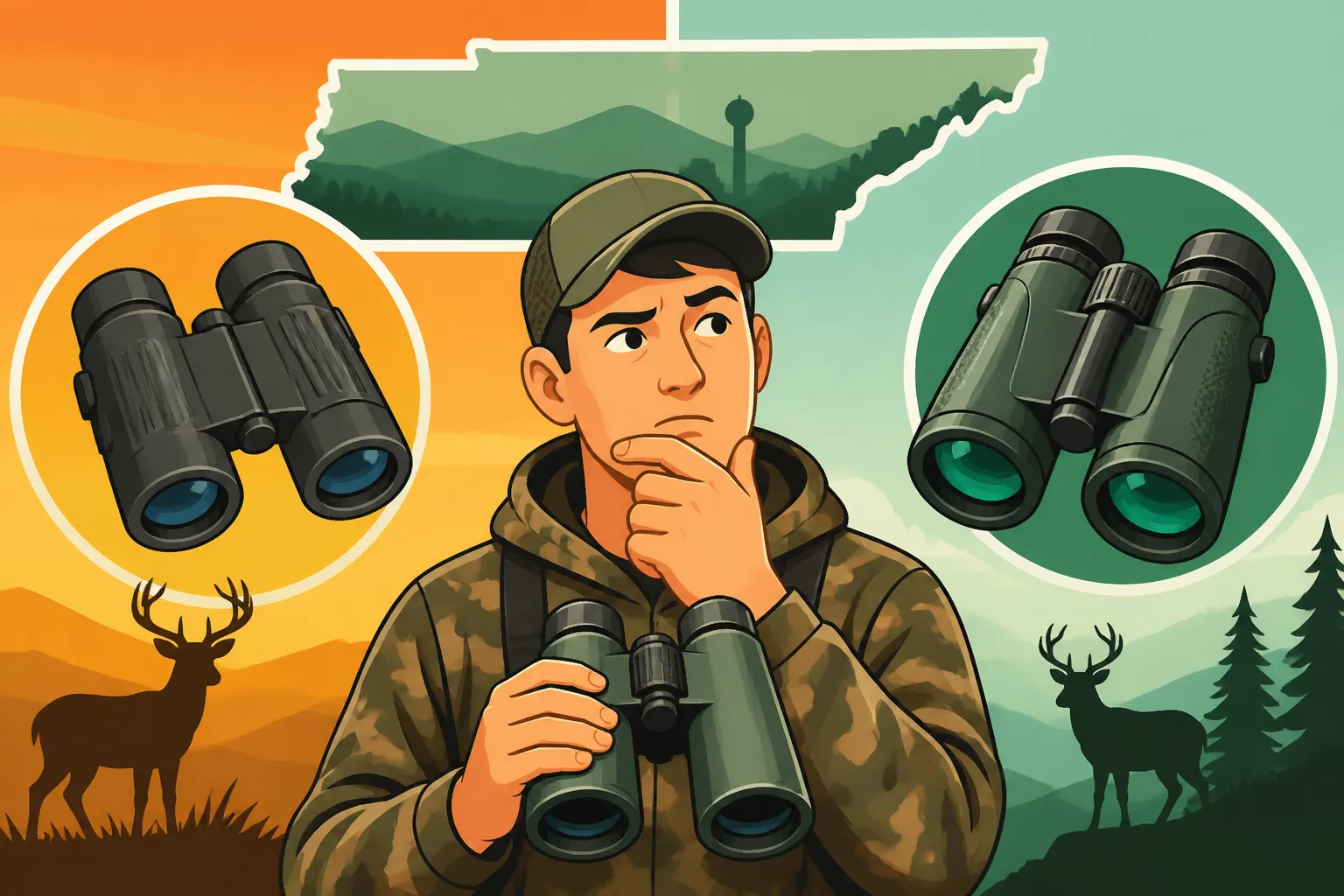
Are Cheap Binoculars Good Enough?
There's a question many of us have pondered while scrolling through hunting gear online or walking the aisles of a sporting goods store: "Are cheap binoculars good enough?" It's a valid thought, especially when you're trying to stretch your hard-earned dollars to cover licenses, tags, fuel, and all the other essentials for a Tennessee hunting season. Nobody wants to blow their budget on something they don't truly need, but nobody wants to be out in a critical moment, squinting through fuzzy glass, either. This guide is all about cutting through the marketing hype and real-world performance to help you decide if that budget-friendly pair of binoculars will actually serve you well in the diverse and often challenging terrain of Tennessee.
The Allure and Reality of Budget Binoculars
It’s easy to be drawn in by a low price tag on a pair of binoculars. The packaging often looks good, the specs seem decent on paper, and in the fluorescent lights of a store, they might even feel pretty solid in your hands. You think, "Hey, a binocular is a binocular, right? It magnifies stuff." But out in the field, under the unforgiving gaze of a misty Tennessee sunrise or the deep shadows of a hardwood hollow, the story can be very different.
What "Cheap" Really Means in Optics
When we talk about "cheap" binoculars, we're generally talking about models at the very bottom of the price spectrum. These aren't necessarily bad; they just come with inherent limitations due to the materials and manufacturing processes involved. The allure is undeniable – saving a significant chunk of change that can then go towards a new broadhead setup or extra gas for scouting trips. You see a pair for a fraction of the cost of some high-end glass, and it's tempting to think you've found a hidden gem.
Often, these binoculars might boast high magnification or large objective lenses, which sounds impressive. However, the true measure of an optical instrument isn't just its power, but its ability to gather light and resolve a clear, sharp image. That's where the compromises often begin. Coatings on the lenses might be minimal or non-existent, impacting light transmission and creating distracting reflections. The prisms inside, responsible for correcting the image, might be made of less expensive glass or lack crucial phase-correction coatings. All of this can fly under the radar during a quick glance in a well-lit environment, leaving you feeling confident in your purchase until the rubber meets the road.
Initial Impressions Versus Field Performance
You pick up a pair of binoculars in the store, look across the room, and everything seems clear enough. Maybe you can read a distant price tag or count the patterns on a ceiling tile. Great! But the true test of any hunting optic comes when you're out in the elements, pushing its limits. Imagine you're trying to pick apart a shadowed clear-cut on a cloudy morning on the Cumberland Plateau, looking for the tell-tale horizontal line of a deer's back in a sea of vertical saplings. Or perhaps you're glassing a distant field edge at last light in West Tennessee, hoping to confirm if that dark blob is a stump or a legal buck.
In these crucial moments, cheap binoculars often fall short. The image might appear hazy, colors could be dull, and discerning fine details becomes a frustrating exercise in eye strain. What looked "good enough" indoors quickly reveals its limitations when you need to distinguish an antler tine from a twig or judge the size of a gobbler's beard in a distant field. The difference between spotting a distant ear twitch or missing a mature deer entirely can boil down to the quality of your glass.
Where Budget Binoculars Fall Short in Tennessee
Tennessee's varied landscapes, from the steep, timbered ridges of the east to the vast agricultural fields and river bottoms of the west, demand performance from your optics. Conditions can change in an instant, from bright sunshine to heavy fog, and the animals we pursue are masters of camouflage. It's in these challenging environments that the shortcomings of truly cheap binoculars become glaringly apparent.
Low-Light Performance: The Critical Edge
In hunting, the "golden hours"—dawn and dusk—are often the most productive. This is when game animals are most active, moving between feeding and bedding areas. But these are also the hours when light is at its absolute lowest, making your optics' ability to gather and transmit light paramount. With cheap binoculars, this is where you'll notice the biggest difference.
As the sun dips below the ridge on a crisp November evening, or before it fully crests the eastern peaks in the morning, a budget pair of binoculars will quickly dim, making it incredibly difficult to pick out details. That promising patch of woods might just look like a dark, indistinguishable mass. You might struggle to discern the rack on a buck against the dark timber, or even to confirm it's a deer and not just a shadow. This can lead to missed opportunities or, worse, ethical concerns about taking a shot at an animal you can't properly identify. Hunters often spend hours perched in a stand, and those first and last 15 minutes are gold. You need glass that helps you maximize that precious window, not hinder it. For spotting deer moving through thick cover, especially when Reading a Ridge for East Tennessee Deer, quality low-light performance isn't a luxury; it's a necessity.
Clarity, Resolution, and Eye Fatigue
Imagine sitting patiently, glassing a distant hillside for an hour. With a good pair of binoculars, this can be a relaxing, even meditative experience. With a cheap pair, it can quickly become a headache-inducing chore. Poor clarity means the image isn't sharp; it might have a hazy quality, or chromatic aberration (color fringing) around high-contrast edges. This fuzziness forces your eyes to work harder to interpret what you're seeing.
Resolution, on the other hand, is the ability to distinguish fine details. Can you count the points on that buck's antlers at 200 yards? Can you see the subtle texture of a turkey's head through the leaves? Cheap binoculars often lack the resolution to reveal these critical details, turning distant game into indistinct blobs. Prolonged use of such optics leads to severe eye fatigue, headaches, and a general reluctance to even pick them up. It's a real bummer when your desire to spot game is overshadowed by the discomfort of using your gear. The difference between an 8×42 and a 10×42 binocular matters less if the clarity isn't there in the first place, regardless of the magnification. When considering 8×42 Versus 10×42 in the Woods, a quality 8×42 will always outperform a cheap 10×42 in terms of usable detail.
Durability in Tennessee's Elements
Tennessee weather can be unpredictable. One day it's clear and sunny, the next you're hunting in a drizzling rain or navigating slick, muddy terrain. Your gear needs to withstand these conditions. Cheap binoculars often cut corners on construction and sealing. This means they are far more susceptible to fogging internally when moving from a warm truck to cold, damp air, or if caught in a sudden downpour. Imagine meticulously picking your way into a West Tennessee river bottom during a morning fog, only to have your binoculars instantly fog up when you lift them to your eyes. You're effectively blind at the most important time.
Beyond fogging, true waterproofing and shock resistance are crucial. A slip on a muddy bank or a tumble against a tree shouldn't render your primary spotting tool useless. Many budget binoculars are advertised as "water-resistant" but not fully waterproof, meaning moisture can eventually seep in and damage the internal components. Good quality binoculars are purged with inert gas (like nitrogen or argon) and O-ring sealed to prevent internal fogging and moisture ingress. They're also built with more robust materials that can take a bump or two. Investing a little more here means your optics will last through many seasons of Hunting West Tennessee Bottomland Deer and continue to perform when you need them most.
Finding the "Good Enough" Sweet Spot: Value Versus Price
So, if truly cheap binoculars have so many downsides, does that mean you need to mortgage the farm for alpha glass? Absolutely not! There's a sweet spot, a range of mid-tier binoculars that offer excellent performance without breaking the bank. The key is to understand your specific hunting needs and prioritize features that genuinely enhance your experience and success.
Understanding Your Hunting Needs
The "good enough" threshold is subjective and depends entirely on how and what you hunt. Are you primarily a close-range squirrel hunter in dense timber, where quick target acquisition is more important than extreme clarity at 500 yards? Or are you a dedicated whitetail hunter, spending long hours glassing distant food plots or picking apart vast swaths of public land in the Cherokee National Forest?
A small game hunter targeting grouse on the Cumberland Plateau might be perfectly served by a lighter, more compact pair with decent clarity for closer ranges, where identifying a bird flushing from cover is key. On the other hand, someone embarking on a once-in-a-lifetime elk hunt in the North Cumberland region would undoubtedly benefit from superior optics for Glassing a North Cumberland Elk Meadow at long distances. Your budget should reflect your pursuit. A deer hunter who spends many hours afield will likely value better glass more than someone who only hunts a couple of days a year.
Key Features to Prioritize (Even on a Budget)
Even if you're not spending top dollar, there are specific features that significantly impact performance and are worth seeking out in more affordable binoculars. Look for these terms when researching:
- Fully Multi-Coated Lenses: This means all air-to-glass surfaces have multiple layers of anti-reflective coatings. This is critical for maximizing light transmission, resulting in brighter, clearer images and reducing glare. It's a major step up from "coated" or "multi-coated."
- Phase-Corrected Roof Prisms: If you're looking at roof prism binoculars (the straight-through design), phase correction coatings maintain image contrast and resolution. Without them, the image can appear softer and less defined. This makes a noticeable difference in image quality.
- Dielectric Coatings on Prisms: These multi-layer coatings significantly improve light reflectivity on roof prisms, leading to brighter and more accurate color reproduction.
- Waterproof and Fogproof: Look for binoculars that are explicitly described as "nitrogen-purged" or "argon-purged" and "O-ring sealed." This ensures they won't fog internally and can withstand wet weather, a common occurrence in Tennessee.
- Good Eye Relief: Especially if you wear glasses, sufficient eye relief allows you to see the full field of view comfortably without having to press your eyes right up against the eyepieces.
By focusing on these features, you can often find binoculars in the mid-range that offer exceptional value, providing performance that's "good enough" and often much more, without the premium price tag of the very best. Websites like GoHunt often have detailed reviews and breakdowns of different optics lines, helping you compare these features across various models.
Considering Brands and Warranties
There are many reputable optics brands that offer excellent value in their mid-tier lines. While they might not carry the same prestige as the absolute top-shelf companies, their products are often robust and perform admirably. When you're shopping, don't just look at the price; look at the company's reputation and, perhaps most importantly, their warranty.
A strong, unconditional lifetime warranty is a huge indicator of a manufacturer's confidence in their product. It means if something goes wrong – whether it's a manufacturing defect or you accidentally drop them off your treestand – they'll often repair or replace them, no questions asked. This kind of peace of mind is invaluable. It transforms a binocular from a disposable item into a long-term investment. Even if you spend a few dollars more upfront for a brand with a solid warranty, it can save you significant money and frustration down the road compared to having to replace a cheaper pair every few seasons. When researching, check what other hunters say about customer service and warranty claims for various brands; GoHunt forums or review sections can be great for this.
Strategies for Smart Binocular Shopping
Navigating the world of optics can be overwhelming, with countless brands and models vying for your attention. To truly find binoculars that are "good enough" for your Tennessee hunting adventures without overspending, a strategic approach is key.
Research and Reviews: Hunter Wisdom
Don't just take the marketing claims at face value. The best way to gauge the real-world performance of binoculars is by reading reviews from actual hunters who have used them in similar conditions to what you'll encounter in Tennessee. Look for reviews that specifically mention low-light performance, clarity at distance, and durability in various weather conditions. Pay attention to comments about eye relief and comfort during extended glassing sessions.
While every review won't be perfect, common themes will emerge. Are people consistently complaining about chromatic aberration or internal fogging? Are they praising the brightness and sharpness for the price point? Websites that specialize in hunting gear reviews, as well as online forums and communities, can be goldmines of information. Scouting With the Tennessee TWRA App might help you find new public lands to hunt, but good research will help you pick the right gear for them. Don't be afraid to dig deep and compare. The GoHunt community often shares detailed feedback on various optics, which can be incredibly helpful for making an informed decision.
Hands-On Testing: Trust Your Own Eyes
While online research is crucial, there's no substitute for actually putting binoculars to your own eyes. If possible, visit a sporting goods store and try out different models. Don't just look at items across the store. Ask if you can take them to the front door or even outside to get a sense of their performance in natural light, especially in varied lighting if the store allows.
Focus on several key aspects:
- Comfort: Do they feel good in your hands? Is the focus wheel easy to manipulate?
- Field of View: How wide is the image? Can you quickly find what you're looking for?
- Brightness and Clarity: How bright and sharp does the image appear? Can you discern fine details on distant objects?
- Eye Relief: If you wear glasses, can you see the full image comfortably without removing them?
If you can, try to compare a truly cheap pair side-by-side with a mid-range model. The difference will often be immediately apparent, especially in terms of brightness and edge-to-edge clarity. You'll likely realize that spending just a little more can get you a significantly better optical experience.
The Used Market and Sales: Smart Savings
If your budget is truly tight but you still want better than entry-level performance, consider the used market or waiting for seasonal sales. Many hunters upgrade their gear regularly, and you can often find excellent quality used binoculars for a fraction of their original price. Check reputable online forums, classifieds, or even local hunting shops that might take trade-ins. Just be sure to thoroughly inspect any used optics for damage, scratches on the lenses, or signs of internal fogging before purchasing.
Another smart strategy is to keep an eye out for sales, especially around major holidays or during the off-season. Retailers often offer significant discounts on optics, allowing you to snag a mid-tier pair that might normally be out of your budget. Subscribing to newsletters from hunting gear retailers or tracking deals on sites like GoHunt can alert you when prices drop. This way, you can acquire high-quality binoculars that will truly enhance your Tennessee hunting experience, proving that "good enough" doesn't have to mean compromising on essential performance.
Here's a quick look at how different optical features contribute to your hunting experience:
| Feature | What it Means | Impact on Hunting (Good vs. Cheap Binoculars) |
|---|---|---|
| Lens Coatings | Layers on glass to reduce glare, increase light | Good: Bright, high-contrast images, less eye strain. Cheap: Dull view, reflections, limited light transmission. |
| Prism Type | How light is reflected inside (Roof vs. Porro) | Good: Sharper image, compact (roof prism). Cheap: Potential clarity loss, often bulkier. |
| Phase Correction | Coating on roof prisms for better clarity | Good: Crisper details, true-to-life colors. Cheap: Softer edges, noticeable color fringing. |
| Eye Relief | Distance from eyepiece to your eye | Good: Comfortable viewing, especially for eyeglass wearers. Cheap: Squinting, tunnel vision, discomfort. |
| Water/Fog Proofing | Sealed with O-rings and purged with gas | Good: Reliable in all weather, no internal fogging. Cheap: Fogs easily, susceptible to internal moisture damage. |
| Field of View | How wide the image appears | Good: Easier to scan, find moving animals quickly. Cheap: Narrow, feels restrictive and limits observation. |
| Resolution | Ability to discern fine details | Good: Clear distinction of antlers, feathers, small features. Cheap: Fuzzy, blurred details at range. |
Ultimately, whether "cheap binoculars are good enough" depends on your expectations and the specific demands of your hunting style. For a hunter truly committed to maximizing their time in the Tennessee woods, investing in a quality mid-range pair that balances performance, durability, and a good warranty will almost always be a more satisfying and effective choice in the long run.
Disclaimer
This article is for general informational purposes only and does not constitute professional advice. Laws, prices and regulations vary by location and change over time. Consult a qualified professional for guidance on your specific situation.