Coffee County Public Hunting Access
Finding public hunting land in counties like Coffee County, Tennessee, can feel like a real treasure hunt. Unlike the vast national forests or sprawling wildlife management areas in other parts of the state, Coffee County often presents a more fragmented landscape of public access, making it tough to figure out where you can legally and ethically pursue game. This guide is here to walk you through the realities of public hunting access in Coffee County, offering practical strategies to help you find and make the most of what's available.
The Challenge of Public Land in Coffee County
Let's be honest, Coffee County isn't exactly synonymous with boundless public hunting opportunities. If you're coming from a region with large tracts of national forest or expansive wildlife management areas (WMAs), you might find the public land landscape here a bit… sparse. This can be incredibly frustrating for hunters who are used to simply driving into a large block of public ground and setting up.
The primary reason for this limited access is the dominant land use: agriculture and private ownership. Much of Coffee County is characterized by farms, small towns, and private residences, leaving fewer large, contiguous parcels dedicated solely to public hunting. You won't find the massive swaths of timber like in the Cherokee National Forest, nor the vast river bottomland of West Tennessee. This means you have to adjust your expectations and your hunting strategies significantly.
It’s easy to get discouraged when you look at a map and see a sea of private property. Many hunters simply assume there’s nowhere to go. But while the opportunities might be smaller and require more effort to locate, they are often there if you know where to look and what type of areas to target. The key is shifting your mindset from expecting a large wilderness experience to focusing on smaller, potentially overlooked pockets.
Unearthing Specific Public Access Points
Even without a "mega WMA," Coffee County does offer some avenues for public hunting, though they might be smaller and less obvious. These typically fall into a few categories, and knowing what to look for is half the battle.
State Forests and Small WMA Parcels
While Coffee County doesn't host a flagship WMA like Catoosa or Chuck Swan, it often has smaller, scattered parcels managed by the Tennessee Wildlife Resources Agency (TWRA) or sections of state forests. These areas might not be highlighted with big green blocks on every map, but they exist. These can be pockets of timber, wetland areas along creeks, or tracts that were once private but have been acquired for public use.
These smaller WMAs or state forest sections can be absolute gems if you're willing to put in the legwork. They often don't receive the same heavy pressure as larger, well-known public lands, precisely because they're harder to find and might require more specific local knowledge. Hunters who overlook them because of their size often miss out on quality opportunities. For instance, a 100-acre piece of public ground tucked away could hold resident deer that rarely see hunting pressure simply because most hunters are looking for 1,000+ acres. Always check the official TWRA website or the Go Outdoors Tennessee platform for the most current information on these smaller tracts.
River and Stream Access Points
Don't underestimate the hunting opportunities along Tennessee's rivers and larger creeks. In Coffee County, you might find access points along bodies of water like the Duck River or various larger creeks. While these might primarily be designated for fishing or boating, the strips of riparian land (land bordering the water) can sometimes offer public hunting access, especially if they are part of a larger state or federal easement.
These narrow corridors can act as natural travel routes for deer, turkeys, and small game. Game often feels secure in the thick cover bordering waterways, and the water itself can provide a natural barrier from human disturbance on one side. Accessing these areas often means using a canoe, kayak, or small boat, which immediately filters out many hunters, reducing pressure. Always check regulations specific to waterway access and hunting along those corridors, as rules can vary regarding how far from the water you can hunt or if discharge of firearms is restricted near developed areas. Hunting Tennessee River Bottom Funnels can offer some excellent insights on leveraging these natural pathways.
Utility Easements and Rights-of-Way
In some cases, large utility easements, like powerline cuts or gas pipeline rights-of-way, may offer limited hunting access where they cross public land or sometimes even private land with landowner permission. While hunting directly on these easements might have restrictions, the edges where they meet other public or private timber can create natural travel corridors and edge habitat that deer and other game utilize heavily.
These aren't always "huntable" areas in themselves, but they can provide access into otherwise hard-to-reach pockets of public ground, or simply act as great scouting lanes to observe game movement. Think of them as open highways cutting through dense cover. You might see deer moving from bedding areas to feeding grounds, or turkeys strutting their stuff. Always ensure you are on legal hunting ground and abide by all setback rules from structures or residences.
Leveraging Technology and Local Knowledge
Given the fragmented nature of public access in Coffee County, modern tools and old-school networking become absolutely essential. You can't just drive around hoping to stumble upon a large hunting sign.
Digital Mapping Tools
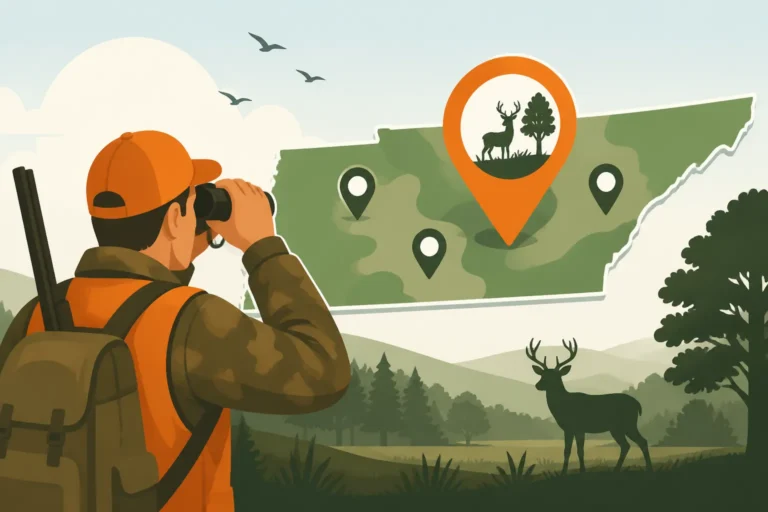
This is where applications like onX Hunt become an absolute game-changer, especially in a county like Coffee where public land isn't always obvious. With onX Hunt, you can literally see property boundaries, landowner names, and clearly distinguished public and private land parcels right on your phone or tablet. This is invaluable for identifying those smaller, overlooked public tracts.
I’ve used it myself countless times to pinpoint small patches of public ground that are invisible on conventional maps, or to ensure I'm not accidentally trespassing when hunting near private boundaries. You can use it to scout from your couch, identifying potential access points, pinch points, and cover areas before you even set foot on the ground. When you're out there, it acts as a real-time GPS, showing your location relative to property lines. This is crucial when you're hunting small parcels or areas bordering private property. Without it, you're truly hunting blind. Finding Tennessee Property Lines and Reading Aerial Photos for Cumberland Plateau Deer (the principles apply even if it's not the Cumberland) are great resources for getting started with these tools.
While onX Hunt is a fantastic tool for mapping specific boundaries, for broader hunt planning and research across different states or game species, platforms like GoHunt can offer valuable insights. While perhaps less hyper-local for day-to-day Coffee County navigation, it offers data analytics and filtering tools that can inform your overall hunting strategy, helping you understand trends and potential opportunities that might not be immediately obvious.
Old-Fashioned Scouting
Even with all the digital maps in the world, nothing beats putting boots on the ground. Scouting these smaller, harder-to-find public areas in Coffee County is critical. Look for subtle signs: deer trails, rub lines, scrapes, turkey droppings, and feeding areas. Since these areas often have less consistent pressure, the game might be less wary than on heavily hunted public lands.
Pay close attention to topography, even subtle changes. A small ridge, a ditch, or a creek bottom can funnel deer movement. Look for forgotten corners, areas that are difficult to access, or spots that require a bit more effort to reach. These are often the places where game finds refuge. Spend time observing during the off-season, learning the local patterns. Scouting Tennessee Public Land Before Season is a great resource to learn how to effectively scout.
| Access Type | Typical Size | Key Advantage | Primary Challenge | How Technology Helps |
|---|---|---|---|---|
| Small WMA Parcels | 50-500 acres | Reduced hunter pressure, local game | Hard to locate, may be isolated | onX Hunt for boundary identification, access routes |
| River/Stream Access | Linear (variable) | Natural travel corridors, water barrier | Limited depth, specific regulations, boat needed | Satellite imagery for access points, Google Maps for public put-ins |
| Utility Easements | Linear (variable) | Edge habitat, travel corridors, visibility | Restricted hunting on actual right-of-way | onX Hunt to verify underlying land ownership |
| Private Land (w/ Perm.) | Varies | Controlled access, often less pressured | Requires landowner relationship, finding contacts | onX Hunt for landowner info to make contacts |
Understanding Local Regulations
Coffee County, like all counties in Tennessee, falls under specific TWRA regulations. It's vital to know which Deer Management Unit (DMU) it's in, as this dictates antlerless bag limits and season dates. Always verify the current Tennessee Deer Season Structure Explained and specific dates for archery, muzzleloader, and gun seasons. Remember that Chronic Wasting Disease (CWD) is a significant concern in Tennessee, and new counties are occasionally added to the CWD management zone. Always check if Coffee County is in the CWD zone and understand the carcass transport and testing requirements. Tennessee's Chronic Wasting Disease Management Zone is an important read. Ignorance of the law is no excuse, so take the time to read the latest hunting guide.
Beyond Public Land: Seeking Private Access
In a county like Coffee, where public land is limited, the ability to gain access to private property often becomes the most successful hunting strategy. This isn't always easy, but it’s a skill every Tennessee hunter should cultivate.
The Art of Knocking on Doors
This might sound intimidating, but asking landowners for permission to hunt their property is a time-honored tradition and often yields amazing results. Most private landowners aren't going to have huge "HUNTING AVAILABLE" signs out front. It takes effort, politeness, and persistence.
Start by identifying potential properties using your mapping tools like onX Hunt. Look for landowners who might have agricultural fields, woodlots, or properties that border known game movement areas. Dress respectfully, approach owners during non-peak hours (not Sunday morning or dinner time), and be prepared to introduce yourself and clearly explain your intentions. Offer to help with chores, share your harvest, or assist with nuisance wildlife control (like hogs or coyotes). Building a relationship based on trust and respect is key. Sometimes, a simple "no" isn't a permanent "no," but a "not right now." Be gracious and try again another time, or ask if they know anyone else who might be open to the idea. Knocking on Doors in West Tennessee Farm Country provides fantastic advice that applies across the state.
Hunting Small Private Tracts
Don't overlook small private woodlots or neglected corners of farms. While a large private tract is ideal, even 10 or 20 acres of timber can hold deer if it's surrounded by good habitat or provides a travel corridor. Deer will often utilize these smaller, seemingly insignificant patches, especially if they offer thick cover and are adjacent to a food source.
These smaller private tracts often present unique challenges but also opportunities. They might be closer to roads or homes, requiring more cautious hunting and attention to safety and setback zones. However, because they are small, they are often overlooked by other hunters, meaning the game on them might be less pressured. Setting up a ground blind or a quiet tree stand in a corner of one of these plots can be incredibly effective. Hunting Small Private Tracts in Tennessee offers more details on this often-underestimated approach.
Hunting Clubs and Leases
While less common for individual small parcels in Coffee County, joining a local hunting club or securing a private lease can provide consistent access. This usually involves a financial investment, but it guarantees a place to hunt and often comes with established rules and a community of like-minded hunters. These options are particularly prevalent in areas with larger agricultural operations or timber company holdings. Keep an eye out for local advertisements or inquire at bait shops and feed stores, as these often serve as community hubs where such opportunities are shared.
Ultimately, finding success in Coffee County public hunting access is about resourcefulness. It’s about leveraging every tool at your disposal, from digital mapping to polite conversations with landowners, and understanding that success might look a little different than a hunt in the vast wilderness of East Tennessee. With patience and persistence, you can definitely find rewarding hunting opportunities here.
Disclaimer
This article is for general informational purposes only and does not constitute professional advice. Laws, prices and regulations vary by location and change over time. Consult a qualified professional for guidance on your specific situation.