Nonresident Access to Tennessee Public Land
One of the biggest anxieties for hunters from outside the Volunteer State is figuring out how to navigate the rules and find a place to hunt here in Tennessee. It can feel like you need a secret decoder ring just to understand the licensing system, let alone where you're actually allowed to set foot with a weapon. This guide is here to cut through the confusion, offering a realistic look at how nonresidents can successfully access and hunt on Tennessee's public lands, from the licensing desk to the timber.
Understanding the Entry Points: Nonresident Licenses and Permits
Let's face it, hunting in a new state often comes with a learning curve when it comes to licenses. Tennessee is no exception, and as a nonresident, you'll find there are specific requirements you need to meet before you even think about stepping into the woods. It's not just about buying a general license; there are often additional stamps and permits that stack up depending on what you're hunting and where.
Navigating the Nonresident License Options
First things first, you'll need a basic nonresident hunting license. This is your foundation, but it's rarely enough on its own. For big game like deer, bear, or turkey, you'll almost always need to add specific big game permits on top of that. The good news is that Tennessee offers a few different ways to get this done, whether you're planning a single trip or envisioning several visits throughout the year.
The Tennessee Wildlife Resources Agency (TWRA) provides several options, including a one-year license or shorter-term licenses which can be really handy for nonresidents who might only come for a specific week or weekend. You'll want to carefully check the TWRA website or app for the most current options and pricing, as these things do change. For instance, there's often a special Tennessee Nonresident 7-Day License Cost available that can be perfect if you're only targeting a short window, like the early muzzleloader season or a quick spring turkey hunt. Always have your license physically or digitally on you; wardens won't be impressed with "I thought I bought it" stories.
It's crucial to understand that even with your nonresident hunting license, you'll likely need additional permits for each specific game species you intend to pursue. Want to hunt deer? You'll need a Big Game Permit. Spring turkey? You'll need a Turkey Permit. Bear? Yup, another permit. These aren't usually included in your basic hunting license. Make sure you've got all your ducks (and deer, and turkeys) in a row before you hit the field. Missing a single stamp could lead to a fine, and nobody wants their hunting trip to end that way. For a comprehensive overview, check out Tennessee Nonresident Hunting License Options.
Additional Stamps and Special Permits
Beyond the basic hunting and big game permits, there are other considerations. If you're a migratory bird hunter—thinking ducks, geese, doves, or woodcock—you'll need to acquire a Tennessee Migratory Bird Permit and potentially a federal duck stamp, even as a nonresident. Waterfowl hunting, especially, has additional layers of complexity, sometimes including specific WMA permits or reservation systems for popular areas like Reelfoot Lake.
Another important aspect, particularly if you're venturing onto many of Tennessee's Wildlife Management Areas (WMAs), is the WMA Nonresident Annual Small Game and Waterfowl or WMA Nonresident Annual Big Game permit. Many WMAs require one of these, or sometimes both, depending on what you're hunting. These permits help fund the management and maintenance of these crucial public hunting grounds. It's a small price to pay for access to well-managed habitat. Always double-check the WMA-specific regulations for the area you plan to hunt, as some have unique requirements that even general WMA permits don't cover. For all your permit needs, the Buying a License on Go Outdoors Tennessee platform is your best bet.
| License Type | Purpose | Typical Requirement for Nonresidents | Notes |
|---|---|---|---|
| Nonresident Annual Hunting | General hunting for small game, predators | Mandatory | Basic entry to hunt in TN |
| Nonresident 7-Day Hunting | General hunting for short trips | Optional, cost-effective for short stays | Often paired with 7-day big game permits |
| Nonresident Big Game Permit | Deer, bear, wild hog (if specified), elk (if drawn) | Mandatory for big game | Must be combined with a valid hunting license |
| Nonresident Turkey Permit | Wild turkey hunting (spring and fall) | Mandatory for turkeys | Specific bag limits apply |
| Nonresident WMA Permit | Access to most Wildlife Management Areas | Often mandatory for WMA hunting | Check specific WMA regulations for exceptions |
| Tennessee Migratory Bird | Waterfowl, dove, woodcock, snipe | Mandatory for migratory birds | Federal Duck Stamp also required for waterfowl |
Decoding Tennessee's Public Hunting Landscape for Outsiders
Tennessee might be famous for its music and mountains, but it also boasts a significant amount of public land open to hunters. However, it's not a monolithic block; public land comes in several forms, each with its own quirks, rules, and management. As a nonresident, understanding these distinctions is key to a successful and legal hunt.
Types of Public Land Available
Tennessee offers a diverse range of public lands. At the top of the list, you have the vast Cherokee National Forest, covering over 650,000 acres in East Tennessee. This is prime territory for those seeking a true backcountry experience, offering opportunities for deer, bear, turkey, and small game. The sheer size of the Cherokee can be intimidating, but it also means less pressure in many areas compared to smaller tracts. You can find everything from steep, rugged mountain terrain to accessible forest roads. For those looking at large, remote areas, Cherokee National Forest Hunting is a great place to start.
Then there are the Wildlife Management Areas (WMAs), managed by the TWRA. These areas are specifically designated for wildlife management and public recreation, including hunting. WMAs vary wildly in size, habitat, and species availability. Some are expansive, like the North Cumberland Wildlife Management Area known for its elk restoration zone and bear hunting, while others are smaller, focused on waterfowl or specific small game species. Each WMA typically has its own set of detailed regulations, hunt dates, and sometimes even draw-only hunts, so checking the TWRA WMA-specific brochures is non-negotiable.
Don't forget Land Between the Lakes National Recreation Area, a unique federal property shared with Kentucky. It’s managed by the U.S. Forest Service and offers a distinct set of hunting opportunities, often involving quota hunts and specific access rules. While it's a fantastic resource, planning a hunt there requires understanding its unique permit system. Lastly, some State Parks and State Forests also offer limited hunting opportunities, often through quota hunts, which require careful research to identify. To grasp the full scope, consider How Many Acres of Public Land Tennessee Has.
General Access Rules and Limitations
The most crucial rule across almost all public land in Tennessee is that hunter access is generally welcome during designated seasons, provided you have the correct licenses and permits. However, "access" doesn't always mean unlimited vehicle use. Many public lands, especially in the national forest and larger WMAs, have gated roads, seasonal road closures, or are foot-traffic-only beyond certain points. This often means embracing hiking and packing in your gear.
While hunting is permitted, camping rules, ATV use, and trail camera placement can vary significantly. For example, Trail Camera Rules on Tennessee Public Land are important to understand. National Forests often allow dispersed camping, while WMAs might have designated campgrounds or prohibit camping altogether. Always check with the specific managing agency for the area you plan to visit. Trespassing onto adjacent private land from public access points is strictly prohibited, so understanding boundaries is paramount—more on that in the next section. Also, remember that Tennessee has Tennessee Blaze Orange Requirements during certain seasons, which applies to nonresidents too.
Strategizing Your Hunt: Scouting and Navigating Tennessee's Public Lands
Okay, so you've got your licenses in order and a general idea of where you want to go. Now comes the real work: figuring out where to hunt within those vast public tracts and how to navigate once you're there. For nonresidents, this often means a lot of remote scouting and smart use of technology.
Remote Scouting and Mapping Tools
Since you can't just hop over for a quick scouting trip every weekend, remote scouting becomes your best friend. Start with online resources. The TWRA's website is a goldmine, with detailed maps for WMAs, including boundary lines, parking areas, and sometimes even habitat features. The Using the Go Outdoors Tennessee Map Tool can be incredibly helpful for this initial phase.
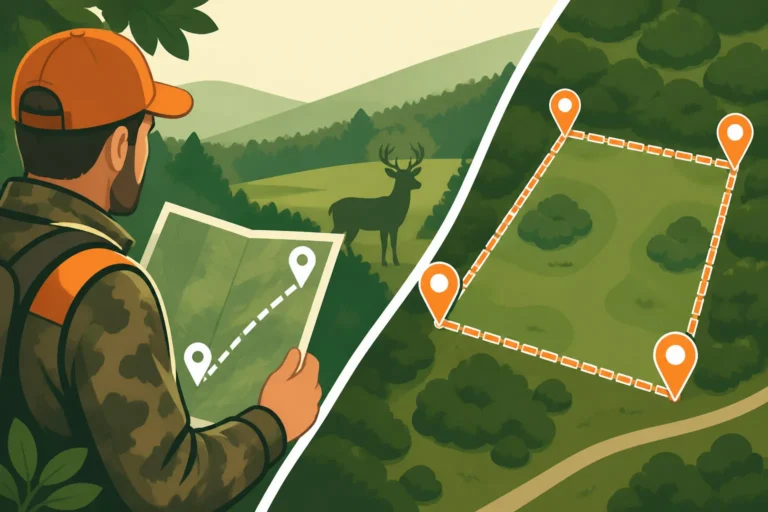
Beyond the official state resources, third-party mapping applications are absolutely invaluable for nonresident hunters. This is where tools like onX Hunt really shine. With a subscription, you can overlay public and private land boundaries, topography, satellite imagery, and even layers showing timber cuts, water sources, and historical wildfire data. You can mark waypoints from your couch, planning potential stand sites, entry and exit routes, and areas of interest before you ever step foot in the state. Many hunters swear by features like the "line tool" to measure distances for legal shooting zones or the "wind direction" feature for planning morning and evening hunts based on terrain and thermals. This level of detail in remote scouting is a game-changer for someone who isn't familiar with every nook and cranny of the land. Knowing onX Layers for Tennessee Land Status can really give you an edge.
It's also a good idea to research hunting pressure. Popular public spots, especially those with easy access, will often see more hunters. Look for areas that require a bit more effort to reach – a longer walk, a tougher climb – as these often hold deer that are less pressured. Reading aerial photos for changes in terrain, such as subtle ridges, creek bottoms, or old clear-cuts, can also point you to hidden gems. For more on this, check out Scouting Tennessee Public Land Before Season.
On-the-Ground Navigation and Safety
Once you're actually in Tennessee and ready to hunt, those maps you poured over come to life. Whether you're using a handheld GPS unit or your phone with a mapping app like onX Hunt, always have a reliable navigation system. Cell service can be spotty, especially in deep hollows or remote parts of the Cherokee National Forest, so ensure your maps are downloaded for offline use.
Beyond navigation, safety is paramount. Let someone know your hunting plan, including where you'll be and when you expect to return. Pack a small first-aid kit, a headlamp, and emergency supplies. Weather in Tennessee can change rapidly, from warm mornings to chilly, wet afternoons, especially during the fall and winter seasons, so dress in layers. As a nonresident, you might not be familiar with local hazards like poisonous snakes or steep, rocky terrain, so stay aware of your surroundings. If you're planning on a deer drive on public land with a group, read up on Deer Drives With Three or Four Hunters to understand the safety protocols. Ultimately, the more prepared you are, the more you can enjoy your hunt, even as an unfamiliar face in the Tennessee woods. Remember, Hunting Pressure on Tennessee Public Land means you often need to go deeper to find unpressured game.
Disclaimer
This article is for general informational purposes only and does not constitute professional advice. Laws, prices and regulations vary by location and change over time. Consult a qualified professional for guidance on your specific situation.