Early Goose Season Tactics in Tennessee
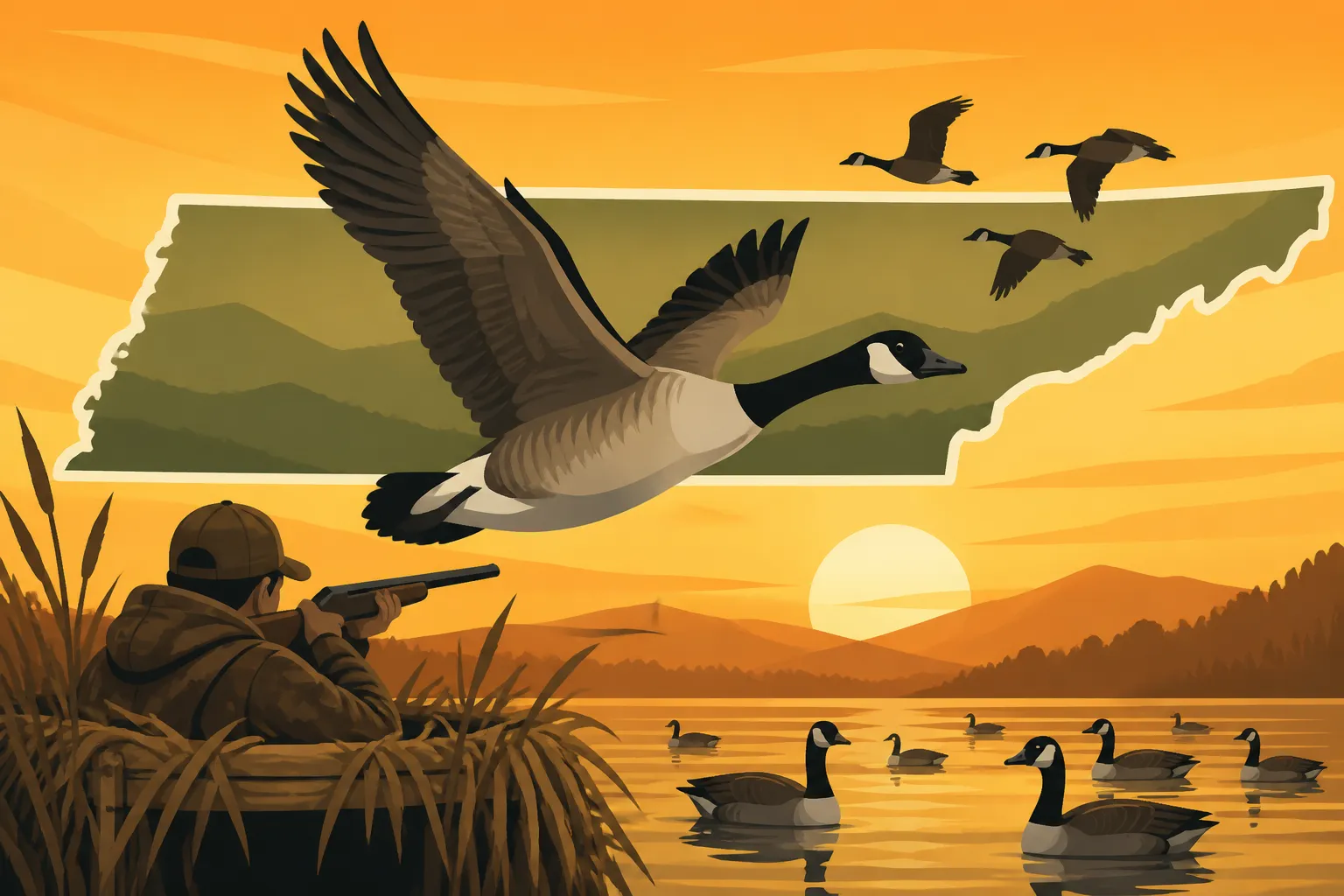
The early goose season in Tennessee can be a fantastic opportunity, but it often frustrates hunters who expect the large migratory flocks of late fall. Instead, you’re dealing with resident birds that have spent all summer getting wise to local patterns, making traditional waterfowl tactics less effective. This guide will walk you through the nuances of targeting these local geese, from understanding their summer habits to setting up the perfect spread, ensuring you maximize your chances when the season opens.
Understanding Early Goose Season in Tennessee
The early goose season in Tennessee is a different beast entirely compared to the later migratory hunts. We're talking about local birds, often raised right here in the state, that haven't been pressured by hunters for months. This means their patterns are predictable, but they're also highly attuned to their immediate environment and can become wary very quickly once the shooting starts. Many hunters overlook this season, opting to wait for the colder months, but those who put in the effort during the early weeks can be richly rewarded.
Key Regulations and Dates
First things first, you've got to know the rules. The early goose season in Tennessee typically kicks off in early September, often running for a few weeks, sometimes even into the first part of October. This specific timing is crucial because it falls outside the main duck season and is designed to target those abundant resident Canada geese before the big push of northern birds arrives. Bag limits are usually quite generous during this period, often set higher than in the regular season to help manage local populations that can sometimes become a nuisance in agricultural areas or suburban ponds. Always make sure to check the current year's Tennessee Goose Season Rules on the TWRA website. You'll also need your standard Tennessee hunting license, a Tennessee Migratory Bird Permit, and a federal duck stamp if you're 16 or older – don't forget your Tennessee Federal Duck Stamp Requirement. These aren't just minor details; getting caught without the right paperwork can quickly turn a fun hunt into a costly headache.
The dates can vary slightly year to year, and different zones within Tennessee might have slightly different start and end times or bag limits. For instance, the Mississippi Flyway has certain regulations that differ from other areas. Knowing your specific location and its regulations is paramount. Don't rely on last year's dates; take a few minutes to confirm everything online or in the annual hunting guide. These birds haven't been educated by heavy hunting pressure yet, so they're often more forgiving of minor setup flaws, but legal compliance is non-negotiable.
The Behavior of Early Season Geese
The behavior of early season geese is the single biggest factor distinguishing this hunt from later seasons. These aren't the large, tightly packed V-formations of wary northern birds. Instead, you'll be dealing with smaller family groups or local flocks, often numbering from a dozen to a few dozen birds. They typically follow very consistent patterns, flying from a specific roosting area, like a large lake or river, directly to a preferred feeding spot, usually a cut grain field or a lush green pasture. Their flights are often low and direct, making them vulnerable if you can intercept them effectively.
What makes them so predictable is their summer routine. They've spent months gorging on local crops, raising their young, and establishing comfortable routines. They know exactly where the best food is, where they feel safe to roost, and the most efficient flight paths between the two. This predictability is your greatest asset. However, they also develop a keen awareness of their surroundings. They've seen farmers on tractors, kids playing near ponds, and cars on roads all summer. Anything out of the ordinary, like a new layout blind in their favorite field, will instantly raise suspicion. You're hunting birds that are smart about their home turf, even if they aren't as flight-savvy as migratory birds who've dodged hunters for hundreds of miles.
Scouting for Early Season Success
You wouldn't just wander into the woods during deer season without scouting, would you? The same principle, if not more so, applies to early goose season. These birds are creatures of habit, and uncovering those habits is the key to filling your strap. If you show up opening morning hoping for the best, you’re likely to be disappointed. Success hinges on dedicated, pre-season reconnaissance.
Locating Prime Feeding and Roosting Areas
Finding where early season geese feed and roost is absolutely critical. These birds are tied to specific locations, and they rarely deviate much from their established routine until later in the season when food sources change or hunting pressure becomes intense. Your first step is to identify potential feeding areas. In late August and early September, this almost always means harvested crop fields. Look for cut corn, wheat, or soybean fields. They also love freshly cut hay fields or newly planted winter wheat, which offer tender, green shoots. Large, open pastures near water can also be magnets.
To find these spots, you can drive around rural areas, but a much more efficient method is to use satellite imagery. Tools like GoHunt's mapping features can show you vast tracts of farmland, pinpointing harvested fields that might not be visible from the road. Look for large bodies of water nearby—major rivers like the Tennessee River or Cumberland River, large lakes such as Reelfoot Lake, or even sizeable farm ponds that are relatively undisturbed. These are prime roosting locations. Once you've identified potential areas, you need to get boots on the ground (or binoculars in hand). Spend time in the early mornings and late evenings watching these areas from a distance. You're looking for birds flying in or out, and on the ground, you’re searching for goose droppings, trampled grass, and muddy footprints near water. Finding these "hot spots" is the first puzzle piece to a successful hunt.
Patterning Daily Movements
Once you've narrowed down some feeding and roosting locations, the real detective work begins: patterning their daily movements. This involves observing geese over several days, noting their exact flight lines, entry points into fields, and their timing. Are they coming from the northeast and landing on the south end of a particular field? Do they fly in groups of 10 or 30? What time do they typically arrive in the morning and leave in the evening? This information is gold.
Grab a notepad or use the notes feature on your phone to log your observations. Note wind direction, time of day, group size, and specific field locations. You might find that on calm mornings, they prefer one particular corner of a field, but with a strong north wind, they'll land on the opposite side. Understanding these subtle preferences allows you to set up your spread precisely where they want to be. Remember, these birds haven't been shot at for months, so they're often incredibly consistent. Your goal is to identify that consistent pattern and intercept them within range. This detailed observation is far more effective than just picking a random spot in a field and hoping for the best.
Effective Decoy Spreads and Calling Strategies
Once you know where they want to be, the next step is convincing them to commit. This is where your decoy spread and calling skills come into play. Early season geese might be less wary than their late-season counterparts, but they're not dumb. A sloppy spread or unconvincing calls will send them sailing to the next field.
Decoy Selection and Placement for Local Birds
For early season resident geese, a smaller, more realistic spread often outperforms a massive one. You're dealing with smaller family groups, not huge migratory flocks. Around a dozen to two dozen high-quality, full-body decoys are usually more than enough. If you can, mix in some feeder decoys, some sentry (upright) decoys, and a few "rester" decoys that look like they're just hanging out. Motion decoys, such as a flag or a "sentry" on a stake that moves in the wind, can add a lot of realism, especially on calm days. The key is to make your spread look natural and relaxed, like a group of content geese feeding.
Placement is critical. Based on your scouting, you should know their preferred landing zone. This is where you want your "kill hole" – the empty space in your spread where you want the geese to land. Set your decoys upwind of your blind, with the kill hole directly in front of you. Geese, like airplanes, typically land into the wind. A common setup is a loose "U" or "J" shape, with the open end facing into the wind, inviting birds to land in the middle. Place some decoys closer to your blind to draw their eyes away from your position, and have a few "outliers" to give the impression of a larger, more dispersed flock. If you're hunting a green field, position your decoys to look like they're actively grazing. Remember, geese are looking for other geese that feel safe and comfortable.
Aggressive vs. Subtle Calling
Calling for early season geese can be a bit different than what you might hear on a typical late-season waterfowl hunt. Since these birds are local and haven't been pressured, they can sometimes be more responsive to aggressive calling, especially early in the morning when they're still fired up to feed. A robust "hail call" series can grab their attention from a distance, letting them know there are other geese in the area. Once they turn and start heading your way, switch to more contented "clucks" and "moans" – sounds that convey relaxation and safety.
However, be ready to go subtle, fast. If the birds are working your spread, circling and looking, too much calling can spook them. Sometimes, a few soft "clucks" or even just letting the decoys do the work is best. Watch their body language. If they're cupping their wings and dropping altitude, quiet down. If they start to peel off or seem hesitant, a few short, reassuring clucks might draw them back in. Experiment with different calls and volumes. A good short-reed call like those from Zink Calls or lesser-known local call makers can be invaluable. The goal is to mimic what natural geese sound like in that specific scenario. Don't be afraid to try different things – sometimes the geese will tell you what they want to hear.
Concealment and Shot Placement
You've done the scouting, perfected your spread, and dialed in your calling. All that effort can go to waste if you don't stay hidden or make a poor shot. Concealment and knowing your gun are paramount to sealing the deal.
Blinds and Camouflage for Early Season
Staying hidden from the keen eyes of a goose is absolutely non-negotiable. Early season geese are often flying low over open fields, making concealment a challenge. Layout blinds are incredibly effective for field hunting. They allow you to lie flat and emerge only when it's time to shoot. The key is to brush them in thoroughly. Don't just set a blind in the middle of a cut cornfield; gather local vegetation—corn stalks, wheat stubble, or even tall grass from a fencerow—and completely cover your blind. Break up its outline. A blind that sticks out like a sore thumb will educate geese very quickly.
If you're hunting near a fencerow or a natural edge, A-frame blinds or panel blinds can work well, but again, brush them in until they blend seamlessly with the background. Think about the sun's position – geese approaching with the sun in their eyes are less likely to spot you. Also, your clothing needs to match the environment. Most camo patterns will work, but avoid anything too dark if you're in a light-colored stubble field, or too light if you're tucked into dark timber near a pond. Remember, geese are looking down at your setup, so blending in from an aerial perspective is crucial. For public land hunting, always check the specific WMA rules on blinds and tree stands.
Shotgun and Ammunition Choices
When it comes to shotguns, a 12-gauge is the standard for goose hunting, though a 20-gauge with appropriate loads can also be effective, especially for younger or smaller hunters. The most important thing is to pattern your shotgun with the ammunition you intend to use. Different shot sizes, brands, and choke tubes will yield different patterns. You want a dense, even pattern at the ranges you expect to shoot (typically 30-45 yards).
Steel shot is legally required for all migratory bird hunting, including geese, in Tennessee. While bismuth or tungsten composite loads offer better performance, they are significantly more expensive. For early season geese that might be a bit closer and less heavily feathered than late-season birds, good quality steel shot in sizes BB, BBB, or even #1 can be very effective. A modified or improved cylinder choke is a good starting point for patterning. Practice your swing and lead on clays before the season. Geese are large birds, but they are incredibly tough, and a clean kill requires solid shot placement on the head and neck or the vitals in the body. Don't take a poke shot at a bird that's out of range – let them commit.
Adapting to Pressure and Weather
Just because it's early season doesn't mean every hunt will be a cakewalk. Geese are smart, and they learn quickly. You also can't control the weather, which plays a huge role in waterfowl activity. Being able to adapt on the fly is what separates a successful hunter from a frustrated one.
Handling Educated Birds
Once opening weekend hits, even resident birds that were once "dumb" start getting educated very rapidly. If you notice birds flaring prematurely, circling high, or simply ignoring your spread, it's time to change tactics. One common strategy for educated birds is to reduce your spread size even further. Sometimes, just a handful of decoys can be more convincing than a large spread, making it look like a very small, safe flock. You might also need to become incredibly quiet with your calling, letting the decoys do most of the work.
Another approach is to move. If your spot has been burned, try to find a completely new field, perhaps one that just got harvested. Geese will often shift their feeding patterns based on new food availability or perceived safety. Going deeper into public land or finding a less accessible private field can yield results. For example, if you've been having trouble with birds on a particular field edge, consider moving your setup further into the field, or even trying a completely different field on the same farm. Remember, these birds will always seek the path of least resistance and maximum safety. Using tools like GoHunt's property line feature can help you find less pressured corners or even small, overlooked parcels where birds might feel more secure.
Weather's Impact on Early Goose Hunting
Weather in early September in Tennessee can be a mixed bag – hot and humid one day, crisp and cool the next, with pop-up thunderstorms a common occurrence. All these factors influence goose behavior.
- Heat: On very hot days, geese might feed earlier in the morning and later in the evening, spending the mid-day loafing on water. This means your prime hunting windows might be shorter but more intense. Make sure you have plenty of water, and consider moving your decoys out to a pond edge if field hunting is slow.
- Rain: Light rain can sometimes improve hunting, as geese don't mind feeding in it. However, heavy downpours can ground birds or make them seek shelter. If it's raining, your concealment might actually be better, as the rain can help obscure your blind and wash away scent. Be ready for the birds to potentially fly lower.
- Wind: Wind is your friend in goose hunting. Geese use the wind for takeoff and landing, almost always landing into it. A strong wind also adds natural motion to your decoys and helps carry your calls further. If it's windy, set your decoys and blind accordingly, placing your kill hole directly into the wind. Calm days, on the other hand, can be challenging, as birds might circle endlessly, struggling to commit without a clear landing direction. This is when motion decoys and flags become even more important to break up the stillness. Always keep an eye on the forecast and adjust your plans accordingly.
Disclaimer
Hunting is an inherently dangerous activity. Always prioritize safety, follow all local, state, and federal regulations, and practice ethical hunting practices. The information provided in this guide is for informational purposes only, and hunting regulations can change frequently. It is the hunter's responsibility to verify current laws and obtain all necessary licenses and permits before hunting.