Turkey Shotgun Gauge Choice
For many Tennessee turkey hunters, the question of which shotgun gauge to carry into the spring woods can feel a bit like a debate between old friends and new technologies. It's easy to get caught up in the hype of the latest and greatest, or conversely, feel pressured to stick with tradition, all while wondering what truly gives you the best chance to tag a gobbler. This guide is here to break down the different shotgun gauge choices, helping you understand the pros and cons of each so you can make an informed decision that suits your hunting style and comfort.
The Classic Choices: 12-Gauge and 20-Gauge
When you talk about turkey hunting shotguns, two gauges almost immediately come to mind: the venerable 12-gauge and the increasingly popular 20-gauge. These two have long dominated the spring woods, each with its own loyal following and distinct advantages.
Why the 12-Gauge Dominates
For decades, the 12-gauge has been the undisputed king of the turkey woods, and for good reason. Its larger shell capacity means it can hold more shot pellets, translating into denser patterns at longer ranges. This was particularly crucial in the days before modern shot technology truly took off. A hunter heading into the Spring Turkey Hunting in Tennessee season could count on a 12-gauge to deliver a crippling blow to a gobbler at those traditional 30-40 yard ranges, and often stretch a bit further if they had a well-matched choke and load.
Many seasoned hunters grew up with a 12-gauge in their hands, learning to call, pattern, and eventually harvest birds with it. The sheer variety of ammunition available for the 12-gauge is staggering, offering everything from heavy lead loads to various tungsten-based options that further enhance its performance. Whether you're sitting in a ground blind hoping for a close-range shot or trying to reach out a bit further to a hung-up gobbler across a field edge, the 12-gauge provides a reassuring amount of firepower and versatility. This broad range of options makes it a reliable choice for nearly any scenario you might encounter on public or private land.
The Nimble 20-Gauge Advantage
In recent years, the 20-gauge has experienced a massive resurgence, largely thanks to advancements in shotshell technology, which we'll dive into more later. What makes the 20-gauge so appealing? For starters, its lighter weight and reduced recoil are significant benefits. Trekking through the rugged terrain of the Cumberland Plateau or navigating dense pine thickets can be a lot more comfortable with a lighter shotgun slung over your shoulder. Less recoil also means you're less likely to flinch, leading to more consistent and accurate shooting. This is a huge factor, especially when that big tom finally steps into range and your heart is already pounding out of your chest.
Beyond comfort, the 20-gauge offers superb maneuverability. It's a fantastic choice for hunters who prefer a run-and-gun style, constantly repositioning to get on a hot bird, or for those hunting in tight quarters where a shorter, quicker-handling firearm is a definite asset. Imagine trying to swing on a bird that suddenly appears in a thick bottomland swamp; a lighter 20-gauge can make all the difference. Many hunters find that with modern loads, a 20-gauge can deliver patterns nearly as lethal as a 12-gauge out to respectable ranges, making the trade-off in power negligible for most typical turkey hunting situations.
Beyond the Big Two: 10-Gauge and .410
While the 12 and 20-gauge shotguns cover the vast majority of turkey hunters, there are a couple of other gauges that deserve mention, each bringing something unique to the table.
The Thundering 10-Gauge
The 10-gauge was once considered the ultimate gobbler gun, prized for its sheer power and ability to throw a massive payload of lead shot. Before modern 12-gauge loads with advanced shot compositions, if you wanted maximum pattern density and range, the 10-gauge was often the answer. It held more pellets, and those larger pellets retained energy better at distance. This made it a formidable tool for reaching out to those wary longbeards that just wouldn't commit to coming in closer.
However, the 10-gauge comes with significant trade-offs. The guns themselves are typically heavier and more cumbersome to carry, and the recoil can be punishing. After a few shots at the pattern board, your shoulder will certainly let you know it. With the advent of super-dense Tungsten Super Shot (TSS) loads in 12-gauge and even 20-gauge, the need for the raw payload capacity of the 10-gauge has diminished considerably for many hunters. While still capable of taking a turkey at impressive ranges, its bulk and heavy recoil have made it a less common sight in today's Tennessee turkey woods. Most hunters find that a properly set up 12-gauge can now match or even exceed the effective range of older 10-gauge setups with less felt recoil.
The Surprising .410
For many years, the .410 was often dismissed as a "kid's gun" or only suitable for small game at extremely close ranges. Its tiny shell and limited shot capacity meant it simply couldn't compete with the larger gauges for turkey hunting. However, the introduction of Tungsten Super Shot (TSS) ammunition has completely revolutionized the .410's capabilities. TSS is incredibly dense, allowing smaller pellets to carry more energy and penetrate deeper than larger lead pellets. This means a .410 shell loaded with TSS can pack an astonishing number of lethal pellets into a tight pattern, making it surprisingly effective for turkeys.
The immediate advantages of a .410 are its incredibly light weight and virtually non-existent recoil, especially compared to a 12-gauge. This makes it an ideal choice for young hunters or those with recoil sensitivity who still want to experience the thrill of turkey hunting. Imagine a small-stature hunter confidently Hunting the Young Sportsman Turkey Weekend with a .410 that doesn't bruise their shoulder. While its effective range is still typically shorter than a 12 or 20-gauge (often topping out around 30-35 yards with good patterns), within that range, a well-placed TSS load from a .410 is absolutely devastating. It's a testament to modern ammunition technology that this small-bore shotgun has earned its place in the turkey woods, proving that size isn't everything when it comes to patterning.
Factors Influencing Your Gauge Decision
Choosing the right turkey shotgun gauge isn't just about raw power; it's a blend of personal comfort, hunting style, and understanding modern ammunition capabilities. There are several key factors to consider before you make your final decision.
Recoil Sensitivity and Shooter Comfort
Let's be honest: shooting a shotgun with a heavy turkey load can be a jarring experience. A 12-gauge firing a magnum turkey shell can deliver a significant punch to the shoulder. While some hunters are built like tanks and barely notice, others, myself included, can find it quite uncomfortable, especially after repeated patterning sessions. The discomfort isn't just about pain; it can lead to anticipating recoil, flinching, and ultimately, poor shot placement when that moment of truth arrives.
If you're recoil sensitive, the thought of dropping the hammer on a big tom shouldn't fill you with dread. A 20-gauge or even a .410, especially when paired with a good recoil pad, offers a much softer shooting experience. This comfort translates directly into confidence and better accuracy. A hunter who is comfortable with their gun is more likely to make a clean, ethical shot. It’s better to shoot a smaller gauge proficiently than a larger gauge poorly because you’re dreading the recoil.
Shotgun Weight and Maneuverability
Turkey hunting in Tennessee often involves a fair bit of walking, whether you're climbing up and down the ridges of the Cherokee National Forest or slipping through the tangled bottoms of West Tennessee. A heavy shotgun can feel like a lead pipe after a few hours of hoofing it. A lighter 20-gauge or .410 shaves off precious pounds, making those long treks much more enjoyable. Think about those early mornings, crossing creeks, and climbing over downed timber—every ounce saved matters.
Maneuverability is equally important. Turkeys have a knack for appearing exactly where you least expect them, or moving into thick cover that forces you to make awkward adjustments. A shorter, lighter shotgun can be shouldered and swung much more quickly and quietly in dense woods. If you're someone who likes to Run-and-Gun Turkey Tactics on Public Land and actively pursue gobblers, a nimble firearm is a huge asset. Even when sitting in a blind, a more compact gun is easier to handle when that bird struts into range at an unexpected angle.
Ammunition Availability and Cost
Before you commit to a specific gauge, it’s always wise to consider the practicalities of ammunition. The 12-gauge reigns supreme here, with an unparalleled variety of turkey loads available from countless manufacturers. You'll find everything from budget-friendly lead loads to high-performance TSS options in virtually any sporting goods store in Tennessee. This widespread availability means you can experiment with different brands and shot sizes to find what patterns best in your particular shotgun, and you’re less likely to be left scrambling for shells closer to Tennessee Spring Turkey Opening Day.
The 20-gauge also enjoys good ammunition availability, though perhaps not quite as extensive as the 12-gauge. You'll still find a solid selection of quality turkey loads, including TSS, without much trouble. The .410, while gaining popularity, might require a bit more searching for specialized TSS loads. Standard lead .410 shells are widely available, but they are not generally recommended for turkey hunting due to insufficient pattern density and energy. The 10-gauge is the most challenging here; its ammunition can be harder to find and is often more expensive. Always check your local shops or online retailers well in advance, and remember that tools like GoHunt can help you track down specific loads if they are hard to come by.
The Magic of Modern Shotshell Technology (TSS)
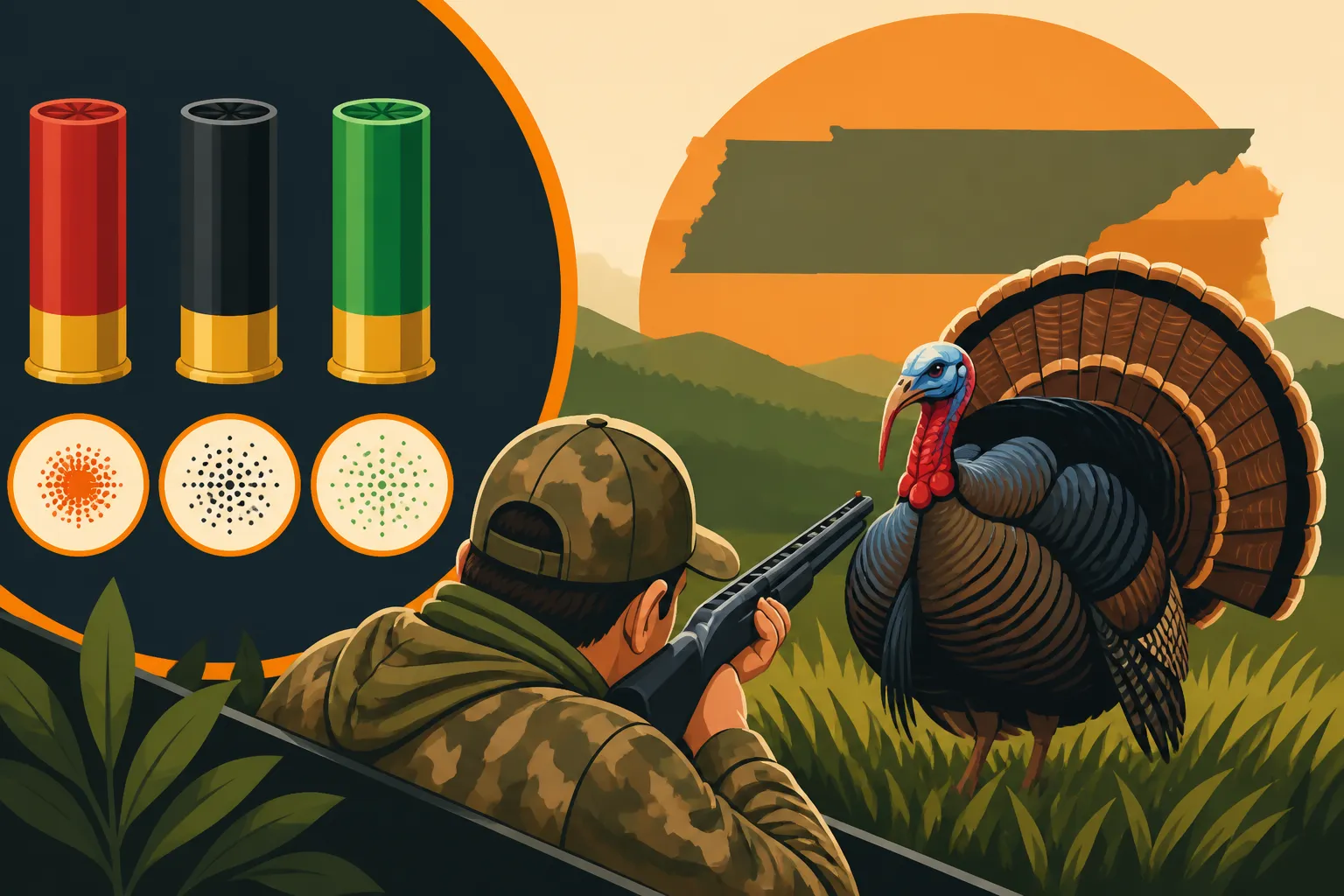
This is perhaps the biggest game-changer in the world of turkey hunting and has single-handedly elevated the status of smaller gauges. TSS, or Tungsten Super Shot, is an alloy that is significantly denser than lead or even steel. This increased density means that TSS pellets are smaller than lead pellets of equivalent weight, yet they retain their energy better and penetrate deeper. This is crucial for turkey hunting, where head and neck shots are paramount.
The practical impact of TSS is profound:
- Increased Pellet Count: Because TSS pellets are smaller, more can fit into a shotshell, resulting in incredibly dense patterns. This significantly increases your chances of hitting the vital head and neck area.
- Extended Range: The superior energy retention of TSS pellets means they remain lethal at longer distances than lead. This has allowed hunters to confidently take shots at ranges that were previously only possible with a 10-gauge or heavy 12-gauge magnum loads.
- Smaller Gauge Performance: This is where the magic really happens. A 20-gauge loaded with TSS can now perform at levels comparable to, or even exceeding, a 12-gauge firing traditional lead loads. And as mentioned, the .410, once an afterthought for turkeys, becomes a legitimate gobbler gun when loaded with TSS.
This technology allows you to pick a shotgun based on comfort and maneuverability without sacrificing effective range. Many hunters who once swore by their 12-gauge are now happily toting a 20-gauge or even a .410, enjoying less recoil and a lighter gun, all while maintaining excellent performance in the field.
Making Your Choice for Tennessee Turkeys
Ultimately, the "best" turkey shotgun gauge is the one that best suits you. There's no one-size-fits-all answer, but by considering your hunting style, personal preferences, and the critical step of patterning your shotgun, you'll be well on your way to a confident season.
Evaluating Your Hunting Style and Terrain
Think about how you typically hunt turkeys in Tennessee. Are you a patient hunter who prefers to Setting Up Against a Big Oak and wait for birds to come into close range? If so, a 20-gauge or even a .410 with TSS loads might be perfect, offering a comfortable and lightweight option for static sits. The accuracy and penetration of TSS at 30-35 yards is more than enough for these close encounters.
Do you prefer to cover a lot of ground, aggressively calling and moving to find birds, maybe through the rolling hills and hollers of Middle Tennessee or the dense forests of the Cumberland Plateau? A lighter 20-gauge will be a blessing on those long walks. For those who hunt more open fields or along powerline cuts and occasionally need to stretch a shot out further, a 12-gauge still offers that traditional range and dense pattern, especially when combined with a good choke and quality ammunition. Consider also the challenges of Recovering a Deer From a Steep Hollow – while for deer, a similar level of effort is often required for turkeys, and a lighter gun can make the walk in and out much easier.
Considering Youth and New Hunters
Introducing new hunters, especially youth, to the sport is incredibly important, and their first experiences should be positive and encouraging. Recoil can be a major deterrent. A young hunter should never be forced to shoot a gun that kicks so hard it makes them flinch or develop bad habits. This is where the 20-gauge and particularly the .410, both with TSS loads, truly shine.
These smaller gauges allow new hunters to focus on the fundamentals: calling, patience, target acquisition, and precise shot placement, rather than bracing for a heavy kick. The confidence gained from a comfortable shooting experience can foster a lifelong passion for hunting. There are excellent youth models available in both 20-gauge and .410 that are perfectly sized for smaller frames. Remember, an ethical kill is always the priority, and a confident shot with a smaller gauge is far superior to a flinching shot with a larger one. For more information on youth hunts, check out Tennessee Youth Deer Hunt Rules (though specifically for deer, the principle of appropriate gear for young hunters applies universally).
Patterning Your Shotgun: The Non-Negotiable Step
No matter which gauge you choose, this is arguably the most critical step for turkey hunting success: you must pattern your shotgun. "Patterning" means shooting your specific shotgun with your chosen choke and ammunition at a paper target (ideally a turkey head target) at various distances (e.g., 20, 30, 40 yards) to see how the pellets distribute. Different guns, chokes, and ammunition combinations will produce different patterns. What works perfectly in your buddy's gun might be wildly inconsistent in yours.
Patterning allows you to:
- Determine Your Effective Range: You'll see exactly how far your setup can consistently place enough pellets in the head and neck area for a clean kill. This gives you the confidence to know when to shoot and, equally important, when not to shoot.
- Optimize Your Setup: You might find that one brand of ammunition patterns significantly better than another, or that a different choke tube tightens your pattern beautifully. Resources like GoHunt can provide guidance on popular choke and load combinations, but always confirm it with your own gun.
- Build Confidence: Seeing a dense, lethal pattern on paper at 35 yards will give you immense confidence when that gobbler finally steps into range. This confidence reduces anxiety and improves accuracy in the heat of the moment.
Don't skip this step. It's not just about knowing your gun; it's about ethical hunting. Knowing your pattern, your gun, and your limits is what separates a responsible hunter from someone just hoping for the best.
Turkey Shotgun Gauge Comparison
Here's a quick comparison of the most common gauges you might consider for Tennessee turkey hunting:
| Gauge | Typical Weight | Recoil Level | Ammunition Availability (Turkey Loads) | Effective Range (with modern TSS) | Pros | Cons |
|---|---|---|---|---|---|---|
| 12-Gauge | Medium-Heavy | Moderate-High | Excellent | 40-60+ yards | Widest range of ammunition, highest pellet count with traditional loads, highly versatile for various hunting styles, readily available components and chokes. | Can be heavy for long treks, recoil can be significant with magnum loads, might be too much for smaller-stature or recoil-sensitive hunters. |
| 20-Gauge | Light-Medium | Low-Moderate | Good | 35-50 yards | Lighter weight, significantly less recoil, easier to maneuver in thick cover, excellent performance with modern TSS loads, great for run-and-gun tactics, suitable for youth/smaller hunters. | Slightly less traditional load variety than 12-gauge, generally a bit less raw pellet count (though TSS mitigates this significantly). |
| 10-Gauge | Very Heavy | High-Severe | Limited | 45-65+ yards | Historically provided maximum range and payload before TSS, still capable of very long shots. | Very heavy and cumbersome, severe recoil, expensive and hard-to-find ammunition, overkill for most modern turkey hunting scenarios with TSS available. |
| .410 | Very Light | Very Low | Limited (TSS specific) | 25-35 yards | Extremely light and maneuverable, almost no recoil, perfect for youth and recoil-sensitive hunters, incredibly effective within its range with TSS, fosters excellent shooting fundamentals. | Very limited effective range without TSS, TSS loads can be harder to find and more expensive, requires precise range estimation for ethical shots. |
Ultimately, your choice in turkey shotgun gauge for Tennessee will come down to a combination of personal comfort, hunting style, and budget. With modern ammunition, even smaller gauges like the 20-gauge and .410 have become formidable tools in the turkey woods, offering excellent performance without the punishing recoil or bulk of their larger counterparts. Focus on comfort, pattern your chosen setup meticulously, and you'll be ready for Calling a Tennessee Gobbler Off the Roost this spring. For more tips on preparing for turkey season, consider looking into Turkey Tactics for Farmland Field Edges or Decoy Placement for Pressured Tennessee Birds.
Disclaimer
This article is for general informational purposes only and does not constitute professional advice. Laws, prices and regulations vary by location and change over time. Consult a qualified professional for guidance on your specific situation.